
UNITED STATES
SECURITIES AND EXCHANGE COMMISSION
Washington, D.C. 20549
SCHEDULE 14A
Proxy Statement Pursuant to Section 14(a) of
the Securities Exchange Act of 1934
Filed by the Registrant ☒
Filed by a Party other than the Registrant ☐
Check the appropriate box:
☐ | Preliminary Proxy Statement |
☐ | Confidential, for Use of the Commission Only (as permitted by Rule 14a-6(e)(2)) |
☒ | Definitive Proxy Statement |
☐ | Definitive Additional Materials |
☐ | Soliciting Material under §240.14a-12 |
(Name of Registrant as Specified in its Charter)
(Name of Person(s) Filing Proxy Statement, if other than the Registrant)
Payment of Filing Fee (Check all boxes that apply):
☒ | No fee required. |
☐ | Fee paid previously with preliminary materials. |
☐ | Fee computed on table in exhibit required by Item 25(b) per Exchange Act Rules 14a-6(i)(1) and 0-11. |
A Message from Our Chairman
Dear Fellow United Stockholders,
On behalf of the United Airlines Holdings, Inc. Board of Directors, it is my pleasure to invite you to attend our 2026 Annual Meeting of Stockholders, which is scheduled to be held on Tuesday, May 19, 2026 at 9:00 a.m., Central Time.
As I enter my fifth year as the Chairman of the Board of Directors of United Airlines, I remain incredibly proud to serve in this role. While 2025 brought unique challenges to this industry, United managed to remain laser focused on the customer experience and building brand loyalty. United did this while continuing to bolster its resiliency and drive to create value for our stockholders by delivering strong financial results. During 2026, United will celebrate its centennial anniversary and I am excited to see what the future holds as we continue to improve the innovative products we offer on our aircraft, enhance customer experience through the rollout of new features on the United app and expand Starlink to our fleet. On behalf of the Board, we want to thank United’s entire employee base, who makes all of this possible.
Throughout the past year, the Board continued to support the Company’s strategic direction and prudent use of capital to increase stockholder value while also overseeing the Company’s management of key risks that face the industry. The most significant risk that the Board oversees is ensuring that United maintains the highest standards of safety. In 2025, we prioritized standalone discussions of safety at each of our regular quarterly Board meetings, including reviews of the Company’s safety management systems and processes, industry-wide safety considerations and the evolving regulatory landscape, among other topics.
Our Board consists of directors with depth and breadth of experience aligned with United’s long-term strategy, key risks and opportunities, helping us provide effective support and oversight. We have worked carefully to evolve the Board’s membership with a focus on having an appropriate mixture of tenure and experience that includes both new perspectives and continuity.
Lastly, I want to emphasize the importance of our stockholders. The Board and management team value ongoing dialogue with our stockholders in order to understand their priorities and perspectives and the Board oversees our stockholder engagement program. During 2025 and early 2026, a broad range of topics were discussed—including our strategy, executive compensation and sustainability—and feedback from the conversations is shared with the Board and relevant committees. We encourage you to continue to engage with us.
This Proxy Statement includes information about director elections and the other proposals up for a vote at the Annual Meeting. We hope you will participate in the Annual Meeting by attending virtually and ask that you vote, as promptly as possible, through one of the options outlined in the Proxy Statement, whether or not you plan to join us for the Annual Meeting. Your participation is crucial, so please exercise your right to vote.
I join our entire Board in thanking you for your interest and continued confidence in United and the opportunity to serve United as directors on your behalf. We hope that you and your families will have an opportunity, whether for business or pleasure, to travel with us in 2026. | |
| Sincerely, |
|
Edward M. Philip Chairman of the Board |


A Message from Our Chief Executive Officer
Dear Fellow United Stockholders,
For the past decade, our strategy has been focused on becoming the best airline in the history of aviation. We are making important progress on accomplishing our goal by building a brand-loyal airline that customers love through our investments in our employees, service, fleet, product, technology and infrastructure. At the same time, we have strengthened our balance sheet and improved credit ratings. Our strategy is succeeding as our execution of several critical initiatives during the last year has helped to move us to the top of the industry from a financial and operational perspective, creating significant value for our stockholders.
One of the pillars of our strategy is our commitment to operational excellence. In the face of what has continued to be a challenging environment for our industry as a whole, our employees are driving our best customer satisfaction scores in our history.
We know that building a great airline for our employees and customers will lead to strong financial results and is the surest path to rewarding our long-term stockholders. Our impressive financial performance can be seen with our profit margin continuing to be near the top of the industry. We were also the only airline of our U.S. competitors(1) to grow adjusted diluted earnings per share(2) year-over-year in 2025. In addition, we are nearing our goal of having an investment-grade credit rating.
While we are proud of our accomplishments, we have always known that industry stress events are inevitable. The war in Iran is the latest stress event. Coming out of the COVID-19 pandemic, I made a commitment to our employees that our management team will do everything possible to improve United financially so that we would never again need to furlough employees in times of stress. Because of the success that we have achieved through our strategy to win brand-loyal customers and elevate our financial results, we are in a position to keep that commitment. We will also be looking for opportunities that higher-priced oil may create to reinforce our drive to deliver long-term growth and stockholder value.
Our focus is on continuing to innovate, invest in our people and pursue key priorities that enhance the experience of our customers, but it is worth reviewing some of the highlights from 2025:
2025 Financial Results
| • | We achieved pre-tax earnings of $4.3 billion, pre-tax margin of 7.3% and net income of $3.4 billion; adjusted pre-tax earnings(2) of $4.6 billion, adjusted pre-tax margin(2) of 7.8% and adjusted net income(2) of $3.5 billion. |
| • | We delivered full-year diluted earnings per share of $10.20 and adjusted diluted earnings per share(2) of $10.62. |
| • | We generated $8.4 billion of operating cash flow and $2.7 billion in free cash flow(2). |
____________________________________________
| (1) | For purposes of this comparison, our U.S. competitors are Delta, American, Southwest, JetBlue, Alaska, Spirit and Frontier. Comparisons to adjusted diluted earnings per share year-over-year of our U.S. competitors are based on this measure as reported by such companies. Because this non-GAAP financial measure is not calculated in accordance with GAAP, there may be differences in method and in the items being adjusted as reported by our U.S. competitors. |
| (2) | Adjusted diluted earnings per share, adjusted pre-tax earnings, adjusted pre-tax margin, adjusted net income, and free cash flow are non-GAAP financial measures. Please refer to Appendix A for additional information and a reconciliation of each historical measure to the most directly comparable GAAP financial measure. |

Successful Growth
| • | We carried 181 million passengers – the most passengers in our history in a year. We operated the largest mainline flight schedule in our history, including an average of 303 daily widebody departures. |
| • | We continued to expand our leading global network, beginning service on 29 routes domestically and in Canada and 13 new international destinations. We now operate flights to more than 380 destinations worldwide and we are the only U.S. legacy carrier with service to more than 75 of these destinations. |
| • | We expanded our premium offerings, setting a Company record high of 27.4 million premium seats across our fleet, which accounted for 12% of all seats flown in 2025. |
| • | We hired more than 13,000 employees worldwide in 2025 and now employ more than 113,000 people around the world. |
| • | We maintained a robust aircraft orderbook, with more than 250 deliveries(3) expected through April 2028. |
Innovation, Fleet and Product Improvements
| • | We continued installing Starlink across our planned regional fleet, completing the project earlier this year, resulting in more than 300 aircraft bringing high-speed Wi-Fi to MileagePlus® members for free. |
| • | We welcomed more than 200 new or retrofitted aircraft with our Signature interior into our fleet in 2025, each including enough overhead space for every passenger’s bag and Bluetooth connectivity and screens at every seat. Within two years we expect to have more than 227,000 screens on more than 1,200 aircraft. |
| • | We achieved the highest customer satisfaction score for a full year as measured by the Net Promoter Score since 2022 among on-time passengers, including a seven-point increase in the check-in experience thanks to our investments in the lobby, improved kiosks and mobile app. And despite challenges like the government shutdown, we achieved our highest fourth-quarter customer satisfaction score in Company history. |
| • | We launched new, personalized features in the United app, including enhanced step-by-step wayfinding, live activities on the day of travel, a bag-tracking redesign and additional connection information. By the fourth quarter, 85% of customers used the United app on their day of travel. |
Sustainability and Aviation Innovation
| • | We purchased blended sustainable aviation fuel (SAF) for use at Houston, Newark and Washington Dulles, growing SAF use to six hubs – LAX, SFO, ORD, IAH, EWR and IAD.(4) |
| • | United Airlines Ventures, which invests in start-ups developing innovative technologies advancing the aviation industry, announced investments in aerospace companies JetZero and AstroMechanica and travel experience and customer engagement companies Dfinitiv and Mindtrip. |
Investments for the Future
| • | We opened our fourth United Club location in Denver and the second grab-and-go Club Fly location in Houston. |
| • | We reopened a 50% larger United Polaris® lounge at Chicago O’Hare, providing our customers with a luxurious, relaxing start to their travel to 18 long-haul international destinations served from the hub. |
| • | We began our $2.5 billion Terminal B redevelopment project at our Houston hub, which will include 40 updated gates and the largest United Club in the network at over 50,000 square feet. Terminal B and the new United Club are planned to open later this year. |
| • | We brought TSA PreCheck Touchless ID to the Washington Dulles and Houston airports and expanded usage in the San Francisco and Chicago O'Hare airports last year. More than 3.5 million customers used this feature for a more efficient trip in 2025. |
____________________________________________
| (3) | Including operating leases. |
| (4) | SAF is only used at specific airports and is not used on all flights. As of December 2024, the total volume of SAF used in our operations represented approximately 0.3% of our total aviation fuel usage. SAF must be blended with conventional fuel in accordance with regulatory requirements. Use of blended SAF results in lower carbon emissions on a lifecycle basis than conventional fuel alone, but still results in emissions. For further information about our environmental impact, review United’s Corporate Impact Report and Annual Report on Form 10-K, available at corporateimpact.united.com and ir.united.com. |
Safety
| • | The rate of flight attendant injuries from turbulence declined by 18% and the rate of such injuries below 10,000 feet declined by 45% following data-driven policy changes made in late 2024. We also saw 50% fewer serious injury incidents year over year.(5) |
| • | We saw an increase in employee utilization of our safety reporting app program to 60%, which resulted in more efficient and easier on-demand reporting. |
Oil is trading at over $110 per barrel as I write this letter. As we look to the future, perhaps the biggest change at United is we have positioned our airline to stay focused on and investing in the long-term, even as we make tactical near-term adjustments in the face of higher fuel costs. And the best is yet to come: we plan to add about 250 new planes(3) to our fleet by April 2028, including our new Boeing 787-9 with United Elevated interior and a new Airbus A321neo called the “Coastliner.” And we just announced the United Relax RowSM, a new set of United Economy® seats that transform into a couch, creating an even more comfortable option for customers traveling in the United Economy cabin on long-haul flights.
We will also continue to make significant investments in our technology, our product, our people and the infrastructure at the airports we serve. Our people are doing a great job taking care of customers and I am very proud of all they are doing to make United the best airline in the history of aviation. Thank you for flying us. We know we have to earn your loyalty each and every day and that we have to continue innovating, wowing you and surprising you by doing something different than you have ever seen on any other airline anywhere in the world. Our stockholders win when our customers and employees love United Airlines.
I join our entire Board in thanking you for your interest and continued confidence in United and the opportunity to serve United as directors on your behalf. We hope that you and your families will have an opportunity, whether for business or pleasure, to travel with us in 2026. | |
| Sincerely, |
|
Scott Kirby Board Member and Chief Executive Officer |
| |
| |

____________________________________________
| (5) | Information relates to United’s mainline operations. Serious injury incidents refer to those as defined by the National Transportation Safety Board. |
Notice of 2026 Annual Meeting of Stockholders
Notice is hereby given that the 2026 Annual Meeting of Stockholders (the “Annual Meeting”) of United Airlines Holdings, Inc. (“We,” “us,” “our,” United” or the “Company”) will be held by live webcast at the date, time and website noted below. Only stockholders of record at the close of business on the record date are entitled to vote on the matters presented at the Annual Meeting (or any adjournment or postponement thereof).
Meeting Agenda | | Date & Time
Tuesday, May 19, 2026 Where
Virtually online at www.virtualshareholdermeeting.com Record Date
March 24, 2026 | |
| | | |
Proposals That Require Your Vote | | | |
1 | The election of the director nominees named in the attached proxy statement for a one-year term. | | |
2 | The ratification of the appointment of Ernst & Young LLP to serve as our independent registered public accounting firm for the fiscal year ending December 31, 2026. | | |
3 | A vote to approve, on a nonbinding advisory basis, the compensation of our named executive officers. | | |
4 | Advisory vote on the stockholder proposal described in this Proxy Statement, if properly presented at the Annual Meeting. | | |
In addition, we will transact such other business as may properly come before the Annual Meeting or any adjournment or postponement thereof. | | ||


Your Vote is Important
We encourage all stockholders of record to read the attached proxy statement with care and vote right away using any of the following methods, even if they intend to attend the Annual Meeting. If you plan to vote during the Annual Meeting, you may do so if you enter the control number found on your Notice of Internet Availability of Proxy Materials, voting instruction form or proxy card, as applicable, at the time you log into the meeting at www.virtualshareholdermeeting.com/UAL2026.
| By Internet | www.proxyvote.com | | By order of the Board of Directors,
E. Anna Ha April 7, 2026 233 S. Wacker Drive |
| By Phone | In the U.S. or Canada dial toll-free 1-800-690-6903 | | |
| By Mail | Cast your ballot, sign your proxy card and send in our prepaid envelope | | |
| By QR Code | Scan this QR code to vote with your mobile device (may require free app) | |



Electronic Delivery of Proxy Materials
United seeks to operate more sustainably and responsibly.
We encourage all stockholders to voluntarily elect to receive all proxy materials electronically. This helps reduce the paper mailed to you and plays a small role in supporting our goal of reducing our emissions.
| Sign up for e-delivery at proxyvote.com. Please have your control number available. | Benefits of E-Delivery: ● immediate and convenient access to the materials ● helps us reduce our impact on the environment ● helps us reduce our printing and mailing costs |

| | Our Environmental Impact Our E-Delivery initiative has resulted in the elimination of 449,962 sets of proxy materials from being produced and mailed. The 506,207 pounds of paper being saved in this process represent the following estimated impacts: | |
| 1,010 tons of wood saved; or the equivalent of 6,060 trees or 94.1 acres of forest | ||
| 6.45 billion BTU’s saved; or the equivalent of 7,680 residential refrigerators operating for one year | ||
| 3,540,000 pounds of CO2 saved; or the equivalent of 322 cars operating for one year | ||
| 5,410,000 gallons of water saved; or the equivalent of 271 swimming pools | ||
| 282,000 pounds of solid waste saved | ||
| 404 pounds of hazardous air pollutants saved | ||
Environmental impact estimates are calculated using the Environmental Paper Network Paper Calculator. For more information, visit www.papercalculator.org. | |||
| |||



Important notice regarding the availability of proxy materials for the Annual Meeting to be held on May 19, 2026:
Our Board of Directors is soliciting your proxy on behalf of the Company for the Annual Meeting, which will be held on May 19, 2026 at 9:00 a.m. Central Time, or any adjournment or postponement thereof. Pursuant to rules promulgated by the Securities and Exchange Commission, we have elected to provide access to our proxy materials by notifying you of the availability of our proxy materials on the internet, thereby capturing cost and environmental benefits. On or about April 7, 2026, we will begin mailing a Notice of Internet Availability of Proxy Materials to stockholders informing them that this Notice of 2026 Annual Meeting of Stockholders, the accompanying proxy statement and our 2025 Annual Report on Form 10-K are available free of charge at www.proxyvote.com, a site that does not have “cookies” that identify visitors to the site. We also will begin sending a paper copy of the proxy materials to those stockholders of record who have requested a paper copy. Brokers and other nominees who hold shares on behalf of beneficial owners may be sending their own similar notices. The proxy materials are available on our investor relations website, ir.united.com. Information on our website as well as within our Corporate Impact Report (at https://corporateimpact.united.com), is not considered part of the proxy statement.
Table of Contents
| |
| |
| |
| |
| |
1 | |
2 | |
3 | |
4 | |
5 | |
5 | |
8 | |
Item 2 | Ratification of Appointment of Independent Registered Public Accounting Firm | 9 |
10 | |
13 | |
| |
16 | |
17 | |
19 | |
20 | |
34 | |
34 | |
40 | |
48 | |
50 | |
56 | |
61 | |
67 | |
67 | |
68 | |
70 | |
| |
Item 2 | 71 |
72 | |
74 | |
74 | |
| |
Table of Contents
75 | |
76 | |
77 | |
81 | |
83 | |
87 | |
93 | |
106 | |
Significant Compensation Policies and Other Information Regarding Executive Compensation | 108 |
110 | |
111 | |
111 | |
114 | |
116 | |
119 | |
121 | |
121 | |
123 | |
126 | |
128 | |
129 | |
133 | |
139 | |
139 | |
145 | |
145 | |
| |
Appendix A | A-1 |
| |
| |
Table of Contents
CAUTIONARY STATEMENT REGARDING FORWARD-LOOKING STATEMENTS
This proxy statement (the “Proxy Statement”) and accompanying materials (collectively, the “Proxy Materials”) contain certain “forward-looking statements” within the meaning of the Private Securities Litigation Reform Act of 1995. All statements that are not statements of historical facts are, or may be deemed to be, forward-looking statements. Such forward-looking statements are based on historical performance and current expectations, estimates, forecasts and projections about our future financial results, goals, plans, commitments, strategies and objectives and involve inherent risks, assumptions and uncertainties, known or unknown, including internal or external factors that could delay, divert or change any of them, that are difficult to predict, may be beyond our control and could cause our future financial results, goals, plans and objectives to differ materially from those expressed in, or implied by, the statements. No forward-looking statement can be guaranteed. Forward-looking statements in the Proxy Materials should be evaluated together with the many risks and uncertainties that affect United Airlines Holdings, Inc.’s (“we,” “us,” “our,” “United” or the “Company”) business and market, particularly those identified in the “Management’s Discussion and Analysis of Financial Condition and Results of Operations” and “Risk Factors” sections in the Company’s Annual Report on Form 10-K for the year ended December 31, 2025 (“2025 Annual Report on Form 10-K”), as updated by its subsequent Current Reports on Form 8-K and other filings with the Securities and Exchange Commission (“SEC”). The forward-looking statements included in this document are made only as of the date of this document and except as otherwise required by applicable law or regulation, the Company undertakes no obligation to publicly update or revise any forward-looking statement, whether as a result of new information, future events, changed circumstances or otherwise.
WEBSITE REFERENCES
The Proxy Materials include several website addresses and references to additional materials found on those websites, including our Corporate Impact Report. These websites and materials are provided for convenience only and the content on the referenced websites is not incorporated by reference herein and does not constitute a part of the Proxy Materials or any of the Company’s other SEC filings.
Proxy Statement Summary and Voting Map
This summary highlights certain information contained elsewhere in the Proxy Statement. This summary does not contain all of the information you should consider and you should read the entire Proxy Statement and our 2025 Annual Report on Form 10-K before casting your vote.
The Board of Directors of the Company (the “Board”) is soliciting your proxy on behalf of the Company to vote your shares at the 2026 Annual Meeting of Stockholders (the “Annual Meeting”). The Proxy Statement has been prepared by our management and approved by the Board and is being sent or made available on or about April 7, 2026 to our stockholders of record as of March 24, 2026 (the “Record Date”).
Annual Meeting Information
Date & Time
May 19, 2026 | Where
Virtually online at www.virtualshareholdermeeting.com | Record Date
March 24, 2026 |

Voting: | Holders will be entitled to one vote at the Annual Meeting for each of the outstanding shares of our common stock, $0.01 par value per share (“Common Stock”) they hold as of the Record Date. |
| |||||
Meeting Agenda | | Board Recommendation | | Page | |
Management proposals | | | | | |
| The election of the director nominees named in the attached proxy statement for a one-year term. | | For each Nominee | | 16 |
| The ratification of the appointment of Ernst & Young LLP to serve as our independent registered public accounting firm for the fiscal year ending December 31, 2026. | | For | | 71 |
| A vote to approve, on a nonbinding advisory basis, the compensation of our named executive officers. | | For | | 75 |
STOCKHOLDER proposal | | | | | |
| Advisory vote on stockholder proposal regarding the stockholder right to act by written consent. | | AGAINST | | 133 |


Proxy Statement Summary and Voting Map
Company Information
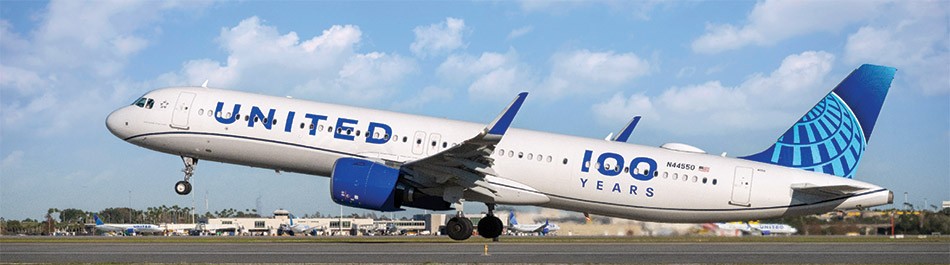
United is the largest airline in the world1. Our 113,000+ employees help over 180 million passengers get to more than 380 destinations across six continents each year.
 Largest Airline in the World
United continues to be the largest airline in the world1, connecting passengers to more than 380 destinations and serving more than 75 destinations around the world that are not served by any other U.S. legacy carrier.
 Leading Carrier
United is the leading carrier across the Atlantic and Pacific1, offering direct flights to international cities in Asia, Australia, Europe, Latin America, the Middle East and Africa.
 Historic Growth through United Next
As part of our United Next growth plan, we hired more than 60,000 employees since 2022. We expect to take delivery of more than 250 new aircraft2 by April 2028, including our new Boeing 787-9 with United Elevated interior and a new Airbus A321neo called the “Coastliner.”
 Industry-Leading Loyalty Program
130+ million MileagePlus members can earn travel benefits, achieve Premier status and use miles toward flights, hotels, cars, gift cards, snacks, entertainment and more. United miles never expire and there are no blackout dates for award seats.
 Elevating the Customer Experience
United has an agreement with SpaceX to bring Starlink, the world’s fastest, most reliable high-speed Wi-Fi in the sky, to its entire fleet. With our new United Polaris product (United Polaris StudioSM), featuring lie-flat seats and unique accouterments, and more than 530 new and retrofitted aircraft, featuring United's signature interior with bigger bins, seatback screens at every seat and Bluetooth connectivity, the experience of flying United is best-in-class.
 Innovation in Aviation and Aerospace
United Airlines Ventures (“UAV”) invests in technologies intended to redefine commercial air travel for decades, including next-generation air traffic management and aviation infrastructure, cutting-edge aerospace technologies and artificial intelligence-driven travel innovation. In 2026, UAV launched its Startup Testing for Aviation Readiness & Transformation Program, an in-house testing program designed to facilitate the product development of UAV’s portfolio companies through collaboration between UAV portfolio companies and United's operational teams.
 Pioneering the use of Sustainable Aviation Fuel
In 2025, United doubled its use of sustainable aviation fuel (“SAF”) compared to 2024 across the network, using more than 27M gallons of SAF across our domestic and international locations. For the first time in 2025, United used blended SAF at three domestic hub locations: George Bush Intercontinental Airport, Newark International Airport and Dulles International Airport. United first used blended SAF in 2016 at Los Angeles International Airport, at San Francisco International Airport in 2023 and in 2024, at Chicago O’Hare International Airport. By 2025 year-end, United had used blended SAF at 6 of its 7 domestic hub stations.3
1 Measured by available seat miles.
2 Including operating leases.
3 SAF is only used at specific airports and is not used on all flights. As of December 2024, the total volume of SAF used in our operations represented approximately 0.3% of our total aviation fuel usage. SAF must be blended with conventional fuel in accordance with regulatory requirements. Use of blended SAF results in lower carbon emissions on a lifecycle basis than conventional fuel alone, but still results in emissions. For further information about our environmental impact, review United’s Corporate Impact Report and Annual Report on Form 10-K, available at corporateimpact.united.com and ir.united.com.
Proxy Statement Summary and Voting Map
Our Business Performance
In 2025, United continued strong execution of our United Next plan to align our network and product with the potential of our hubs. We remained focused on protecting the safety of our employees and customers, as well as providing a superior customer experience. We continued to win brand-loyal customers across all of our hubs with our customer-focused investments. These investments included deploying new and retrofitted aircraft featuring United's signature interior with larger bins, seatback screens at every seat and Bluetooth connectivity; bringing Starlink's Wi-Fi service (the world's fastest, most reliable high-speed Wi-Fi in the sky) to our dual-class, United Express regional aircraft and beginning its installation on our mainline aircraft; expanding our leading global network to more than 380 destinations; and making significant technology investments that empower our employees and improve the customer experience. These investments helped us deliver some of the best operational metrics in our history, which were fundamental to producing the following strong financial results in 2025:
Pre-Tax Margin | | Earnings Per Share (“EPS”) | ||
7.3% | 7.8% | | $10.20 | $10.62 |
Pre-Tax Margin | Adjusted Pre-Tax | | Diluted EPS | Adjusted Diluted |
During 2025 we delivered 7.8% in Adjusted Pre-Tax Margin,(1) representing our continued focus on margin expansion. | | We delivered Diluted EPS up 8% year-over-year and our Adjusted Diluted EPS(1) was near the high-end of our Adjusted Diluted EPS guidance range. Further, of our U.S. competitors(2), we were the only airline to grow Adjusted Diluted EPS(1) year-over-year. | ||
Total Operating Revenue | | Free Cash Flow | ||
$59.1B ä | 3.5% ä | | $8.4B | $2.7B |
Total Operating Revenue | Total Operating Revenue Growth Year-Over-Year | | Operating Cash Flow | Free Cash Flow (Non-GAAP)(1) |
During 2025, we generated the highest annual operating revenue in United’s history. | | We delivered strong Free Cash Flow(1) for 2025 of $2.7B, which demonstrated our resiliency and that Free Cash Flow remains a priority for management. | ||
| (1) | Adjusted Pre-Tax Margin, Adjusted Diluted EPS and Free Cash Flow are non-GAAP financial measures. Please refer to Appendix A for important information regarding these measures, including a reconciliation of each measure to the most directly comparable GAAP financial measure. |
| (2) | For purposes of this comparison, our U.S. competitors are Delta, American, Southwest, JetBlue, Alaska, Spirit and Frontier. Comparisons to Adjusted Diluted EPS year-over-year of our U.S. competitors are based on this measure as reported by such companies. Because this non-GAAP financial measure is not calculated in accordance with GAAP, there may be differences in method and in the items being adjusted as reported by our U.S. competitors. |
Proxy Statement Summary and Voting Map
Corporate Governance Highlights
We are committed to strong corporate governance policies that promote the interests of our stockholders and strengthen Board and management accountability. The “Board and Corporate Governance Matters” section beginning on page 34 describes our governance framework and our “Compensation Discussion and Analysis” section beginning on page 76 describes our executive compensation program. Those sections include the following highlights:
Separate Chairman and CEO roles (see page 50) | 10 out of 13 Board nominees are independent (10 out of 11 nominees elected by the holders of Common Stock are independent) (see page 38) | Risk oversight by the full Board and its committees (see page 41) | ||
All Committee chairs are independent (see pages 51-55) | | Executive sessions provided for all Board and Committee meetings (see page 47) | ||
Majority voting standard in uncontested elections of directors (see page 34) | | Annual Board and committee evaluations (see page 39) | | Annual election of all directors (see page 34) |
| Regular review of Board and executive succession planning (see pages 35 and 45) | | Stockholders have the ability to call a special meeting (see page 36) | |
Regular engagement with stakeholders (see page 57) | | Executive compensation programs that link executive pay to performance (see page 83) | | Robust stock ownership guidelines for directors and executive officers (see pages 63 and 108) |
Proxy Statement Summary and Voting Map
Item 1 | Election of Directors
(► see page 16 for more information)
The Board has nominated the following 11 director nominees for election by the holders of shares of Common Stock: Ms. Rosalind Brewer, Ms. Michelle Freyre, Mr. Matthew Friend, Mr. Barney Harford, Ms. Michele J. Hooper, Mr. Walter Isaacson, Mr. Scott Kirby, Mr. Edward M. Philip, Mr. Edward L. Shapiro, Ms. Laysha Ward and Mr. James M. Whitehurst. The United Airlines Pilots Master Executive Council of the Air Line Pilots Association, International (the “ALPA”) has nominated and intends to elect Captain Brian Noyes at the Annual Meeting. The International Association of Machinists and Aerospace Workers (the “IAM”) has nominated and intends to reelect Mr. Richard Johnsen at the Annual Meeting. A more detailed discussion on how directors are selected and elected, how Board governance operates, how the Board is organized, how you can communicate with directors and how directors are paid can be found beginning on page 34.
The Board Recommends you vote FOR each of the nominees | Vote Required We have majority voting in uncontested elections of directors. Accordingly, our bylaws provide that each director will be elected by vote of a majority of the votes cast with respect to that director’s election. Abstentions and broker non-votes will have no effect on the election of directors. |

Director Nominee Details
The following tables provide summary information of our Board if our director nominees are elected.
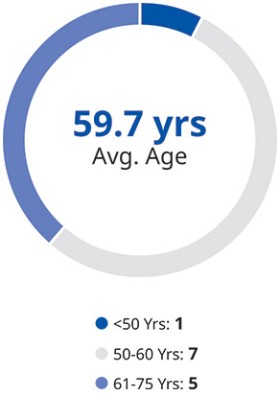
| Independent Chair 6 of 13 Directors 10 of 13 Directors |
|
| |
2026 Proxy Statement | 5 |
Proxy Statement Summary and Voting Map
Name and Principal Occupation | Age | Director | Independent | Other | Current Committee Memberships | ||||||
Audit | Compensation | Executive | Finance | Nominating/ | Public | ||||||
Directors to be Elected by the Holders of Common Stock | | ||||||||||
| Rosalind Brewer Former CEO, Walgreens Boots Alliance, Inc.; Interim President, Spelman College | 63 | 2024 |
| – | | ¢ | | ¢ | | |
| Michelle Freyre Global Brand President, | 55 | 2024 |
| – | | | | ¢ | | ¢ |
| Matthew Friend EVP and CFO, NIKE, Inc. | 48 | 2021 |
| – | ¢ ▲ | ¢ | | ¢ | | |
| Barney Harford Former COO, Uber Technologies, Inc.; | 54 | 2016 |
| – | ¢ | | | ¢ | | ¢ |
| Michele J. Hooper President and CEO, | 74 | 2018 |
| 1 | ⚫▲ | | ¢ | | ¢ | |
| Walter Isaacson Professor of History, Tulane University; | 73 | 2006 |
| – | | | ¢ | | ¢ | ⚫ |
| J. Scott Kirby CEO, United Airlines Holdings, Inc. | 58 | 2020 | CEO | 1 | | | ¢ | ¢ | | |
| Edward M. Philip « Former COO, Partners in Health | 61 | 2016 |
| 2 | ¢ ▲ | | ⚫ | | ⚫ | |
| Edward L. Shapiro Former Managing Partner, | 61 | 2016 |
| – | | ¢ | ¢ | ⚫ | ||
| Laysha Ward Former EVP and | 58 | 2021 |
| – | ¢ | | | | ¢ | ¢ |
| James M. Whitehurst Managing Director, Silver Lake; | 58 | 2016 |
| 2 | | ⚫ | ¢ | | ¢ | |
Directors to be Elected by the Holders of Other Classes of Stock | |||||||||||
| Captain Brian Noyes Chair, United Airlines Master | 56 | 2025 | | – | | | | | | ¢ |
| Richard Johnsen Air Transport Territory General Vice President, IAM Union | 57 | 2021 | | – | | | | | | ¢ |
Number of Meetings in 2025 | Board–9 | | 9 | 6 | 5 | 9 | 4 | 6 | |||


⚫ | Committee Chair | ¢ | Committee Member | « | Chairman of the Board | ▲ | Audit Committee Financial Expert |
| |
6 |
|
Proxy Statement Summary and Voting Map
| | |||||||||||||
Director Nominee Skills and Experience | Brewer | Freyre | Friend | Harford | Hooper | Isaacson | Johnsen | Kirby | Noyes | Philip | Shapiro | Ward | Whitehurst | |
| ACTIVE OR FORMER C-SUITE EXECUTIVE: Service in senior leadership positions, including past CEO experience or other senior executive positions |
|
|
|
|
|
| |
| |
|
|
| |
| AIR, TRAVEL & TRANSPORTATION: Experience as a business leader, regulator or consultant in the industry | |
| | |
|
|
| |
| |
| ||
| GOVERNANCE AND CURRENT OR FORMER PUBLIC COMPANY BOARD: Experience in corporate governance through current or past service on the boards of other publicly traded companies |
| |
|
| |
| |
|
|
|
| ||
| FINANCE/ACCOUNTING/CAPITAL ALLOCATION: Experience in evaluating financial statements or overseeing capital structure and financial strategy |
| |
|
|
| | |
| |
|
|
|
|
| GLOBAL OPERATIONS: Leadership at a global company or experience overseeing international corporate strategy, operations or development |
|
|
|
|
|
|
| |
| | |
| |
| HUMAN CAPITAL MANAGEMENT/UNION RELATIONS: Experience in human capital management, human resources, talent acquisition and management or labor relations and unions | | | | | | |
| |
| | |
| |
| RETAIL / BRAND MANAGEMENT: Experience in consumer marketing, sales or brand management |
|
|
|
|
| | |
| |
| |
| |
| RISK MANAGEMENT: Experience in risk management and oversight, including risk assessment, identification and mitigation | | |
|
|
| | | | |
|
| | |
| TECHNOLOGY/CYBERSECURITY: Experience in e-commerce, cybersecurity, data analytics or information technology |
| |
|
| | | | | |
| |
| |


| |
2026 Proxy Statement | 7 |
Proxy Statement Summary and Voting Map
ACTIVE STAKEHOLDER ENgAGEMENT IN FISCAL 2025
Our Annual Stakeholder Engagement Program | ||||||
In addition to the ongoing dialogue among our stockholders and our Chief Executive Officer, Chief Financial Officer and Investor Relations team on United’s strategic and financial performance, we have developed a proactive, ongoing stakeholder engagement program focused on topics that are important to our stakeholders, including strategy, financial and operating performance, corporate governance, safety, oversight of artificial intelligence, environmental sustainability, responsible sourcing, labor management and executive compensation, highlights of which are described under “Communications with Directors and Stockholder Engagement” beginning on page 56. As part of our regular stakeholder outreach, since our 2025 annual meeting of stockholders, we engaged with our top stockholders, representing approximately 61% of our total shares outstanding. These interactions provide us with the opportunity to learn about our stockholders’ priorities and perspectives on significant issues. United and its Board consider feedback and insights from stockholders and other stakeholders as we review our governance framework and disclosures. | ||||||
Who participated ● Senior management ● Investor Relations ● Corporate Secretary’s Office ● Chairman of the Board | | | Who we engage ● Institutional investors ● Our stockholder proponent | | | Other ways we engage ● Quarterly earnings calls ● Industry presentations and conferences ● Company-hosted events and presentations ● Road show meetings with investors and analysts |
| | How we engage ● One-on-one meetings ● Written and electronic communications | | | ||
| |
8 |
|
Proxy Statement Summary and Voting Map
Item 2 | Ratification of Appointment of Independent Registered Public Accounting Firm
(► see page 71 for more information)
The Audit Committee appointed, and the Board has ratified the appointment of, Ernst & Young LLP (“Ernst & Young”) to serve as our independent registered public accounting firm for the fiscal year ending December 31, 2026, subject to ratification by the holders of shares of Common Stock. The Board is presenting a resolution to our stockholders requesting ratification of Ernst & Young’s appointment, as the Board and the Audit Committee believe that the continued retention of Ernst & Young for 2026 is in the best interest of the Company and its stockholders. Detailed information about Ernst & Young’s appointment and fees for 2025 and 2024 can be found beginning on page 72.
The Board and Audit Committee recommend you vote FOR Item 2 | Vote Required Approval of Item 2-Ratification of Appointment of Independent Registered Public Accounting Firm-requires the affirmative vote of a majority in voting power of the shares present in person or represented by proxy and entitled to vote on such matter. If you elect to abstain, the abstention will have the same effect as an “AGAINST” vote. Because brokers will have discretionary authority to vote on this proposal, there will not be any broker non-votes. |

| |
2026 Proxy Statement | 9 |
Proxy Statement Summary and Voting Map
Item 3 | Advisory Vote to Approve Executive Compensation
(► see page 75 for more information)
In accordance with the requirements of Section 14A of the Securities Exchange Act of 1934, as amended (the “Exchange Act”), and the related rules of the SEC, and, consistent with the views expressed by stockholders at our 2023 annual meeting of stockholders, the Board has determined to seek an annual nonbinding advisory vote from our stockholders to approve the compensation of our named executive officers (“NEOs”) as disclosed pursuant to the SEC’s compensation disclosure rules, which disclosure includes the Compensation Discussion and Analysis, the compensation tables and the accompanying narrative disclosures of the Proxy Statement (“Say-on-Pay” vote). The Board is presenting a resolution to our stockholders recommending approval, on a nonbinding advisory basis, of the 2025 compensation paid to our NEOs as described in the “Compensation Discussion and Analysis” and disclosed in the Summary Compensation Table and related compensation tables and narrative disclosure set forth in this Proxy Statement. For additional information on our 2025 executive compensation program and the 2025 decisions made by the Compensation Committee, we encourage stockholders to review, in detail, the section entitled “Compensation Discussion and Analysis” beginning on page 76.
The Board recommends you vote FOR Item 3 | Vote Required Approval of Item 3-Advisory Vote to Approve Executive Compensation-requires the affirmative vote of a majority in voting power of the shares present in person or represented by proxy and entitled to vote on such matter. If you elect to abstain, the abstention will have the same effect as an “AGAINST” vote. Broker non-votes will have no effect on the advisory vote to approve executive compensation. |
| |
10 |
|
Proxy Statement Summary and Voting Map
Executive Compensation Summary for 2025
Compensation Program Highlights
Our 2025 executive compensation program (the “2025 Program”) was designed to motivate and reward our management team for advancing United’s strategic and financial priorities while aligning the management team’s interests with those of our stockholders. It features long-term performance-based equity awards and applies three-year vesting to our time-based equity awards.
The following is a high-level summary of the 2025 Program.
We designed our 2025 Program to align the interests of our stockholders and executives, link executive pay to performance and attract, retain and appropriately reward our executives in line with market practices. Notably, our 2025 Program: | ||
● Is informed by the market median of our peer group of companies, selected based on similar revenue, size, scope and complexity, with a focus on size-relevant U.S.-based airline peers. | ● Features a mix of cash and equity-based compensation. | ● Links pay to performance with multiple performance measures aimed at increasing stockholder value. |
● Includes robust stock ownership guidelines for our named executive officers, as well as prohibitions on pledging and hedging and a robust clawback policy. | ● Does not encourage excessive risk-taking. | ● Reflects stockholder feedback through our annual Say-on-Pay vote and stockholder engagement program. |
|
|
|
94% | 6x | 90% |
Percentage of our CEO’s target compensation at-risk and fluctuating based on our performance and/or our stock price. | Our CEO’s stock ownership requirement, as a multiple of his base salary. | Average level of stockholder support for our “Say-on-Pay” proposal in the last 3 years. |
NO | YES | Independence |
No hedging or pledging of company stock permitted for officers, directors or management and administrative employees. | Clawback policy is in place to permit recovery of compensation in the event of certain misconduct and goes beyond Dodd-Frank requirements. | Compensation decisions made by the independent Compensation Committee and the Compensation Committee’s compensation consultant is independent. |


| |
2026 Proxy Statement | 11 |
Proxy Statement Summary and Voting Map
2025 TOTAL TARGET COMPENSATION MIX
CEO | AVG OTHER NEOS |
|
|
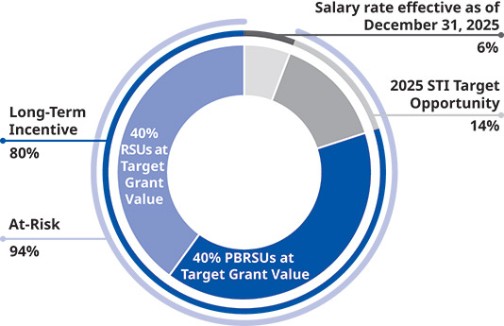
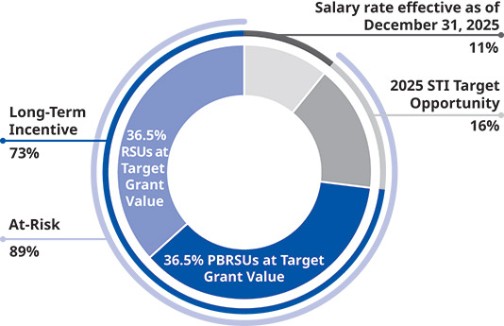
Short-Term Incentive Program | | Long-Term Incentive Program | ||||
● Our executives are eligible to receive an annual cash short-term incentive award, which is earned based on achievement of performance measures consistent with our business plan for the fiscal year (in particular, operational targets aligned with our key strategic initiatives to enhance the best-in-class travel experience of our customers as well as financial targets aligned with our key financial objectives) and metrics are designed to align with short-term and long-term stockholder value creation. | | ● We granted awards of time-based restricted stock units (“RSUs”) and performance-based restricted stock units (“PBRSUs” or “Performance-Based RSUs”) to our executives in 2025. ● Equity awards are structured to promote retention of key talent, motivate management’s focus on our sustained performance and success and on building long-term stockholder value. | ||||
2025 Short-Term Incentive Program Weighted Measures | | Performance-Based RSUs | ||||
33% |
| Financial: This metric is based on our 2025 Adjusted EBITDAR Margin relative to our industry peers. | | 50% |
| Performance-Based RSUs reward achievement of financial goals and strategic initiatives. |
33% |
| Net Promoter Score (“NPS”): This customer-based metric focuses on taking care of our customers and indicates our success toward positioning the United brand as the preferred choice for airline travel. | | Time-Based RSUs | ||
50% |
| Time-based RSUs vest one-third per year over a three-year period, aligning with stockholder value creation and promoting executive retention. | ||||
33% |
| Operational Excellence: This features three key airline operational metrics—on-time departures, mishandled baggage rate and seat cancellations. | | | | |


| |
12 |
|
Proxy Statement Summary and Voting Map
Item 4 | Advisory Vote on Stockholder Proposal, if properly presented
(► see page 133 for more information)
The Board recommends you vote AGAINST Item 4 | VOTE REQUIRED Approval of Item 4-Advisory Vote on Stockholder Proposal Regarding Shareholder Right to Act by Written Consent-requires the affirmative vote of a majority in voting power of the shares present in person or represented by proxy and entitled to vote on such matter. If you elect to abstain, the abstention will have the same effect as an “AGAINST” vote. Broker non-votes will have no effect on the outcome of this proposal. |

| |
2026 Proxy Statement | 13 |
United’s Approach to Corporate Citizenship and Value Creation
At United "Good Leads the Way" is more than a slogan; it fuels our mission to build the world's biggest and best airline. Our employees around the world are joined together to enable connections that matter and move society—whether it is connecting people across cultures, flying a loved one to a wedding, connecting medical professionals at a breakthrough conference or getting a business traveler to an important meeting or back home in time for a child’s big game.
Today, United is viewed not only as a leader among our peer airlines but as a leader among the world’s largest corporations. Our leadership is driven by our desire to blaze new trails by being a force for good, responsive to the world in which we operate, responsible for our actions and committed to doing the right thing. We have identified six corporate citizenship focus areas set forth below that we believe are critical to our business needs, maintain our corporate values, build stockholder value and improve the communities in which we live and fly. To learn more about the Company’s corporate citizenship focus areas, please see our Corporate Impact Report available at https://corporateimpact.united.com. Later this year, we plan to issue an updated Corporate Impact Report based on our 2025 fiscal year.
Safety Culture | Community Impact | Environmental Sustainability Strategy | People and Human Capital Management | Cybersecurity Strategy | Corporate Governance |
United takes an integrated approach to our corporate citizenship:
| ● | Board Composition Philosophy: Our Board believes that a key component of effective oversight of our corporate strategy is its commitment to having directors with a broad range of perspectives reflecting a variety of independent views. The Board, therefore, remains focused on ensuring that it is composed of directors with a broad range of experience and balance of professional skills to oversee the success of the business effectively. |
| ● | United Corporate Citizenship Strategy: We have devoted our brand, reputation, resources, time and effort to pursuing corporate citizenship goals aimed to generate value and impactful results. Over the last few years, our management has worked to incorporate our corporate citizenship strategy into the Company’s overall business strategy, which has included establishing important initiatives improve energy security and sustainability in aviation and providing career opportunities to thousands of people. |
| ● | Board and Executive Team Oversight of United Corporate Citizenship Strategy: We identify and manage the risks and opportunities that arise from our corporate citizenship focus areas through strong Board and executive oversight. |
Oversight of our corporate citizenship strategy starts at the Board level, which, as a whole and through its Committees, oversees goals, targets, strategies, initiatives, risks, assessments, disclosures and external engagement and related matters. Each of the Public Responsibility, Audit, Nominating/Governance, Executive and Compensation Committees is charged with oversight and implementation of their respective corporate citizenship-related focus areas. This distributed allocation of responsibilities among the various Committees helps ensure dedicated attention to implementation of our corporate citizenship strategy. In 2025, the Board, in full and in individual committees, discussed a range of corporate citizenship topics, including the six corporate citizenship focus areas identified above, as well as political engagement and contributions, technology, data privacy and artificial intelligence.
United’s executive team also provides management-level oversight over United’s corporate citizenship strategy and is responsible for reviewing, refining and implementing long-term corporate citizenship strategies and periodically updating the full Board and the Committees, as applicable, on issues related to the implementation of the corporate citizenship strategies. Through the review process and ongoing check-ins with United team leaders of our corporate citizenship focus areas, United’s executive team approves the creation of corporate citizenship goals and initiatives and monitors progress toward the goals by maintaining regular communication with dedicated teams of corporate citizenship professionals and subject-matter experts throughout the Company.
United’s Approach to Corporate Citizenship and Value Creation
| ● | Transparency of United Corporate Citizenship Strategy: We place a high priority on active stakeholder engagement and robust public reporting of our corporate citizenship strategy, initiatives and goals. |
Throughout 2025, the Corporate Secretary’s Office, in partnership with Investor Relations, hosted calls with stakeholders and investor groups focusing specifically on Board and Committee oversight of various corporate citizenship matters, including environmental sustainability topics, such as our stated greenhouse gas (“GHG”) emissions goals and efforts to source and scale SAF; human capital management, including our people impact initiatives; how we have invested in our team; our labor relations; and our responsible sourcing initiatives. Our stakeholder engagement enables us to better understand our stakeholders’ priorities and perspectives.
We believe that our stakeholder engagement program is successful in part because our public disclosures allow our various stakeholders to measure our performance and track our progress against our goals. Examples of our disclosures include the following:
| o | In our most recent Corporate Impact Report, we provided an update on our corporate citizenship strategy, initiatives and goals. The report can be found at corporateimpact.united.com. Neither the report nor the contents are incorporated by reference into this proxy statement. |
| o | We disclosed key corporate citizenship qualitative and quantitative data in our Annual Report on Form 10-K, including our Scope 1 (direct), Scope 2 (indirect) and Scope 3 (other indirect) GHG emissions and carbon intensity emission rates. |
| o | We reported information around performance and progress toward our environmental sustainability-related goals in alignment with recognized external corporate citizenship reporting frameworks, including the former Task Force on Climate-related Financial Disclosures, now incorporated in the International Sustainability Standards Board (ISSB) standards. |
| o | We issued our “Climate Lobbying Report: Aligning Climate Leadership with Advocacy” in 2022, which describes how our lobbying practices are aligned with our environmental sustainability strategy. |
We will continue to evaluate our corporate citizenship strategy and disclosures as we develop and implement our corporate citizenship strategy.
Item 1-Election of Directors
Our Amended and Restated Bylaws provide that the number of directors shall be determined by the Board, which has currently set the number at 13. The Board reserves the right to increase or decrease its size at any time. Upon the recommendation of the Nominating/Governance Committee, which consists of only independent directors, the Board has unanimously nominated 11 nominees (Ms. Brewer, Ms. Freyre, Mr. Friend, Mr. Harford, Ms. Hooper, Mr. Isaacson, Mr. Kirby, Mr. Philip, Mr. Shapiro, Ms. Ward and Mr. Whitehurst) for election by the holders of shares of Common Stock as directors of the Company at the Annual Meeting. Proxies cannot be voted for a greater number of persons than the number of nominees named.
The ALPA, the sole holder of the Company’s Class Pilot MEC Junior Preferred Stock, which provides the ALPA with the right to elect one member to the Board at each annual meeting of stockholders (the “ALPA director”), has nominated and intends to elect Captain Noyes as the ALPA director at the Annual Meeting.
The IAM, the sole holder of the Company’s Class IAM Junior Preferred Stock, which provides the IAM with the right to elect one member to the Board at each annual meeting of stockholders (the “IAM director”), has nominated and intends to reelect Mr. Johnsen at the Annual Meeting.
Each Board nominee being voted on by holders of Common Stock was elected by our stockholders at the 2025 annual meeting.
In accordance with our Amended and Restated Certificate of Incorporation and Amended and Restated Bylaws, we have a declassified Board, which means that if elected each nominee will serve a one-year term of office that would expire at the next annual meeting of stockholders. Each director will hold office until his or her successor is elected and qualified or until his or her earlier resignation, removal from office or death. Each of the directors nominated by the Board has consented to serving as a nominee, being named in this Proxy Statement and serving on the Board, if elected. Consequently, the Board knows of no reason why any of the nominees would be unable or unwilling to serve. However, if for any reason any nominee is unable or unwilling to serve as a director, your proxy authorizes the people named as proxies to vote for a replacement nominee if the Board names one. Alternatively, the Board may reduce the number of directors who serve on the Board to eliminate the vacancy. In accordance with our Corporate Governance Guidelines, any nominee who is currently a director and for whom more votes are cast against than are cast for must offer to resign from the Board. There are no family relationships among the director nominees or between the director nominees and any executive officer.
The Board asks in Item 1 for your voting support so we can continue our important work and build on our success. All of the nominees are expected to attend the Annual Meeting.
The Board Recommends you vote FOR each of the nominees | Vote Required We have implemented majority voting in uncontested elections of directors. Accordingly, our bylaws provide that each director will be elected by vote of a majority of the votes cast with respect to that director’s election. Abstentions and broker non-votes will have no effect on the election of directors. |
Item 1 - Election of Directors
Director Qualifications
The Nominating/Governance Committee and the Board believe that our slate of director nominees consists of individuals with expertise in fields that align with both the Company’s current and evolving business and long-term strategy and includes a mixture of tenure that allows for both new perspectives and continuity. In addition, our Nominating/Governance Committee and Board believe that our nominee directors possess broad experience (including in positions at the policy-making level and in areas relevant to the Company), balance of professional skills (including financial literacy) and a broad range of perspectives that, taken together, are relevant and beneficial in fulfilling the Board’s oversight of the Company’s business and strategy on behalf of the Company’s stockholders and other stakeholders and in strengthening and supporting senior management. The Nominating/Governance Committee and the Board also believe that each director nominee has the proven integrity, ability to work professionally with others, sound business judgment and experience to act in what the nominee reasonably believes to be in the best interests of the Company and its stockholders and is able to devote adequate time and effort to Board responsibilities.
Item 1 - Election of Directors
The table below summarizes the key skills and experience of each of our director nominees that are most relevant to their Board service. The fact that a specific area of focus or experience is not designated does not mean the director nominee does not possess that skill or expertise. Rather, the skills and experiences noted below are those reviewed periodically by the Nominating/Governance Committee and the Board in making nomination decisions and as part of the Board succession planning process.
Director Nominee Skills and Experience | Brewer | Freyre | Friend | Harford | Hooper | Isaacson | Johnsen | Kirby | Noyes | Philip | Shapiro | Ward | Whitehurst | |
| ACTIVE OR FORMER C-SUITE EXECUTIVE: Service in senior leadership positions, including past CEO experience or other senior executive positions |
|
|
|
|
|
|
| |
|
|
| ||
| AIR, TRAVEL & TRANSPORTATION: Experience as a business leader, regulator or consultant in the industry | | | |
| | |
|
|
| |
| |
|
| GOVERNANCE AND CURRENT OR FORMER PUBLIC COMPANY BOARD: Experience in corporate governance through current or past service on the boards of other publicly traded companies listed on U.S. exchanges |
| | |
|
| |
| |
|
|
|
| |
| FINANCE/ACCOUNTING/CAPITAL ALLOCATION: Experience in evaluating financial statements or overseeing capital structure and financial strategy |
| |
|
|
| | |
| |
|
|
|
|
| GLOBAL OPERATIONS: Leadership at a global company or experience overseeing international corporate strategy, operations or development |
|
|
|
|
|
| |
| |
| | |
|
| HUMAN CAPITAL MANAGEMENT/UNION RELATIONS: Experience in human capital management, human resources, talent acquisition and management or labor relations and unions | | | | | | |
| |
| | |
| |
| RETAIL / BRAND MANAGEMENT: Experience in consumer marketing, sales or brand management |
|
|
|
|
| | |
| |
| |
| |
| RISK MANAGEMENT: Experience in risk management and oversight, including risk assessment, identification and mitigation | | |
|
|
| | | | |
|
| | |
| TECHNOLOGY/CYBERSECURITY: Experience in e-commerce, cybersecurity, data analytics or information technology |
| |
|
| | | | |
| |
| ||


Item 1 - Election of Directors
Director Refreshment
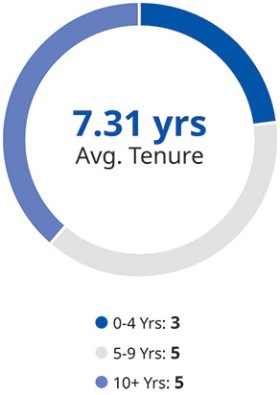
Our Board represents an intentional mix of long-tenured directors maintaining the stability and continuity of Board oversight with newer directors with fresh perspectives, insights, expertise and experiences. The average tenure of our director nominees is 7.31 years, with six of our current directors having joined our Board since 2021.
The Board uses refreshment processes to enable it to evaluate the continued alignment of the Board’s membership with the needs of United. The Board’s refreshment processes involve periodically reviewing and assessing director skills, as reflected in our director skills matrix and evaluating the experience required for membership accordingly. The Board also enables periodic refreshment through its retirement policy contained in the Corporate Governance Guidelines which provides that no director may be nominated to a new term if he or she would be 75 years of age or older at the time of the election.
46.2% | 46.2% of our director nominees were first elected or appointed to our board in the past five years. These directors are identified below. |
56.2 | The average age of our director nominees that were first elected or appointed to our board in the past five years is 56.2 years old. |
| | 2021 | | | | 2024 | | 2025 | ||
| | | | | | | | | | |
| | | | | | | | | | |
| |
| |
| |
| |
| |
|
Laysha Ward | | Richard Johnsen | | Matthew Friend | | Rosalind Brewer | | Michelle Freyre | | Captain Brian Noyes |
Active or | | Air, travel and | | Active or | | Active or | | Active or | | Air, travel and |






| |
2026 Proxy Statement | 19 |
Item 1 - Election of Directors
Director Biographical Information
Set forth on the following pages is certain biographical information about each director nominee, including key experience, qualifications and skills that led the Board to conclude that each nominee should serve as a director. The biographical information presented below is based on voluntary self-identification by each nominee.
The ages indicated are as of the date of the 2026 Annual Meeting and the other information is as of the date of this Proxy Statement.
DIRECTORS TO BE ELECTED BY THE HOLDERS OF COMMON STOCK
Eleven directors are to be elected by the holders of Common Stock. Each current director has served continuously since the date of his or her appointment.
| |
20 |
|
Item 1 - Election of Directors
ROSALIND BREWER-Independent Director | ||
| EXPERIENCE Spelman College (university) Interim President (2024-present) Walgreens Boots Alliance, Inc. (retail pharmacy and health care company) Special Advisor (2023-2025) Chief Executive Officer (2021-2023) Starbucks Corporation (beverage retailing company) Group President and Chief Operating Officer (2017-2021) Sam’s Club (membership-only retail warehouse club) President and Chief Executive Officer (2012-2017) Walmart Inc. (retail company) Multiple roles (2006-2012), including Executive Vice President, Operations (2007-2008) | OTHER PUBLIC COMPANY DIRECTORSHIPS None FORMER PUBLIC COMPANY DIRECTORSHIPS HELD IN THE PAST FIVE YEARS Walgreens Boots Alliance, Inc. (2021-2023) Amazon.com, Inc. (2019-2021) Starbucks Corporation (2019-2021) EDUCATION Spelman College, BS, Chemistry |
Director Since: 2024 Age: 63 Committees: Compensation Finance | ||

Skills and Qualifications:
| Active or Former C-Suite Executive: Ms. Brewer has extensive executive leadership experience through her positions as Chief Executive Officer of Walgreens Boots Alliance, Inc. (“Walgreens”), Group President and Chief Operating Officer at Starbucks Corporation, President and Chief Executive Officer of Sam’s Club and Interim President of Spelman College. |
| Governance and Current or Former Public Company Board: Ms. Brewer brings the benefit of her previous public company board experience, having served on the boards of directors of Walgreens, Amazon.com, Inc., Starbucks Corporation and Lockheed Martin Corporation. |
| Finance / Accounting / Capital Allocation: Through her extensive senior executive experience, including as chief executive officer and chief operating officer of various companies, Ms. Brewer has gained a broad base of knowledge regarding financial statements and financial strategy. |
| Global Operations: Ms. Brewer has senior executive experience as well as experience being a board member of various large companies with global operations. |
| Retail / Brand Management: Having experience at Walgreens, Starbucks Corporation, Sam’s Club and Walmart, Inc., Ms. Brewer has a wide base of experience with consumer facing brands. |
| Technology / Cybersecurity: During her time as Chief Executive Officer of Walgreens, Group President and Chief Operating Officer of Starbucks Corporation and President and Chief Executive Officer of Sam’s Club, Ms. Brewer developed a successful track record of implementing large digital transformations and fostering innovation among leadership with regard to new technologies. |

| |
2026 Proxy Statement | 21 |
Item 1 - Election of Directors
MICHELLE FREYRE-Independent Director | ||
| EXPERIENCE The Estée Lauder Companies, Inc. (cosmetics company) Global Brand President, Clinique and Dermatological Brands (2025-present) Global Brand President, Clinique and Origins (2022-2025) Global Brand President, Clinique (2021-2022) Senior Vice President, Global General Manager (2020-2021) Johnson & Johnson (healthcare products company) President, U.S. Beauty, Consumer Division (2016-2019) General Manager, Neutrogena Corp. (2013-2016) Multiple roles (1999-2013), including National Sales Director of U.S. Skincare Brands (2011-2013) PepsiCo (food and beverage company) Associate Brand Manager (1998-1999) Assistant Brand Manager (1997-1998) | OTHER PUBLIC COMPANY DIRECTORSHIPS None FORMER PUBLIC COMPANY DIRECTORSHIPS HELD IN THE PAST FIVE YEARS None EDUCATION Harvard Business School, Master of Business Administration Yale University, BA, Economics |
Director Since: 2024 Age: 55 Committees: Finance Public Responsibility | ||

Skills and Qualifications:
| Active or Former C-Suite Executive: Ms. Freyre has extensive senior leadership experience through her position as Global Brand President, Clinique and Dermatological Brands, at The Estée Lauder Companies (“Estée Lauder”), where she is responsible for guiding the brand’s overall strategic vision, including innovation, product development, marketing and all facets of consumer engagement, as well as through her past experience in various leadership roles within the Consumer Health Products division of Johnson & Johnson, where she most recently served as President of U.S. Beauty. |
| Global Operations: Ms. Freyre has experience as a senior executive of Estée Lauder and Johnson & Johnson, both of which are large companies with a multinational presence. |
| Retail / Brand Management: Ms. Freyre brings extensive brand management, product development and marketing expertise as Global Brand President, Clinique and Dermatological Brands, of Estée Lauder, as well as through her experience as President of U.S. Beauty at Johnson & Johnson. |
| |
22 |
|
Item 1 - Election of Directors
MATTHEW FRIEND-Independent Director | ||
| EXPERIENCE NIKE, Inc. (apparel company) Executive Vice President and Chief Financial Officer (2020-present) Chief Financial Officer, Nike Operating Segments and VP of Investor Relations (2019-2020) Vice President and Chief Financial Officer, Nike Brand (2017-2019) Vice President and Chief Financial Officer, Nike Global Brands and Functions (2016-2017) Multiple roles (2009-2016), including Vice President & CFO, Emerging Markets (2011-2014) Goldman Sachs (financial institution) Senior Vice President, Technology, Media & Telecom Group (2005-2009) Morgan Stanley (financial institution) Associate (2002-2005) Analyst (2000-2002) | OTHER PUBLIC COMPANY DIRECTORSHIPS None FORMER PUBLIC COMPANY DIRECTORSHIPS HELD IN THE PAST FIVE YEARS None EDUCATION University of California, Berkeley, BS, Business Administration |
Director Since: 2021 Age: 48 Committees: Audit Compensation Finance | ||

Skills and Qualifications: | |
| Active or Former C-Suite Executive: Mr. Friend has senior leadership experience through his position as Chief Financial Officer of NIKE, Inc. (“NIKE”) and as a member of NIKE’s leadership team, including serving as an executive sponsor of the Black Employee Network, a Nike employee group. |
| Finance / Accounting / Capital Allocation: Mr. Friend brings experience in corporate strategy and development as well as a decade of experience in investment banking and mergers and acquisitions. |
| Global Operations: During his time as an executive officer at NIKE, Mr. Friend gained global operations experience, including in the Asia Pacific region, China, Latin America and Europe. |
| Retail / Brand Management: Mr. Friend brings extensive management and direct-to-customer business expertise to the Board as Executive Vice President and Chief Financial Officer of NIKE. |
| Risk Management: Mr. Friend brings expertise in identifying, managing and mitigating key strategic and operational risks through his experience as Chief Financial Officer of NIKE. |
| Technology / Cybersecurity: As Chief Financial Officer, Mr. Friend manages NIKE’s technology risks, including operational resilience, privacy and data protection and cybersecurity. |
| |
2026 Proxy Statement | 23 |
Item 1 - Election of Directors
BARNEY HARFORD-Independent Director | ||
| EXPERIENCE Uber Technologies, Inc. (ridesharing and local services company) Chief Operating Officer (2018-2019) Orbitz Worldwide, Inc. (online travel company) Chief Executive Officer (2009-2015) Expedia, Inc. (online travel company) Multiple roles (1999-2006), including President of Expedia Asia Pacific (2004-2006) | OTHER PUBLIC COMPANY DIRECTORSHIPS None FORMER PUBLIC COMPANY DIRECTORSHIPS HELD IN THE PAST FIVE YEARS None EDUCATION INSEAD, Master of Business Administration University of Cambridge, BA, MA (Cantab), Natural Sciences |
Director Since: 2016 Age: 54 Committees: Audit Finance Public Responsibility | ||

Skills and Qualifications: | |
| Active or Former C-Suite Executive: Mr. Harford has served in various senior positions at Orbitz Worldwide, Inc. (“Orbitz”), Expedia, Inc. (“Expedia”) and Uber Technologies, Inc. (“Uber”). |
| Finance / Accounting / Capital Allocation: Mr. Harford has gained a broad base of knowledge regarding financial statements and financial strategy through his experience in various leadership roles, including as chief executive officer and chief operating officer of large companies. |
| Air / Travel / Transportation: Mr. Harford brings travel industry and ecommerce insight having served as Chief Executive Officer of Orbitz. |
| Global Operations: Mr. Harford provides experience with international markets, in particular the Asia Pacific region, having led Expedia’s entry into China, Australia and Japan. |
| Retail / Brand Management: Having experience at Orbitz, Expedia and Uber, Mr. Harford has a wide base of experience with consumer facing brands. |
| Risk Management: Mr. Harford has extensive prior experience and leadership in risk management, including as Chief Executive Officer of Orbitz and Chief Operating Officer of Uber as well as through his past service on other boards with complex risk management profiles. |
| Technology / Cybersecurity: During his time at Orbitz, Mr. Harford developed a successful track record deploying large technology teams. |

| |
24 |
|
Item 1 - Election of Directors
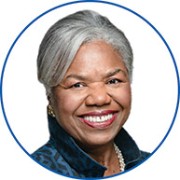
MICHELE J. HOOPER-Independent Director | ||
| EXPERIENCE The Directors’ Council (consulting firm) President and Chief Executive Officer (2013-present) Voyager Expanded Learning (provider of educational training services) President and Chief Executive Officer (1999-2000) Stadtlander Drug Company (pharmaceutical company) President and Chief Executive Officer (1998-1999) | OTHER PUBLIC COMPANY DIRECTORSHIPS UnitedHealth Group, Inc. (2007-present) FORMER PUBLIC COMPANY DIRECTORSHIPS HELD IN THE PAST FIVE YEARS None EDUCATION University of Chicago, Master of Business Administration University of Pennsylvania, BS, Economics |
Director Since: 2018 Age: 74 Committees: Audit (Chair) Executive Nominating/Governance | ||
Skills and Qualifications: | |
| Active or Former C-Suite Executive: As President and Chief Executive Officer of The Directors’ Council, Ms. Hooper has consulted with boards of major companies to enhance the effectiveness of their corporate governance. |
| Governance and Current or Former Public Company Board: Ms. Hooper has been a director of Target Corporation, Warner Music Group Corporation and PPG Industries, Inc. and she is currently a director at UnitedHealth Group, Inc. |
| Finance / Accounting / Capital Allocation: Through her extensive experience as a chief executive officer of various companies, Ms. Hooper has gained a broad base of knowledge regarding financial statements and financial strategy. |
| Global Operations: Ms. Hooper has experience as a board member of large companies with global operations. |
| Retail / Brand Management: During her time at Target Corporation and Warner Music Group Corporation, Ms. Hooper gained experience with consumer facing businesses. |
| Risk Management: Ms. Hooper has significant public company audit committee experience, with over 20 years of experience chairing audit committees at PPG Industries, Inc., AstraZeneca PLC, Warner Music Group Corporation and Target Corporation. Ms. Hooper’s corporate governance and accounting experience, along with her experience as a senior executive at a range of companies, provides the Board with a unique set of skills that enhances the Board’s leadership, risk management and oversight capabilities. |
| |
2026 Proxy Statement | 25 |
Item 1 - Election of Directors
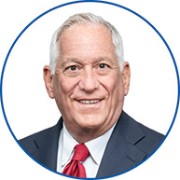
WALTER ISAACSON-Independent Director | ||
| EXPERIENCE Perella Weinberg Partners LP (financial services firm) Advisory Partner (2017-present) The Aspen Institute (international education and leadership institute) President and Chief Executive Officer (2003-2018) CNN (media company) Chairman and Chief Executive Officer (2001-2003) | OTHER PUBLIC COMPANY DIRECTORSHIPS None FORMER PUBLIC COMPANY DIRECTORSHIPS HELD IN THE PAST FIVE YEARS None EDUCATION University of Oxford, Pembroke College, BA, Philosophy, Politics and Economics Harvard University, AB, History and Literature |
Director Since: 2006 Age: 73 Committees: Public Responsibility (Chair) Executive Nominating/Governance | ||
Skills and Qualifications: | |
| Active or Former C-Suite Executive: Mr. Isaacson has extensive senior leadership experience from his time as the chairman of CNN, the editor of TIME magazine, the Chief Executive Officer of The Aspen Institute (where he is now a Distinguished Fellow), an Advisory Partner at Perella Weinberg Partners, the chair emeritus of Teach for America and the chairman of the Broadcasting Board of Governors. |
| Governance and Current or Former Public Company Board: Mr. Isaacson is the previous chairman of the board of directors of CNN. |
| Global Operations: Mr. Isaacson has experience as a former executive officer at large companies with a multinational presence. |
| |
26 |
|
Item 1 - Election of Directors
J. SCOTT KIRBY-Chief Executive Officer and Director | ||
| EXPERIENCE United Airlines Holdings, Inc. Chief Executive Officer (2020-present) President (2016-2020) American Airlines Group and American President (2013-2016) US Airways (airline company) President (2006-2013) | OTHER PUBLIC COMPANY DIRECTORSHIPS CVS Health Corporation (2023-present) FORMER PUBLIC COMPANY DIRECTORSHIPS HELD IN THE PAST FIVE YEARS None EDUCATION The George Washington University, MS, Operations Research United States Air Force Academy, BS, Computer Science and Operations Research |
Director Since: 2020 Age: 58 Committees: Executive Finance | ||

Skills and Qualifications: | |
| Active or Former C-Suite Executive: As our Chief Executive Officer, Mr. Kirby is responsible for the Company’s business and ongoing operations and management’s efforts to implement the strategic priorities identified by the Board. |
| Air / Travel / Transportation: Through his time at US Airways, American Airlines, Inc. and now with the Company, Mr. Kirby has extensive and valuable experience in the airline industry. |
| Governance and Current or Former Public Company Board: Mr. Kirby currently serves on the board of directors of CVS Health Corporation. |
| Finance / Accounting / Capital Allocation: Mr. Kirby brings to the Board valuable expertise based on his development and implementation of the Company’s strategic growth plans, including its financial strategies, in connection with his role as Chief Executive Officer and President of the Company. |
| Global Operations: Mr. Kirby has key expertise in the Company’s domestic and international operations. |
| Retail / Brand Management: Mr. Kirby brings valuable expertise to the Board from his experience with marketing, sales, alliances and network planning at the Company. |
| |
2026 Proxy Statement | 27 |
Item 1 - Election of Directors
EDWARD M. PHILIP-Chairman of the Board and Independent Director | ||
| EXPERIENCE Partners in Health (non-profit healthcare organization) Chief Operating Officer (2013-2017) Highland Consumer Fund (private equity company) Special Partner (2013-2017) Co-Founder and Managing General Partner (2006-2013) Decision Matrix Group (research and consulting firm) President and Chief Executive Officer (2004-2005) Lycos, Inc. (internet search company) President, Chief Operating Officer and Chief Financial Officer (1996-2000) The Walt Disney Company (entertainment company) Vice President of Finance (1991-1995) | OTHER PUBLIC COMPANY DIRECTORSHIPS BRP Inc. (2005-present) Strata Critical Medical, Inc. (2019-present) FORMER PUBLIC COMPANY DIRECTORSHIPS HELD IN THE PAST FIVE YEARS Hasbro, Inc. (2002-2023) EDUCATION Harvard Business School, Master of Business Administration Vanderbilt University, BS, Math and Economics |
Director Since: 2016 Age: 61 Committees: Executive (Chair) Nominating/ Audit | ||

Skills and Qualifications: | |
| Active or Former C-Suite Executive: Mr. Philip has served in multiple senior executive and director roles at large multinational companies. |
| Governance and Current or Former Public Company Board: Mr. Philip served on the board of directors of Hasbro, Inc. and currently serves on the board of directors of BRP Inc. and Strata Critical Medical, Inc. |
| Finance / Accounting / Capital Allocation: Mr. Philip brings to the Board valuable experience in financial strategies from his time as Chief Financial Officer at Lycos, Inc. and Vice President of Finance at The Walt Disney Company. |
| Global Operations: Mr. Philip has served as an executive officer at large companies with world-wide operations. |
| Retail / Brand Management: Through his time at Hasbro, Inc. and The Walt Disney Company, Mr. Philip gained expertise in brand management and consumer facing products. |
| Risk Management: Mr. Philip brings expertise in identifying, managing and mitigating key strategic and operational risks through his experience as President, Chief Operating Officer and Chief Financial Officer at Lycos, Inc. as well as through his experience as Vice President of Finance for The Walt Disney Company. |
| Technology / Cybersecurity: Mr. Philip brings to the Board nearly three decades of leadership across the technology sector, including in senior positions at Lycos, Inc. |
| |
28 |
|
Item 1 - Election of Directors
EDWARD L. SHAPIRO-Independent Director | ||
| EXPERIENCE The Shapiro Foundation (philanthropic foundation) Managing Trustee (2000-present) PAR Capital Management, Inc. (investment management firm) Managing Partner (1999-2016) Portfolio Manager (1997-2016) | OTHER PUBLIC COMPANY DIRECTORSHIPS None FORMER PUBLIC COMPANY DIRECTORSHIPS HELD IN THE PAST FIVE YEARS None EDUCATION University of California, Los Angeles, Master of Business Administration University of Pennsylvania, BS, Economics |
Director Since: 2016 Age: 61 Committees: Finance (Chair) Compensation Executive | ||

Skills and Qualifications: | |
| Air / Travel / Transportation: Mr. Shapiro has been an active investor in the airline industry for more than 25 years and previously served as a director on the boards of directors of Global Eagle Entertainment, Inc., which offers satellite-based in-flight connectivity solutions with embedded entertainment services, as well as US Airways prior to its merger with American Airlines. |
| Governance and Current or Former Public Company Board: Mr. Shapiro served on the board of directors of US Airways. |
| Finance / Accounting / Capital Allocation: Mr. Shapiro brings to the Board financial expertise and an investor’s perspective, having served in various capacities at PAR Capital Management, Inc. (“PAR Capital”) from 1997 to 2016. |
| Risk Management: Mr. Shapiro also brings valuable risk management expertise based on his experience in portfolio management at PAR Capital. |
| |
2026 Proxy Statement | 29 |
Item 1 - Election of Directors
LAYSHA WARD-Independent Director | ||
| EXPERIENCE Target Corporation (retail corporation) Strategic Advisor (2023-2024) Executive Vice President, Chief External Engagement Officer (2017-2023) Executive Vice President, Chief Corporate Social Responsibility Officer (2015-2017) President, Community Relations and Target Foundation (2008-2015) | OTHER PUBLIC COMPANY DIRECTORSHIPS None FORMER PUBLIC COMPANY DIRECTORSHIPS HELD IN THE PAST FIVE YEARS Denny’s Corporation (2010-2025) EDUCATION University of Chicago, MA, Social Services Administration Indiana University Bloomington, BS, Journalism |
Director Since: 2021 Age: 58 Committees: Audit Nominating/Governance Public Responsibility | ||

Skills and Qualifications: | |
| Active or Former C-Suite Executive: Ms. Ward served in various senior leadership positions at Target Corporation over 15 years. |
| Finance / Accounting / Capital Allocation: Ms. Ward has gained a broad base of knowledge regarding financial statements and financial strategy through her experience in various leadership roles at Target Corporation and her service on the board of directors of Denny’s Corporation. |
| Governance and Current or Former Public Company Board: Ms. Ward previously served on the board of directors of Denny’s Corporation. |
| Human Capital Management / Union Relations: Ms. Ward has a demonstrated ability to navigate rapid change, solve problems and collaborate with cross-sector stakeholders to achieve organizational and community goals and objectives through her experience as the Chief External Engagement Officer of Target Corporation. |
| Retail / Brand Management: Ms. Ward has extensive experience with brand management gained from her time in various positions at Target Corporation. |
| |
30 |
|
Item 1 - Election of Directors
JAMES M. WHITEHURST-Independent Director | ||
| EXPERIENCE Qualtrics (experience management software company) Executive Chairman (2025-present) Silver Lake (private equity firm) Managing Director (2024-present) Unity Software Inc. (software development company) Interim Chief Executive Officer (2023-2024) International Business Machines Corporation (technology company) Senior Advisor (2021-2022) President (2020-2021) Senior Vice President (2019-2020) Red Hat, Inc. (provider of open source enterprise IT products and services) President and Chief Executive Officer (2008-2019) Delta Air Lines, Inc. (airline company) Chief Operating Officer (2005-2007) Multiple roles (2002-2005), including Chief Network and Planning Officer (2004-2005) | OTHER PUBLIC COMPANY DIRECTORSHIPS Unity Software Inc. (2023-present) Amplitude, Inc. (2021-present) FORMER PUBLIC COMPANY DIRECTORSHIPS HELD IN THE PAST FIVE YEARS Software AG (2023-2024) EDUCATION Harvard Business School, Master of Business Administration Rice University, BS, Computer Science and Economics |
Director Since: 2016 Age: 58 Committees: Compensation (Chair) Executive Nominating/Governance | ||

Skills and Qualifications: | |
| Active or Former C-Suite Executive: Mr. Whitehurst brings executive management experience to the Board having served in various senior officer roles. |
| Air / Travel / Transportation: Mr. Whitehurst gained extensive experience with the airline industry through his time at Delta Air Lines, Inc. (“Delta”). |
| Governance and Current or Former Public Company Board: Mr. Whitehurst currently serves on the board of directors of Unity Software Inc. and Amplitude Inc. and previously served on the board of directors of Software AG and DigitalGlobe, Inc. |
| Finance / Accounting / Capital Allocation: Mr. Whitehurst brings to the Board significant experience in financial and capital strategy having served in various operational roles throughout his career. |
| Global Operations: Mr. Whitehurst spent six years at Delta, where he managed airline operations and drove significant international expansion during his tenure. |
| Technology / Cybersecurity: Mr. Whitehurst also has experience in data analytics and information technology from his time at Unity Software Inc., International Business Machines Corporation and Red Hat, Inc. |
| |
2026 Proxy Statement | 31 |
Item 1 - Election of Directors
Directors to be Elected by the Holders of Other Classes of Stock
The Holders of Common Stock Do Not Vote on the Election of the Following Directors
The ALPA is the sole holder of the Company’s Class Pilot MEC Junior Preferred Stock. The ALPA became the sole holder of the Company’s Class Pilot MEC Junior Preferred Stock pursuant to an agreement with United Airlines, Inc. whereby the ALPA has the right to elect one member to the Board at each annual meeting of stockholders.
The IAM is the sole holder of the Company’s Class IAM Junior Preferred Stock. The IAM became the sole holder of the Company’s Class IAM Junior Preferred Stock pursuant to an agreement with United Airlines, Inc. whereby the IAM has the right to elect one member to the Board at each annual meeting of stockholders.
Each of the ALPA director and the IAM director was previously elected by the holders of the applicable class of our preferred stock and has served continuously as a director since the date of his first election as noted herein.
The ALPA Director-Elected by the Holder of Class Pilot MEC Junior Preferred Stock
The ALPA has nominated and intends to reelect Captain Noyes as the ALPA director at the Annual Meeting. He became the ALPA director on January 15, 2025. Captain Noyes is a current employee of United Airlines, Inc., serving as the representative of the ALPA to the Board. Captain Noyes is not entitled to receive any cash or equity compensation from the Company as a director but is entitled to receive certain travel and charitable contribution benefits related to service as a director. For a description of such travel and charitable contribution benefits, see “How Directors Are Paid.”
CAPTAIN BRIAN NOYES-ALPA Director | ||
| EXPERIENCE ALPA Chair, ALPA United Airlines Master United Airlines, Inc. Pilot (1995-present) Flight Time Duty Time (ALPA-I) Chair and Member (2015-2024) Fatigue Management (IFALPA) Co-Chair and Member (2020-2024) | OTHER PUBLIC COMPANY DIRECTORSHIPS None FORMER PUBLIC COMPANY DIRECTORSHIPS HELD IN THE PAST FIVE YEARS None EDUCATION Embry Riddle Aeronautical University, BS, Aeronautical Science |
Director Since: 2025 Age: 56 Committees: Public Responsibility | ||

Skills and Qualifications: | |
| Air / Travel / Transportation: Captain Noyes serves as a pilot of Boeing 787 aircraft. |
| Human Capital Management / Union Relations: Captain Noyes serves as the Chairperson of the ALPA Master Executive Council, a position he has held since March 2025. |
| |
32 |
|
Item 1 - Election of Directors
The IAM Director-Elected by the Holder of Class IAM Junior Preferred Stock
The IAM has nominated and intends to reelect Richard Johnsen as the IAM director at the Annual Meeting. He became the IAM director on July 6, 2021. Mr. Johnsen is a current employee of United Airlines, Inc. on union leave of absence, serving as the representative of the IAM to the Board. Mr. Johnsen is not entitled to receive any cash or equity compensation from the Company as a director but is entitled to receive certain travel and charitable contribution benefits related to service as a director. For a description of such travel and charitable contribution benefits, see “How Directors Are Paid.”
RICHARD JOHNSEN-IAM Director | ||
| EXPERIENCE IAM General Vice President of the Air Transport Territory (2022-present) Chief of Staff to the International President (2021-2022) Special Assistant to the International President (2021-2021) IAM Representatives Association President (2017-2021) IAM Transportation Department Grand Lodge Special Representative (2001-2017) Assistant General Chairperson (district 141 M) (2000-2001) | OTHER PUBLIC COMPANY DIRECTORSHIPS None FORMER PUBLIC COMPANY DIRECTORSHIPS HELD IN THE PAST FIVE YEARS None EDUCATION University of Maryland, BS, Management Information Systems |
Director Since: 2021 Age: 57 Committees: Public Responsibility | ||

Skills and Qualifications: | |
| Air / Travel / Transportation: Mr. Johnsen has served in various positions within the IAM throughout his career. |
| Human Capital Management / Union Relations: Mr. Johnsen currently serves as General Vice President of the Air Transport Territory of IAM and has held various other leadership positions with the IAM. |
| |
2026 Proxy Statement | 33 |
Board and Corporate Governance Matters
Board Selection and Election
Majority Vote Standard and Mandatory Director Resignation
All directors are elected annually.
Our Amended and Restated Bylaws and our Corporate Governance Guidelines provide that a majority of the votes cast is required to elect directors in uncontested elections. An “uncontested election of directors” means an election of directors in which the number of nominees does not exceed the number of directors to be elected as of the date that is 10 days prior to the date of filing the definitive proxy statement (such as the election of directors at the Annual Meeting). This means that the number of votes cast for a nominee must exceed the number of votes cast against that person. Abstentions and “broker non-votes” will have no effect on the election of directors. The Corporate Governance Guidelines require any current director who does not receive a majority of votes cast to tender his or her resignation as a director to the Board promptly following the certification of the stockholder vote. The Nominating/Governance Committee, without participation by any director tendering their resignation, will consider the resignation offer and recommend to the Board whether to accept or reject the resignation offer or take another action. The Board, without participation by any director tendering their resignation, will act on the Nominating/Governance Committee’s recommendation within 120 days following certification of the stockholder vote and promptly disclose its decision by press release, filing of a Current Report on Form 8-K or another public means of disclosure deemed appropriate.
In a contested election, the required vote would be a plurality of votes cast.
If for any reason any nominee is unable or unwilling to serve as a director, your proxy authorizes the people named as proxies to vote for a replacement nominee if the Board names one. Alternatively, the Board may reduce the number of directors that serve on the Board to eliminate the vacancy.
Board and Corporate Governance Matters
Board Composition and Succession Planning
Non-Preferred Stock Director Nomination Process
| | 1 | Pursuant to its charter, the Nominating/Governance Committee is primarily responsible for maintaining a strong Board with a broad range of experience, skills and perspectives and is focused on Board succession planning on a continuous basis. Our Nominating/Governance Committee proactively evaluates our Board’s size and composition and succession planning to facilitate a smooth transition and maintain continuity of experience, attributes, balance of professional skills, independence requirements and variety of perspectives in the boardroom. This process involves identifying directors approaching retirement age or who may have indicated an intent to resign from the Board and allows the Board to find a replacement director with skills and expertise relevant for the Company in light of the Board composition at the time and business needs as well as plan for Committee leadership and membership. |
| | | |
| | 2 | In building a slate of director nominees for consideration by the Board, including the members of the Board eligible for reelection, the Nominating/Governance Committee’s assessment of potential directors includes a review of the experience (including in positions at the policy-making level and in areas relevant to the Company), balance of professional skills (including financial literacy), broad range of perspectives, proven integrity, independence, ability to work professionally with others, sound business judgment, tenure as director (in the case of reelection) and other characteristics as the Nominating/Governance Committee deems important. The Nominating/Governance Committee also considers the qualifications of individual directors and director candidates, taking into account current and expected future needs of the Company, the Board and the respective Committees of our Board, any gaps to fill due to Board turnover/succession planning, the assessment of the performance of incumbent directors through the Board evaluation process, the impact of any change in the principal occupations of incumbent directors, number of directorships and management team priorities. The Nominating/Governance Committee uses a variety of sources, including Board members, members of management and stockholder recommendations, to identify potential new non-preferred stock candidates. Potential non-preferred stock director candidates are identified based on a candidate profile that includes the relevant skills and experiences being sought at that time as well as the Board membership criteria described in the above paragraph. Board candidates undergo a rigorous screening process, including initial interviews by our Chairman, CEO and President, a background check, a review of references and an assessment of whether the candidate meets the criteria that the Board seeks in all of its directors and how that candidate’s skills and experience would positively contribute to the Board. From time to time, when needed, the Nominating/Governance Committee may retain a third-party search firm to identify potential director candidates with the skills, experience and qualifications being sought in potential candidates. |
| | | |
| | 3 | The Nominating/Governance Committee recommends to the Board a slate of candidates for election at each annual meeting of stockholders. Our Board may also elect directors on the recommendation of our Nominating/Governance Committee throughout the year, following the same process, when determined to be in the best interests of our Company and stockholders. In that case, such directors would stand for reelection by stockholders the following year. Following election, all new independent directors undergo a comprehensive onboarding process. |



Board and Corporate Governance Matters
Stockholder Nominations for Directors
In addition, the Nominating/Governance Committee considers candidates for director suggested by stockholders. The Nominating/Governance Committee considers all potential candidates in the same manner and by the same standards regardless of the source of the recommendation and acts in its discretion in making recommendations to the full Board. Candidates for director recommended by stockholders must be able to satisfy the independence standards established by the Board as set forth in the applicable Nasdaq Listing Rules, any other applicable rules or regulations and the Company’s Corporate Governance Guidelines as outlined below under “Director Independence.”
Holders of shares of Common Stock may submit director candidates for consideration (other than those elected by holders of shares of preferred stock of the Company) by writing to the Chairman of the Nominating/Governance Committee, United Airlines Holdings, Inc., c/o the Corporate Secretary’s Office, 233 S. Wacker Drive, Chicago, Illinois 60606. Stockholders must provide the recommended candidate’s name, biographical data, qualifications and other information required by Section 2.10 of the Amended and Restated Bylaws with respect to director nominations by stockholders.
In addition to recommending director candidates to the Nominating/Governance Committee, stockholders may also, pursuant to procedures established in the Amended and Restated Bylaws, directly nominate one or more director candidates to stand for election at an annual or special meeting of stockholders. For a regularly scheduled annual meeting of stockholders, a stockholder wishing to make such a nomination must deliver written notice of the proposed nomination to the Secretary of the Company not later than the close of business on the 90th day or earlier than the 120th day prior to the one-year anniversary of the preceding year’s annual meeting of stockholders. Close of business means 5:00 p.m. Eastern Time on any calendar day, whether or not the day is a business day. Our stockholders who hold 25% ownership in Common Stock have the right to request that the Company call a special meeting. For a special meeting of stockholders, a stockholder wishing to make such a nomination must deliver written notice of the nomination to the Secretary of the Company not earlier than 120 days prior to the date of such special meeting and not later than the close of business on the later of: (x) 90 days prior to the date of such special meeting; and (y) 10 days following the day on which public announcement is first made of the date of such special meeting. In either case, a notice of nomination submitted by a stockholder must include information concerning the nominating stockholder and the stockholder’s nominee(s) as required by the Amended and Restated Bylaws.
Proxy Access Stockholder Right
As part of our ongoing commitment to strong corporate governance practices, we adopted a “proxy access” bylaw for stockholders in 2016. In accordance with the Amended and Restated Bylaws, under specified circumstances, a stockholder or group of stockholders may submit director nominees to the Board to be included in the Company’s proxy materials for an annual meeting of stockholders, known as “proxy access.” Stockholders who intend to submit director nominees for inclusion in the Company’s proxy materials for the next year’s annual meeting of stockholders must comply with the requirements of proxy access as set forth in the Amended and Restated Bylaws. These proxy access provisions of our Amended and Restated Bylaws provide, among other things, the following:
3% SHARES FOR 3 YEARS | 2 NOMINEES OR 20% OF THE NUMBER OF DIRECTORS | ||||
| Any stockholder or group of up to 20 stockholders maintaining continuous qualifying ownership of at least 3% of our outstanding shares of Common Stock for at least 3 years | | May nominate for inclusion in our proxy materials, director nominees constituting the greater of 2 nominees or 20% (rounded down) of the number of directors in our proxy materials for the annual meeting | | Nominating stockholder(s) and the nominee(s) must also meet the eligibility requirements described in our Amended and Restated Bylaws |


Board and Corporate Governance Matters
For a regularly scheduled annual meeting, the group of stockholders who wish to submit director nominees pursuant to our proxy access bylaw provision must deliver the required materials to the Company not less than 120 days nor more than 150 days prior to the anniversary of the date that the Company first mailed its proxy materials for the annual meeting of the previous year.
Preferred Stock Director Nomination Process
Pursuant to Part II, Section 8.1 of the Amended and Restated Certificate of Incorporation, the ALPA, the sole holder of the Company’s Class Pilot MEC Junior Preferred Stock, has the right to elect one member to the Board at each annual meeting of stockholders, remove such director with or without cause and fill any vacancies in such directorship. The ALPA became the sole holder of the Company’s Class Pilot MEC Junior Preferred Stock pursuant to an agreement with United Airlines, Inc.
Pursuant to Part III, Section 8.1 of the Amended and Restated Certificate of Incorporation, the IAM, the sole holder of the Company’s Class IAM Junior Preferred Stock, has the right to elect one member to the Board at each annual meeting of stockholders, remove such director with or without cause and fill any vacancies in such directorship. The IAM became the sole holder of the Company’s Class IAM Junior Preferred Stock pursuant to an agreement with United Airlines, Inc.
Director Retirement Policy and Term Limits
Under our Corporate Governance Guidelines, no candidate is eligible for election or reelection as a director to the Board if he or she would be 75 years of age or older at the time of election. From time to time there may be unusual circumstances where exceptions need to be made to this general rule to retain needed continuity and expertise, or for other business reasons, and the Board, upon recommendation by the Nominating/Governance Committee, may approve exceptions to this policy.
None of our director nominees will be 75 or older at the time of the Annual Meeting.
Also as set forth in the Corporate Governance Guidelines, the Board does not believe it should establish director term limits, which have the disadvantage of limiting the contribution of directors who have been able to develop, over a period of time, increasing insight into and knowledge of the Company and its operations and, therefore, provide an increasing contribution to the Board as a whole. However, the Nominating/Governance Committee considers the tenure of directors as one of several factors in re-nomination decisions as well as its general Board refreshment practices.
| Our Tenure & Age Policies | | |||||
| | | | ||||
| | | | ||||
| NO TERM LIMITS | | | RETIREMENT AGE: 75 | | ||
Director Outside Board Service
Our Corporate Governance Guidelines and the Audit Committee charter provide the following public company board service guidelines:
● No Audit Committee member may serve on the audit committee of more than three public companies (including our Board). | ● The Chairman and any other director who serves as chairman or lead independent director of another public company are not permitted to serve on boards of more than four public companies (including our Board). |
● Our Chief Executive Officer and any other director who is an active chief executive officer or the equivalent of another public company are not permitted to serve on boards of more than three public companies (including our Board). | ● None of our directors is permitted to serve on boards of more than five public companies (including our Board). |
| |
2026 Proxy Statement | 37 |
Board and Corporate Governance Matters
All the director nominees are compliant with our public company board service guidelines.
In addition, our Corporate Governance Guidelines provide that directors are required to advise the Chairman and the chair of the Nominating/Governance Committee in advance of accepting an invitation to serve on another public company board or an appointment to serve on an audit committee or a compensation committee of another public company board. Furthermore, in assessing the director nominees’ qualifications to serve on the Board, the Nominating/Governance Committee reviews the number of other boards on which each director nominee serves and the other business and professional commitments of each director nominee in accordance with our Corporate Governance Guidelines.
Director Independence
Process for Determining Independence
Our Corporate Governance Guidelines require that at least a majority of the Board members be independent from management under the applicable Nasdaq Listing Rules, any other applicable laws and regulations and our Corporate Governance Guidelines. The Board has adopted categorical standards reflecting the bright-line independence standards under the applicable Nasdaq Listing Rules to assist in determining each director’s independence. These standards are set forth in Annex A to our Corporate Governance Guidelines, which is available on the Company’s investor relations website at ir.united.com.
Independence Determination
The Board, through the Nominating/Governance Committee, undertakes an annual review of director independence in accordance with our Corporate Governance Guidelines. The Nominating/Governance Committee relies on information derived from Company records, a detailed questionnaire that provides information about relationships that might affect the determination of independence completed annually by each director and other inquiries. A summary of the answers to annual questionnaires completed by each of the directors and a report of transactions with director affiliated entities (if any) are also made available to the Nominating/Governance Committee.
On the basis of this review of all of the director nominees, the Nominating/Governance Committee delivered a report to the full Board and the Board affirmatively determined that all nominees for non-employee director up for election by the holders of Common Stock (“non-employee directors”) qualify as “independent” under the applicable independence tests and standards and that all members of each of our Audit Committee, Compensation Committee and Nominating/Governance Committee are independent and satisfy the relevant SEC and Nasdaq independence requirements for such committees. The Board has also determined that Messrs. Kirby and Johnsen and Captain Noyes do not qualify as “independent” under the applicable tests and standards. Mr. Kirby is not independent because he is an employee of the Company. Captain Noyes is not independent because he is an employee of United Airlines, Inc. and affiliated with the ALPA, a union that represents certain of the Company’s employees. Mr. Johnsen is not independent because he is an employee of United Airlines, Inc. and affiliated with the IAM, a union that represents certain of the Company’s employees.
| |
38 |
|
Board and Corporate Governance Matters
BOARD AND COMMITTEE EVALUATION PROCESS
The Board conducts an annual self-evaluation to determine whether the Board and its Committees are functioning effectively and meeting their objectives and goals. The Nominating/Governance Committee develops and oversees the overall evaluation framework. The annual self-evaluation has periodically been conducted by a third-party provider, as appropriate.
| | 1 | The Nominating/Governance Committee reviews the format and substance of the Board evaluation and director peer review process as necessary to help ensure that the solicited feedback remains relevant and appropriate. The charter of each Committee also requires an annual performance evaluation, which traditionally is overseen by the chair of each Committee. Directors complete an electronic questionnaire responding to questions about the Board and Committee structure and responsibilities, Board culture and dynamics, oversight of strategy and risk, meeting agendas, adequacy of information to the Board, Board and Committee composition and refreshment, Committee effectiveness, potential Board education topics and other Board-related topics. The questionnaire also allows directors to provide written feedback and make anonymous comments. Committee members also complete an electronic questionnaire, which includes questions approved by each Committee chair with topics covering each Committee’s responsibilities and effectiveness. |
| | | |
| | 2 | The Chairman of the Board speaks with each other director individually to obtain candid feedback with respect to Board, Committee and individual director performance, including to: ● confirm the director’s continued desire to serve on the Board and discuss Committee assignments; ● solicit the director’s suggestions on Board and Committee effectiveness and practices; ● solicit additional feedback on Board composition and priority agenda topics; and ● address any other issues the director wishes to discuss. |
| | | |
| | 3 | The results from the questionnaires are anonymously compiled, reviewed by the Nominating/Governance Committee and presented by the Chairman of the Board to the full Board for discussion. Committee chairs also report to their Committees the results of their respective Committee’s evaluation and any follow-up actions. The Nominating/Governance Committee uses the results of the annual assessment to make enhancements and continue to improve board effectiveness as part of its annual governance review. Any feedback for management is provided by the Chairman of the Board. The Chairman of the Board also discusses with the full Board the anonymized feedback from the one-on-one director discussions. Any notable results from the individual director self-assessments are shared with the relevant directors. |
| |
2026 Proxy Statement | 39 |
Board and Corporate Governance Matters
Board Governance
Governance Framework
The Board has developed a corporate governance framework designed to ensure the Board has the authority and practices in place to review and evaluate the Company’s business operations and to make decisions independent of management. The Board’s goal is to align the interests of management and stockholders and comply with or exceed the requirements of the applicable Nasdaq Listing Rules and any other applicable rules or regulations. This framework establishes the practices that the Board follows with respect to, among other things, Board composition and member selection, Board leadership structure, Board meetings and involvement of senior management, director compensation, the Chief Executive Officer performance evaluation, management succession planning and Board Committees. The Board is committed to seeking opportunities for improvements to this framework on an ongoing basis.
We are committed to high standards of corporate governance and to conducting our business ethically and with integrity and professionalism. The Board has responsibility for establishing broad corporate policies and for overseeing the Company’s business and strategy on behalf of the Company’s stockholders and other stakeholders pursuant to the Delaware General Corporation Law and our Amended and Restated Bylaws. To this end, the Board has adopted Corporate Governance Guidelines that, together with our Amended and Restated Certificate of Incorporation, Amended and Restated Bylaws and Committee charters, form the governance framework for the Board and its Committees. The Nominating/Governance Committee regularly reviews (at least annually) the Corporate Governance Guidelines and other governing documents and policies in light of changing regulatory requirements, evolving best practices and feedback from our stockholders and other stakeholders and recommends appropriate changes to the Board for consideration and approval. The Corporate Governance Guidelines may be viewed on the Company’s investor relations website at ir.united.com. Each Committee of the Board is governed by a charter adopted by the Board and any potential changes to the Committees’ charters are also considered at least once a year. In addition, the Compensation Committee regularly reviews compensation issues and recommends adoption of policies and procedures that strengthen our compensation practices. The section entitled “Compensation Discussion and Analysis” beginning on page 76 discusses many of these policies and procedures.
| |
40 |
|
Board and Corporate Governance Matters
Board Oversight of Key Risks
The Board takes an active role in overseeing corporate and business strategy and seeks to ensure the long-term interests of United and our stockholders are being served. The Board believes that evaluating the executive team’s management of the risks confronting United is an important area of oversight.
| | | ||
BOARD OF DIRECTORS Our Board oversees corporate strategy, executive succession planning and other matters reserved to the Board. Our Board reviews and discusses with management significant risks affecting United, including directly overseeing safety matters and other matters escalated by its Committees from within their respective areas of direct oversight. | ||||
| | |||
Audit Committee Oversees financial and audit matters, including financial reporting, internal audit, ethics, legal and regulatory compliance, cybersecurity, artificial intelligence and internal controls and has primary responsibility for assisting in Board oversight of the enterprise risk management program. | Compensation Committee Oversees the design and administration of executive compensation programs and policies, including equity incentive plans, and has primary responsibility for assisting the Board with its oversight of executive compensation. | Executive Committee Oversees and monitors trends, strategies and operational and financial matters that affect United and has primary responsibility for assisting the Board with its oversight of human resources matters and labor relations. | ||
Finance Committee Oversees financial and strategic planning and has primary responsibility for assisting the Board with oversight of matters relating to our treasury and capital structure. | Nominating/Governance Committee Oversees Board structure, governance, independence and director compensation and has primary responsibility for assisting the Board with its oversight of Board succession planning and management succession planning. | Public Responsibility Committee Oversees the design and administration of our safety and health, community impact, environmental sustainability and climate-related, people impact, responsible sourcing and government affairs initiatives, risks and opportunities, including strategic goals and objectives. | ||
| ||||
MANAGEMENT Led by our CEO and executive team, implements and supervises day-to-day risk management processes and reports to the Board and its Committees on significant matters. | ||||
Internal Audit Identifies and helps mitigate risk and improves internal controls. The internal audit function is directly overseen by the Audit Committee and operates pursuant to a charter, which is reviewed and approved annually by the Audit Committee. | Enterprise Risk Management Program Designed to identify, assess and monitor our business risks, including financial, operational, compliance, safety and reputational risks. | |||
| |
2026 Proxy Statement | 41 |
Board and Corporate Governance Matters
| | |
| Oversight of SAFETY | At United, safety is first in everything that the Company does and is our first service standard of our Core4 standards (we are safe, then caring, dependable and efficient). Our Board provides significant oversight of our safety processes and procedures, which includes a review of management’s development, implementation and maintenance of the Company’s safety management system, objectives, culture, training and reporting. Board meeting sessions typically start with a presentation on current and potential future safety considerations affecting the Company—both in the air and on the ground. The topics may include discussions regarding current and proposed safety procedures, programs and goals; reports and matters related to our and the industry’s safety performance (e.g., our customer and employee injuries (including turbulence-related, heat-related and ergonomic injuries) as well as our aircraft damages); our safety-related regulatory compliance requirements; and our efforts to collaborate with global regulators, airline operators and other industry stakeholders to improve airline safety. |
| | |
| Oversight of Business Strategy | Overseeing management’s formulation, implementation and ongoing execution of the Company’s strategy is one of our Board’s primary responsibilities. The Board believes that a fundamental understanding of the Company’s strategy assists it in fulfilling its oversight role on behalf of the Company’s stockholders and other stakeholders. As part of its oversight role, the Board regularly reviews the Company’s strategy, controls and procedures, as well as issues and opportunities facing the Company in light of trends and developments in the aviation industry and broader business environment. The Board’s Committees oversee elements of our strategy associated with their respective areas of responsibility. Throughout the year, the Board provides guidance to management on strategy and helps to refine operating plans to implement the strategy. Every regularly-scheduled meeting of the Board includes updates from Company management regarding the Company’s strategy and the Board holds an annual multi-day strategy session with the Company’s senior leadership team and other members of management who present our Board with important information about the Company’s short-term and long-term strategic plans, including their development, execution, ongoing implementation, performance relative to goals under the strategic plans and the principal issues that the Company will face in the future. Engagement of the Board on matters of strategic importance continues in between meetings, including through updates to the Board. |
| | |
| Oversight of United Next Plan | The Board has been actively involved in the development of the Company’s United Next plan since its inception. United Next aims to increase customer choice and win brand-loyal customers by offering a diversity of products, ranging from Basic Economy to United Polaris, and growing our leading global network, which the Company believes will lead to diverse revenue streams for the Company. The Board has centered its focus on drawing on its collective leadership experiences and areas of expertise to provide guidance on the Company’s execution of its United Next plan, including increasing our employee headcount; introducing hundreds of new and retrofitted aircraft featuring United’s signature interior to the United fleet; expanding our global network; inaugurating service to new destinations; launching Kinective MediaSM; bringing Starlink’s Wi-Fi service to our United Express aircraft and beginning installation on our mainline aircraft; and making significant technology changes that empower the Company’s employees and improve the customer experience. Management is focused on the various components of the United Next strategy, utilizing the resources of all operational groups to ensure the successful execution of our United Next strategy. The Board receives updates and engages in dialogue with the members of our executive management team on various aspects of the United Next plan at each Board meeting. |
| | |
| oversight of Financial and Competitive Performance | Throughout the year, the Board reviews the Company’s financial and competitive performance and financial condition, including overseeing management’s execution against the Company’s capital, liquidity, strategic and financial operating plans. The Board, through the Finance Committee, dedicates significant focus to reviewing our capital allocation strategy. |
| | |
| |
42 |
|
Board and Corporate Governance Matters
| | |
| Oversight of CORPORATE CITIZENSHIP Approach | Our governance framework includes direct oversight by our Board and our various Committees of our corporate citizenship goals, targets, strategies, initiatives, risks, assessments, disclosures and external engagement and related matters. The Public Responsibility Committee, the Audit Committee, the Nominating/Governance Committee, the Executive Committee and the Compensation Committee each have key responsibilities relating to corporate citizenship topics and they align and collaborate to enable achievement of our corporate citizenship goals. Management is responsible for reviewing, refining and implementing long-term corporate citizenship strategies and periodically updating the full Board and its Committees, as applicable, on issues related to the implementation of our corporate citizenship strategies. |
| | |
| | |
| oversight of cybersecurity risks | The Company considers management of cybersecurity and digital risk as essential for enabling its success. United has developed a risk-based cybersecurity and digital risk management strategy. This program is informed by industry-recognized frameworks and standards, including those published by the National Institute of Standards and Technology (“NIST”), and is tailored to the Company’s risk profile and regulatory environment. The Company is also subject to extensive cybersecurity regulation, including but not limited to those regulations overseen by the Federal Aviation Administration, Transportation Security Administration and Department of Transportation. This risk-based framework is also integrated into the Company’s Enterprise Risk Management ("ERM") process that is subject to oversight by the Audit Committee. Cybersecurity risks are one of the key risks regularly evaluated, assessed and monitored as part of the Company's overall ERM process. The Company’s Cybersecurity and Digital Risk (“CDR”) organization is responsible for establishing and advancing this program, including capabilities to prevent, detect, respond to and recover from cybersecurity threats. The Company incorporates regular information security training as part of its employee education and development program. The Company also participates in various information-sharing organizations to timely share and receive threat information, thereby improving the collective defense of the aviation, retail and hospitality and other critical infrastructure sectors. The Company regularly seeks opportunities to improve its capabilities to protect the Company and its customers, including through cybersecurity trainings and skill development programs for its CDR organization members. United’s Chief Information Security Officer (“CISO”) oversees the CDR organization and the Company’s approach to prevent, detect, mitigate and remediate cybersecurity and digital risk. The CISO works in close coordination with senior leaders across Digital Technology, Legal, Audit, Human Resources, Safety, Corporate Risk and other functions. The Audit Committee provides oversight of the Company’s assessment and risk management policies and strategies with respect to significant business risks, including cybersecurity and digital risk. Our Audit Committee is provided with regular quarterly updates regarding the Company’s cybersecurity and digital risk program, including information security, data protection and operational resilience. This includes, on a regular basis, the Audit Committee receiving reports from the Company's CISO as well as its Chief Information Officer, Chief Risk Officer, Chief Legal Officer and Chief Compliance Officer regarding the Company’s processes for assessing, identifying and managing cybersecurity risks, including when applicable, notable cybersecurity threats or incidents impacting the aviation sector or the Company; results of independent third-party assessments of the Company's cybersecurity program; key metrics, capabilities, resourcing and strategy regarding the Company's cybersecurity program; and updates related to cybersecurity regulatory developments. The Chair of the Audit Committee regularly reports its activities-including those related to cybersecurity risks-to the Board and, as necessary, recommends actions to the Board that the Audit Committee deems appropriate. We periodically engage an independent external auditor to assess our cybersecurity program against the NIST Cybersecurity Framework and we report the results of such assessment to the Audit Committee. Further, certain aspects of our cybersecurity program are externally reviewed by applicable overseeing authorities, including through our annual obtainment of a Payment Card Industry (PCI) Report on Compliance, our attestation of our cybersecurity program to the Department of Defense, the review of our program through the International Air Transport Association Operational Safety Audit, and, beginning in 2025, the Transportation Security Administration’s Cybersecurity Evaluation. For more information, please see Item 1C, “Cybersecurity” in the Company’s Annual Report on Form 10-K for the fiscal year ended December 31, 2025. |
| | |
| |
2026 Proxy Statement | 43 |
Board and Corporate Governance Matters
| | |
| OVERSIGHT OF ARTIFICIAL INTELLIGENCE | The Audit Committee provides oversight with respect to the Company’s various business risk exposures, including, but not limited to, those relating to artificial intelligence. Further, the Audit Committee periodically reviews with management the steps management has taken to monitor and manage artificial intelligence and information security risk exposure. The Company’s Chief Information Officer and the CISO provide regular updates to the Board on the Company’s use of artificial intelligence. These updates include the Company’s digital technology strategy, governance framework, risk profile and the measures in place to manage and mitigate associated risks. The Company also has established the Responsible AI Executive Board, comprised of senior leaders across key business and corporate functions. This group meets regularly to define and oversee artificial intelligence governance practices, guide responsible use and mitigate risks associated with the deployment of artificial intelligence across our operations, in alignment with the Company’s enterprise risk management and compliance frameworks. |
| | |
| INTERNAL AUDIT | The Company’s internal audit function identifies and helps mitigate risk and improves internal controls. The internal audit function is directly overseen by the Audit Committee and operates pursuant to a charter, which is reviewed and approved annually by the Audit Committee. The Audit Committee is responsible for reviewing and approving management’s appointment, replacement, reassignment or dismissal of the Chief Risk Officer (or any other individual performing the function of the senior internal audit executive (the “Chief Audit Executive" or the "CAE”)). The Audit Committee reviews the summaries of the internal audit reports to management and management’s responses and discussion with the CAE, management and the independent auditors, as appropriate. The Audit Committee further reviews the significant internal audit findings and management’s responses to such findings. The Audit Committee reviews with independent auditors, the CAE and management the extent to which changes or improvements in financial or accounting practices and internal controls that were previously reviewed and/or approved by the Audit Committee have been implemented. The Audit Committee also periodically meets separately with management, the independent auditors and the CAE. |
| | |
| |
44 |
|
Board and Corporate Governance Matters
MANAGEMENT SUCCESSION PLANNING AND TALENT DEVELOPMENT
One of the primary responsibilities of the Board is to ensure that United has a high-performing executive leadership team. To meet that goal, especially in light of the critical importance of executive leadership to United’s business strategy and the Company’s overall success, we have an annual succession planning process that is enterprise-wide and designed to help ensure that an appropriate succession plan is in place for our CEO and other members of senior management. Our talent management and succession planning process is designed to help ensure continuity of leadership, provide for a talent-rich leadership organization that can drive the Company’s strategic objectives and prepare us for expected transitions (such as those arising from promotions, retirements and other role changes) as well as unexpected departures.
The Board maintains an effective planning process to select successors to the CEO and other members of executive management. Our Board’s involvement in our annual succession planning process is outlined in the Company’s Corporate Governance Guidelines. Our Board believes that the directors and the CEO should collaborate on succession planning and that the Board should be involved in the critical aspects of the management succession planning process. The Board has assigned to the Nominating/Governance Committee and the Executive Committee the responsibility to oversee the Company’s talent management and succession planning process, including long-term succession plans for the CEO and other executive officers as well as oversight of the Company’s readiness for turnover in key positions and ability to act swiftly in response to unplanned turnover.
The CEO, our Executive Vice President, Human Resources and Labor Relations and other executives report annually to the Nominating/Governance Committee on succession planning (including plans in the event of an emergency) and management development and provide the Nominating/Governance Committee with an assessment of persons considered potential successors to certain senior management positions. The Board may review development and succession planning more frequently as it deems necessary or desirable. The Executive Committee also is regularly updated on key talent indicators for the overall workforce.
More broadly, our talent review process for senior management roles involves the Board engaging with the Company’s leadership team on matters of talent and culture, including the development of the Company’s talent pipeline and review of talent for business and function groups across the Company. As a part of this process, potential successors engage with Board members through formal presentations and during informal events.
Political Contributions and Lobbying Expenditure Oversight and Disclosure TRANSPARENCY
United works with government officials at all levels (international, federal, state and local), as well as our extensive network of partners and stakeholders to advocate for policies and a regulatory environment to enable our industry to safely and sustainably grow and contribute to the economy. We participate in the political and policy process via regular engagement with government officials and policymakers, by making contributions to candidates and organizations and by encouraging political engagement by our employees in order to advocate for the long-term interests of the Company. We advocate for policies that modernize infrastructure and improve safety, rationalize our tax burden, reduce unnecessary regulation, enhance the customer experience, mitigate fuel cost and enhance global competitiveness in the airline industry, among other items. More information and additional disclosures referenced below can be found in our Political and Lobbying Policy, available at https://corporateimpact.united.com.
Corporate Political Contributions
| ● | The Company may make contributions to state or local candidate campaigns, parties, political committees and ballot measures that enhance the interests of the Company’s stakeholders, to the extent permitted by applicable law, and subject to the approval of the board of directors (“UAPAC Board of Directors”) of the United Airlines, Inc. Political Action Committee (“UAPAC”). |
| ● | We file publicly available reports that disclose our political contributions with state and local agencies as required by state and local law. We provide information regarding our corporate political contributions on our website that is updated semi-annually. |
| |
2026 Proxy Statement | 45 |
Board and Corporate Governance Matters
Lobbying Expenditures
| ● | Our lobbying activities are governed by policies and practices designed to facilitate compliance with laws and regulations, including those relating to the lobbying of government officials, the duty to track and report lobbying activities and the obligation to treat lobbying costs and expenses as nondeductible for tax purposes. |
| ● | The Company fully supports appropriate disclosure of its lobbying criteria, activities and expenditures. Our lobbying disclosures are made on a regular basis as required by federal, state, or local jurisdictions. |
| ● | We also provide annual disclosure of the member organizations where our dues and other contributions used for non-deductible activity such as lobbying activities exceed $25,000, the amount of such dues attributable to lobbying activity and the Company’s total spending on lobbying as defined in the Internal Revenue Code. Additionally, we provide annual disclosure of any 501(c)(4) organization to which we paid more than $25,000 and the total amount of such payments. This disclosure is available at https://corporateimpact.united.com. |
| ● | In addition, we published our “Climate Lobbying Report: Aligning Climate Leadership with Advocacy” in 2022, which is available on our investor relations website at ir.united.com. This report describes how our lobbying practices are aligned with our corporate climate strategy. |
Oversight
| ● | The Board has delegated oversight responsibility of our political contributions to its Public Responsibility Committee. Our Government Affairs and Global Public Policy organization makes recommendations on political contributions to the UAPAC Board of Directors, which in turn reviews and approves all UAPAC and corporate political contributions. Our Executive Vice President, Government Affairs and Global Public Policy or her representative provides the Public Responsibility Committee an annual report on political contributions of the Company and the UAPAC for the prior year. |
Our policy advocacy and lobbying activities are determined by senior management with oversight by the Board, which has delegated this oversight responsibility to its Public Responsibility Committee. Our Government Affairs and Global Public Policy organization oversees and executes our policy advocacy, lobbying expenditures and related activities. Our Executive Vice President, Government Affairs and Global Public Policy or her representative also reports regularly to the Board on our policy advocacy, lobbying expenditures and related activities, periodically reviewing with the Public Responsibility Committee the strategic priorities for the Company’s lobbying activity.
Board Meetings and Director Attendance
Each quarter, our Board holds a series of two-day meetings of the Board and its Committees to review significant developments affecting the Company and to act on matters requiring Board approval. Committee meetings occur the first and second day before the full Board meeting. In addition to the quarterly meetings, there are other regularly scheduled Committee meetings and several special Board and Committee meetings each year. Members of senior management regularly attend Board meetings to report on and discuss their areas of responsibility. Directors are expected to attend all Board meetings and meetings of the Committees on which they serve. Our Board met nine times in 2025 and our Committees met the number of times shown beginning on page 51.
Each incumbent director nominee attended at least 75% of the aggregate number of (i) Board meetings held during their tenure as directors during 2025 and (ii) meetings of any Committees held during their tenure as members of such Committees during 2025.
In addition, absent extenuating circumstances, directors are required to attend our annual meetings of stockholders. All of the directors who stood for election in 2025 attended our 2025 annual meeting of stockholders.
| |
46 |
|
Board and Corporate Governance Matters
Executive Sessions of independent Directors
Our independent directors meet separately in executive session outside the presence of any management director at each Board meeting. Our Corporate Governance Guidelines provide that the Chairman preside over independent director executive sessions. When deemed appropriate, the Chairman invites the Chief Executive Officer and the President to join a portion of the executive session to receive feedback from the Board and to provide direct insight on relevant topics. Executive sessions are also scheduled for each regular quarterly meeting of each Committee.
Director Orientation and Continuing Education
Upon joining our Board, in accordance with our Corporate Governance Guidelines, all new non-employee directors participate in the Company’s orientation program with senior management from all areas of the Company who provide the new directors with a thorough understanding of their fiduciary duties as well as an overview of the Company’s business, performance, corporate governance and key policies and practices. Directors typically attend site visits to one or more of our locations. The Nominating/Governance Committee develops and oversees this orientation program with the assistance of our management.
On an ongoing basis, senior management and experts outside of the Company are periodically invited to attend portions of Board and Committee meetings to provide presentations on a variety of topics related to the aviation industry and general industry trends, governance, regulatory, legal and financial matters.
| |
2026 Proxy Statement | 47 |
Board and Corporate Governance Matters
Governance Policies and Principles
Certain Relationships and Related Transactions
Policy Statement Regarding Related Party Transactions
The Board recognizes that transactions involving the Company and related parties present a heightened risk of conflicts of interest. To enable the Company to act in the best interests of its stockholders, it has a written Policy Statement Regarding Related Party Transactions (the “Related Party Transaction Policy”).
Except for a limited set of transactions previously reviewed and approved, a Related Party Transaction (as defined below) must be reviewed and approved or ratified by the Audit Committee or the Chair of the Audit Committee if approval by the entire committee is impractical. In reviewing a proposed transaction, the Audit Committee or the Chair of the Audit Committee must consider all the material information available to them regarding the proposed transaction or Related Party that would be material to investors in light of the circumstances of the transaction, which includes whether the transaction is fair to the Company and is not inconsistent with the best interests of the Company and its stockholders.
If the Company enters into a transaction that (i) the Company was not aware constituted a Related Party Transaction at the time it was entered into but which it subsequently determines is a Related Party Transaction or (ii) did not constitute a Related Party Transaction at the time such transaction was entered into but thereafter becomes a Related Party Transaction, then such transaction shall be presented for ratification by the Audit Committee or the Chair of the Audit Committee.
A “Related Party Transaction” generally is a transaction in which:
| (a) | the aggregate amount involved exceeds or is expected to exceed $120,000; |
| (b) | a Related Party had, has or will have a direct or indirect material interest (other than solely as a result of being a director, limited partner or less than 10% beneficial owner (together with all other Related Parties) of another entity that is party to the transaction); and |
| (c) | the Company is a participant. |
A “Related Party” is a director, director nominee or executive officer of the Company, beneficial owner of more than 5% of the Company’s voting securities or such person’s immediate family member.
Related Party Transactions Since January 1, 2025
John Gebo, Senior Vice President, Treasury, Fleet & Fuel of United Airlines, Inc., is the spouse of Kate Gebo, Executive Vice President, Human Resources and Labor Relations, of the Company. For 2025, Mr. Gebo received compensation, including base salary, incentive compensation awards and other customary officer and employee benefits that were determined in the ordinary course consistent with the process used for determining compensation levels for other officers and employees of United. The 2025 cash compensation and equity award values for Mr. Gebo were approximately $2,019,000. Mr. Gebo and Ms. Gebo do not report to, or determine the compensation of, each other.
| |
48 |
|
Board and Corporate Governance Matters
Conflict and Code of Ethics and Business Conduct
The Related Party Transaction Policy operates in conjunction with other aspects of the Company’s compliance program, including the requirement in the Corporate Governance Guidelines that directors disclose any potential conflict of interest to the Chairman before any decision is made related to the matter. If the Chairman, in consultation with legal counsel, determines that a conflict exists, or that the perception of a conflict is likely to be significant, then the director is obligated to recuse himself or herself from any discussion or vote related to the matter.
The Company has a code of ethics, the “Code of Ethics and Business Conduct,” (the “Code of Conduct”) for its directors, officers and employees. The Code of Conduct serves as a “Code of Ethics” as defined by SEC regulations and as a “Code of Conduct” under Nasdaq Listing Rule 5610. The Code of Conduct addresses conflicts of interest, including disclosure of any situations or activities that might be perceived as a conflict of interest. The Code of Conduct is available on the Company’s investor relations website at ir.united.com. Waivers granted to certain officers from compliance with or future amendments to the Code of Conduct will be disclosed on the Company’s investor relations website in accordance with Item 5.05 of Form 8-K.
Securities trading POLICY
The Company has
Prohibition on Hedging and Pledging
Under our Securities Trading Policy, officers, directors and all of our management and administrative employees are prohibited from engaging in speculative and derivative trading, short-selling or otherwise hedging our securities. This restriction includes “short sales,” “short sales against the box,” the purchase and sale of “put” and “call” options, warrants and hedging transactions (such as forward-sale contracts, equity swaps, collars and exchange funds). Our officers, directors and management and administrative employees are also prohibited from holding Company securities in a margin account or pledging our securities as collateral for a loan.
| |
2026 Proxy Statement | 49 |
Board and Corporate Governance Matters
How the Board Is Organized
Board Leadership Structure
The Board recognizes that one of its key responsibilities is to evaluate and determine its optimal leadership structure to ensure both independent oversight of management and a highly engaged and high-functioning Board. Our Corporate Governance Guidelines state that the offices of the Chairman of the Board and Chief Executive Officer may be either combined or separated, in the Board’s discretion, and establish well-defined responsibilities with respect to the Chairman and Lead Independent Director roles, including the requirement that the Board have a Lead Independent Director if the Chairman is not an independent director. The Board regularly reevaluates its Board leadership structure as part of the Board evaluation process described and also considers stockholder feedback on the topic.
Our Company has separate Chairman and Chief Executive Officer roles, which the Board believes currently best serves its ability to carry out its roles and responsibilities on behalf of the Company and its stockholders. Our independent Chairman oversees corporate governance matters, helping to ensure that the Board provides strong oversight of management and the Company’s strategy and business and that all directors have access to the resources required to discharge their duties appropriately. Our Chief Executive Officer is in charge of the business and strategic direction of the Company, subject to the overall direction and supervision of the Board and its Committees. The Board does not have a Lead Independent Director given that the Chairman is currently an independent director. The duties of the Chairman are substantially similar to those of the Lead Independent Director. In addition, independent directors chair our Board Committees. Our overall structure promotes effective oversight, strengthens our Board’s independent leadership and supports our commitment to enhancing stockholder value and strong governance.
Edward “Ted” Philip has served as our independent Chairman of the Board since May 2021. Mr. Philip has a wealth of leadership experience and deep understanding of the Board from his experience as Lead Independent Director of the Board from 2020 to 2021 and serving as a director of the Board since 2016. Mr. Philip manages the relationship between the Board and the Chief Executive Officer and other executive officers as needed and seeks to ensure that interactions with the directors facilitate a useful exchange of viewpoints. Mr. Kirby is available to all directors between meetings and meets regularly with the Chairman and with the directors as a group to advise on the Company’s business and affairs and to receive feedback from the Board. Mr. Philip’s collaboration with Mr. Kirby allows the Board to focus attention on the issues of greatest importance to the Company and its stockholders and Mr. Kirby to focus primarily on executing the Company’s business and strategic goals in his role as Chief Executive Officer.
Edward M. Philip | | Robust responsibilities: ● Convene meetings. Has the authority to convene meetings of the Board and executive sessions consisting solely of independent directors. ● Preside at certain meetings. Presides at all meetings of the Board at which he is present, including executive sessions of independent directors and stockholder meetings. ● CEO performance review. Consults with the Compensation Committee as it conducts the annual performance review of the CEO. ● Director liaison. Serves as liaison between the CEO and the directors by facilitating open, transparent and candid dialogue. ● Meeting schedules, agendas and information. Approves meeting schedules, agendas and the information furnished to the Board in connection with Board meetings or other Board action to ensure that the Board has sufficient time and information for discussion. ● Stockholder engagement. Engages in consultation and direct communication with major stockholders, as appropriate. ● Composition and director succession planning. Consults with the Nominating/Governance Committee regarding Board and Committee composition, Committee Chair selection, the annual performance review of the Board and its Committees and director succession planning. |

| |
50 |
|
Board and Corporate Governance Matters
Committees of the Board
The Board has six standing Committees: Audit, Compensation, Executive, Finance, Nominating/Governance and Public Responsibility. The Audit Committee, Compensation Committee and Nominating/Governance Committee are composed solely of independent directors. The current membership and function of each standing Committee is described on the following pages. Each Committee operates under a written charter adopted by the Board, which is available on our investor relations website at ir.united.com. Each Committee reviews and assesses its charter annually.
| AUDIT COMMITTEE(1) |
Primary Responsibilities ●Oversee the accounting and financial reporting processes of the Company and the audits of the financial statements of the Company; ●Assist the Board in fulfilling its responsibility to oversee (a) the quality and integrity of the Company’s financial statements and related disclosures and adequacy of the Company’s system of disclosure controls and internal control over financial reporting and risk management, (b) the Company’s compliance with legal and regulatory requirements and ethical standards, (c) the independent auditors’ qualifications, performance and independence and (d) the performance of the Company’s internal audit function and independent auditors; ●Oversee and periodically review with management the Company’s information technology systems and controls, including programs and defenses against cybersecurity threats and the steps management has taken to monitor and manage cybersecurity, artificial intelligence and information security risk exposures; ●Oversee the Company’s controls and procedures relating to its material corporate citizenship-related disclosures and reporting, including assurance processes where applicable; ●Prepare an audit committee report as required by the rules and regulations of the SEC to be included in the Company’s annual proxy materials; ●Oversee the internal audit function; and ●Provide an open avenue of communication between the independent auditors, the internal auditors, management and the Board. | |
Chair: Michele J. Hooper Additional Committee Members: Matthew Friend Barney Harford Edward M. Philip Laysha Ward FY25 Meetings Held: 9 Committee Report: Page 72 |

| (1) | The Board has determined that all members of the Audit Committee are independent as defined by the applicable Nasdaq Listing Rules and SEC standards. The Board has determined that each of the Audit Committee members satisfies the financial literacy requirements under the Nasdaq Listing Rules and that each of Ms. Hooper and Messrs. Philip and Friend qualifies as an “audit committee financial expert” as defined by SEC regulations. |
The Audit Committee also appoints the Company’s independent registered public accounting firm and pre-approves the services performed by them and their fees. Further details of the role of the Audit Committee, as well as the Audit Committee Report, may be found in the section entitled “Item 2—Ratification of Appointment of Independent Registered Public Accounting Firm” beginning on page 71.
As provided in the Audit Committee’s charter, no member of the Audit Committee may serve on the audit committee of more than three public companies (including the Company).
| |
2026 Proxy Statement | 51 |
Board and Corporate Governance Matters
| COMPENSATION COMMITTEE |
Primary Responsibilities ● Oversee the administration of the Company’s compensation plans, including the equity-based plans and executive compensation programs of the Company; ● Discharge the Board’s responsibilities relating to the performance evaluation of the Chief Executive Officer and the compensation of the Company’s Section 16 officers; and ● Prepare the compensation committee report required by the SEC to be included in the Company’s annual proxy statement or Form 10-K, which is set forth in this Proxy Statement under “Compensation Discussion and Analysis.” | |
Chair: James M. Whitehurst Additional Committee Members: Rosalind Brewer Matthew Friend Edward L. Shapiro FY25 Meetings Held: 6 Committee Report: Page 110 |

The Compensation Committee also is responsible for reviewing and discussing with management the Compensation Discussion and Analysis (the “CD&A”) and, based on such discussions, determining whether to recommend to the Board that the CD&A be included in the Company’s annual proxy statement or Form 10-K, as applicable.
The Compensation Committee has the authority, in its sole discretion, to retain or obtain, at the expense of the Company, the advice of a compensation consultant, independent legal counsel or other adviser (each, a “compensation adviser”). The Compensation Committee may select a compensation adviser only after taking into consideration all factors relevant to the compensation adviser’s independence from management, including the factors specified under applicable SEC rules and Nasdaq Listing Rules. The Compensation Committee has the authority to approve the appointment, compensation and oversight of the work of any compensation adviser retained by the Compensation Committee. It also has the authority, without further Board approval, to obtain, at the expense of the Company, advice and assistance from internal and external legal, accounting or other advisers as it deems advisable. The Compensation Committee can also form and delegate authority to subcommittees.
The Compensation Committee has delegated to the Chief Executive Officer the authority to grant, modify and interpret the terms of stock awards to eligible participants (other than officers of the Company subject to Section 16 of the Exchange Act). Additionally, the Chief Executive Officer makes recommendations to the Compensation Committee regarding the compensation of the senior management team. His recommendations are based on input from the Executive Vice President, Human Resources and Labor Relations, her staff and the Compensation Committee’s independent compensation consultant. The Compensation Committee has the authority to review and approve these recommendations as it deems appropriate.
| |
52 |
|
Board and Corporate Governance Matters
Compensation Committee Interlocks and Insider Participation
During 2025 and as of the date of the Proxy Statement, none of the members of the Compensation Committee was or is an officer or employee of the Company or its subsidiaries and no executive officer of the Company served or serves on the compensation committee (or its equivalent) or board of any company that employed or employs any member of the Company’s Compensation Committee or the Board. In addition, no member of the Compensation Committee had any relationship requiring disclosure under Item 404 of Regulation S-K promulgated by the SEC.
Role of Compensation Consultant in Determining Executive Compensation
The Compensation Committee has retained Exequity LLP (“Exequity”) as its independent compensation consultant. A representative of Exequity regularly attends Compensation Committee meetings, participates in discussions regarding executive compensation issues, and, in connection with setting incentive compensation targets, makes executive compensation recommendations to the Compensation Committee based on available marketplace compensation data for U.S. peer airlines and certain non-airline companies with comparable revenue and other characteristics. Exequity reports exclusively to the Compensation Committee and does not provide any additional services to the Company other than advising the Nominating/ Governance Committee with respect to director compensation.
The Compensation Committee maintains a conflict of interest policy governing the relationship with its compensation consultant in order to ensure objectivity and minimize the potential for conflicts of interest in the delivery of executive compensation advice. The policy establishes management’s obligation to report periodically to the Compensation Committee the scope and amount of work being performed by the consultant or its affiliates for the Company. The policy also specifies that the consultant reports directly to the Compensation Committee and has direct access to the Compensation Committee through its Chair (or in the case of services being provided to the Board, through the Chairman of the Board or, as applicable, the Lead Independent Director). The policy prohibits the consultant from soliciting business from the Company other than work on behalf of the Compensation Committee or the Board and requires the consultant to develop policies and procedures to prevent any employee of the consultant who advises the Compensation Committee or the Board from discussing such services with other employees of the consultant who currently provide other services to the Company or who were providing other services during the prior year. The Compensation Committee has assessed the independence of Exequity pursuant to applicable SEC rules and Nasdaq Listing Rules and concluded that Exequity’s work for the Compensation Committee does not raise any conflict of interest.
| |
2026 Proxy Statement | 53 |
Board and Corporate Governance Matters
| EXECUTIVE COMMITTEE(1) |
Primary Responsibilities ● Act on such matters as are specifically assigned to it from time to time by the Board and exercise all of the powers that are held by the Board with respect to management of the business and affairs of the Company to the extent permitted by law with certain exceptions enumerated its charter; ● Monitor trends, strategies, operational and financial matters and other items that materially affect, or could materially affect, the Company’s business; and ● Oversee the Company’s significant human resources and labor relations strategies, including, but not limited to, culture and talent management matters. | |
Chair: Edward M. Philip Additional Committee Members: Michele J. Hooper Walter Isaacson Scott Kirby Edward L. Shapiro James M. Whitehurst FY25 Meetings Held: 5 |
(1) | Consists of the Chairman of the Board, the Chairpersons of our five other standing Committees, each of whom is an independent director, and our Chief Executive Officer. |
| FINANCE COMMITTEE |
Primary Responsibilities ● Review financial plans and cash management policies and activities; ● Evaluate and advise the Board on any proposed merger or consolidation, or any significant acquisition or disposition of assets; ● Evaluate and advise the Board on business opportunities, capital commitments and financing transactions; ● Evaluate the Company’s capital structure and recommend certain proposed issuances of securities; and ● Review strategies relating to financial, operating or economic risk. | |
Chair: Edward L. Shapiro Additional Committee Members: Rosalind Brewer Michelle Freyre Matthew Friend Barney Harford Scott Kirby FY25 Meetings Held: 9 |

| |
54 |
|
Board and Corporate Governance Matters
| NOMINATING/GOVERNANCE COMMITTEE |
Primary Responsibilities ● Identify, evaluate and recommend for nomination individuals qualified to be Board members, other than directors appointed by holders of preferred stock of the Company; ● Develop and recommend to the Board and at least annually review the Corporate Governance Guidelines and oversee corporate governance matters; ● Review and oversee the Company’s succession planning process for executive officers, including the Chief Executive Officer; ● Oversee an annual evaluation of the Board, its Committees and individual directors, as applicable; and ● Review and make recommendations to the Board with respect to director compensation. | |
Chair: Edward M. Philip Additional Committee Members: Michele J. Hooper Walter Isaacson Laysha Ward James M. Whitehurst FY25 Meetings Held: 4 |
| PUBLIC RESPONSIBILITY COMMITTEE |
Primary Responsibilities ● Review and make recommendations to the Board regarding the Company’s policies and positioning with respect to safety and health, community impact, environmental sustainability and climate-related, people impact, responsible sourcing and governmental affairs, initiatives, risks and opportunities, including strategic goals and objectives; and ● Oversee the Company’s policies and practices regarding political expenditures, including an annual review of the Company’s political and lobbying policy and a review of the Company’s annual corporate political contributions and trade association dues and payments, and receive an annual report on political contributions of the Company and the UAPAC for the prior year. | |
Chair: Walter Isaacson Additional Committee Members: Michelle Freyre Barney Harford Richard Johnsen Brian Noyes Laysha Ward FY25 Meetings Held: 6 |

| |
2026 Proxy Statement | 55 |
Board and Corporate Governance Matters
Communications with Directors and Stockholder Engagement
Written Communications with the Board
The Board welcomes input from stockholders and other interested parties and has established a process for stockholders and other interested parties to communicate directly with the Board as a whole, or any individual member, including the Chairman or the independent directors as a group, by one of the following means: (i) writing to the Board of Directors, United Airlines Holdings, Inc., c/o the Corporate Secretary’s Office, 233 S. Wacker Drive, Chicago, Illinois 60606; or (ii) emailing the Board at UALBoard@united.com. Any matter relating to our financial statements, internal accounting practices, internal controls or auditing matters should be addressed to the chair of the Audit Committee.
Stockholders may communicate with the Board on an anonymous or confidential basis. The Board has designated the Corporate Secretary’s Office as its agent for receipt of communications. All communications will be received, processed and initially reviewed by the Corporate Secretary’s Office. The Corporate Secretary’s Office generally does not forward communications that are not related to the duties and responsibilities of the Board, including junk mail, service complaints, employment issues, business suggestions, job inquiries, opinion surveys and business solicitations. The Corporate Secretary’s Office maintains communications and they are available for review by any member of the Board at his or her request.
WHY WE ENGAGE
The Board and management are committed to driving long-term stockholder value through strong corporate governance, which includes continuing dialogue with our stockholders and other stakeholders to enable us to understand and respond to their concerns. We have a robust outreach program, aimed at providing visibility and transparency into financial, compensation and corporate governance practices and assessing those issues to better inform our decision-making, enhance our disclosures and help shape our policies and practices.
| |
56 |
|
Board and Corporate Governance Matters
when we engage: Year-Round Stockholder Engagement Program
| | before meeting | |
| AT ANNUAL MEETING | | | |
| | | | | | |||
| | | | | | | | |
| | ● Publish annual report and proxy statement ● Discuss Board's rationale for its voting recommendations with key stockholders and address concerns and questions ● Discuss stockholder proposals with proponents | | ● Engage directly with stockholders ● Receive and review voting results for management and stockholder proposals | | | ||
| | | | | | | | |
| | | | | |
| ||
| | | | | | | | |
| | OFF-SEASON ENGAGEMENT | |
| AFTER ANNUAL MEETING | | | |
| | | | | ||||
| | | | | | | | |
| | ● Engage with stockholders and other stakeholders regarding topics of interest to better understand their priorities and viewpoints, to seek feedback on our initiatives, disclosures and proposals and to inform Board discussions ● Attend and participate in investor and corporate governance-related events to learn about emerging trends and issues and further engage stockholders ● Review changes to our largest stockholders’ proxy voting policies and perspectives ● Evaluate potential changes to corporate governance or executive compensation practices as well as disclosure enhancements in light of stockholder feedback and voting policies ● Develop strategy for proxy season outreach meetings | | ● Discuss with the Nominating/Governance Committee voting results from annual meeting in light of existing corporate governance and executive compensation practices, as well as feedback received from stockholders, and determine if any follow-up actions are appropriate ● Review corporate governance trends, recent regulatory developments and the Company’s corporate governance documents, policies and procedures to determine if any changes should be considered ● Determine topics for discussion during off-season stockholder engagement ● Issue our Corporate Impact Report, which highlights our recent developments relating to various topics, including corporate citizenship | | | ||


| |
2026 Proxy Statement | 57 |
Board and Corporate Governance Matters
Stockholder Engagement and ResponsivenesS
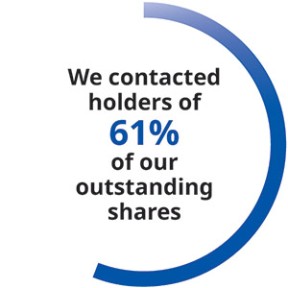
To inform our corporate governance practices, understand and consider the issues that matter most to our stockholders and keep our stockholders informed about our business, we engage with our stockholders and the broader corporate governance community year-round to seek their feedback on areas where we are performing well and areas for potential improvement. We held discussions with a number of our stockholders in the spring before the 2025 annual meeting of stockholders. However, we believe it is most productive to discuss these matters well in advance of the annual meeting of stockholders to enable management and the Board to gather information about investor perspectives and make educated and deliberate decisions that are balanced and appropriate for the Company’s broad stockholder base and in the Company’s best interests. Since our 2025 annual meeting of stockholders, we contacted stockholders representing approximately 61% of our outstanding shares to offer engagement meetings based on filings made by our stockholders with the SEC on or before March 31, 2026. Members of our Investor Relations department and Corporate Secretary’s Office, as well as other subject-matter experts within the Company, spoke with a substantial number of stockholders representing holdings both large and small on strategy, financial and operating performance, executive compensation, oversight of artificial intelligence, labor management, safety, environmental sustainability, responsible sourcing and corporate governance matters, among others. We shared these discussions with our Nominating/Governance Committee as appropriate and our Chairman met with one of our top stockholders. We took feedback and insights from our engagement with stockholders and other stakeholders into consideration as we reviewed and evolved our corporate practices and policies. As noted above, the Board updates our corporate governance framework each year based on a number of inputs, including stockholder feedback. We also engaged with the proponent who submitted a stockholder proposal this year to better understand the rationale and request of his proposal. In addition, throughout the year, our Investor Relations group engages with our stockholders, frequently along with our Chief Executive Officer and our Chief Financial Officer. This engagement includes attending investor conferences, holding one-on-one and small group meetings and calls with investors, and also interacting with investors and the analyst community during our quarterly earnings conference calls.
We encourage our stockholders to reach out directly to us to let us know your thoughts about the Company or to bring a particular matter to our attention.
| |
58 |
|
Board and Corporate Governance Matters
Some key themes in 2025 and early 2026 emerged as part of our various engagements as set forth below.
Topic | Stockholder Feedback | Company Response |
Executive Compensation | Stockholders expressed concerns related to the special retention LTI awards that we granted in July 2024, which were deemed critical to incentivizing and retaining our key executives and were awarded to achieve specific retention objectives. | In 2025 we did not grant any retention or special awards outside of our regular annual STI or LTI program to any of our NEOs and further, we do not currently intend to grant any retention or special awards outside of our regular annual STI or LTI program to any of our NEOs in 2026 except in the case of extraordinary circumstances. The Committee, however, continues to review the design and performance measures of our incentive programs as part of its regular annual process and may make refinements to the structure or performance measures of our ongoing STI and LTI programs from time to time to further align pay with performance and stockholder interests. |
RESPONSIBLE SOURCING | Stockholders expressed a desire for the Company to enhance our procedures related to ensuring that our suppliers are complying with applicable human rights laws. | We have established certain procedures in our procurement processes that are designed to help ensure that our suppliers and subcontractors are also complying with applicable laws and held to the same standards with respect to human rights set forth in our Human Rights Policy statement in the Code and our Global Policy on Worker Welfare. We have added certain provisions regarding fair labor practices to our supply contracts, including provisions that require our counterparties to provide notice if they become aware of any non-compliance with applicable fair labor laws. We also enhanced our due diligence procedures with respect to our counterparties and their operations, which can include third party reputation analyses and site checks. |
artificial intelligence | Stockholders indicated the importance of the Board’s robust oversight of our use of artificial intelligence. | In addition to adding a regular update on artificial intelligence governance to the Audit Committee meetings, we have initiated a board education program to further educate our directors on various topics related to artificial intelligence in 2026, which include trainings by both internal and third-party subject matter experts. These board educational sessions are intended to support our directors’ ability to provide oversight of the Company’s use of artificial intelligence. |
| |
2026 Proxy Statement | 59 |
Board and Corporate Governance Matters
Availability of Governance Materials
You may access financial and other information on our investor relations website, ir.united.com. Copies of these documents and other information are also available free of charge by sending a request to the Corporate Secretary’s Office, United Airlines Holdings, Inc., 233 S. Wacker Drive, Chicago, Illinois 60606. Also available on our website or upon request, free of charge, are copies of the following documents:
● Annual Report on Form 10-K, Quarterly Reports on Form 10-Q, Current Reports on Form 8-K and amendments to those reports filed or furnished pursuant to Section 13(a) or 15(d) of the Exchange Act; ● Amended and Restated Certificate of Incorporation and Amended and Restated Bylaws; | ● Committee Charters; ● Corporate Governance Guidelines; ● Climate Lobbying Report; and ● Code of Ethics and Business Conduct, which applies to all directors, officers and employees. |
To view the United Airlines, Inc. Political and Lobbying Policy and our comprehensive index that maps our corporate governance and corporate citizenship related disclosures across metrics outlined in the TCFD framework, please view our Corporate Impact Report at https://corporateimpact.united.com.
| |
60 |
|
Board and Corporate Governance Matters
How Directors Are Paid
HIGHLIGHTS OF OUR NON-EMPLOYEE DIRECTOR COMPENSATION PROGRAM
| | |
| | ● No Fees for Board or Committee Meeting Attendance: Meeting attendance is an expected part of Board service. ● Emphasis on Equity: There is an emphasis on equity-based compensation with a one-year vesting period in the overall non-employee director compensation pay mix to align non-employee director and stockholder interests. ● Recognition of Roles: Roles requiring extra time commitment and responsibilities, such as the Chairman of the Board and the Committee Chairpersons, are recognized for the supplemental service that they provide to the Board. ● Stock Ownership Requirement: Non-employee directors must hold meaningful equity ownership positions in United. |
| | |

STRUCTURE OF OUR NON-EMPLOYEE DIRECTOR COMPENSATION PROGRAM
Overview of Non-Employee Director Compensation Program
The members of our Board play a critical role in guiding United’s strategic direction. In light of the demanding nature of the role and responsibilities of a public company board, including the time commitment and risks associated with board service, the market for highly qualified and experienced individuals who are capable of serving as qualified directors of a large public company such as United is highly competitive.
These dynamics make it imperative that we provide a competitive compensation program for our non-employee directors.
We have structured the compensation of our non-employee directors with the following objectives in mind:
| | Recognize the substantial investment of time and expertise necessary for the non-employee directors to discharge their duties to oversee United’s affairs. | |
| | Align the non-employee directors’ interests with the long-term interests of our stockholders. | |
| | Provide a non-employee director compensation program that is competitive, reasonable and clearly disclosed. |


Our non-employee directors are accordingly compensated based on their respective levels of Board participation and responsibilities, including service on Committees, and receive a combination of annual cash retainers and equity compensation in the form of share unit awards.
As a United employee, Scott Kirby, our Chief Executive Officer, does not receive compensation for his service on the Board. Additionally, directors elected by a class of stock other than Common Stock are not entitled to receive any cash or equity compensation from United as a director, but are entitled to receive certain travel and charitable contribution benefits related to service as a director.
| |
2026 Proxy Statement | 61 |
Board and Corporate Governance Matters
In 2025, non-employee directors received the following compensation:
| | | |
Compensation Element | | Amount | |
REGULAR ANNUAL RETAINER | |
| |
Cash | | $ | 115,000 |
Equity | | $ | 180,000 |
COMMITTEE CHAIR ANNUAL RETAINER (CASH) | |
| |
Audit Committee | | $ | 30,000 |
Compensation Committee | | $ | 25,000 |
Executive, Finance, Nominating/Governance and Public Responsibility Committees | | $ | 20,000 |
COMMITTEE MEMBER ANNUAL RETAINER (CASH)(1) | |
| |
Audit Committee | | $ | 15,000 |
Compensation, Executive, Finance, Nominating/Governance and Public Responsibility Committees | | $ | 12,500 |
ADDITIONAL ANNUAL RETAINER FOR CHAIRMAN OF THE BOARD (EQUITY) | | $ | 225,000 |
(1)Committee Chairpersons are not eligible for Committee Member Retainers.
The Nominating/Governance Committee periodically reviews and makes recommendations to the Board regarding the form and amount of compensation of United’s non-employee directors.
The Compensation Committee’s independent compensation consultant, Exequity, has advised the Nominating/Governance Committee with respect to director compensation matters. These matters include, among other things, a review and market analysis of board of director pay and benefits and stock ownership guidelines. United’s non-employee director compensation program was designed with reference to median director pay levels among the companies that comprise United’s compensation peer group. See “Compensation Discussion and Analysis-Market Considerations and Peer Group Used for 2025 Pay Analysis” for a listing of the companies included in our compensation peer group.
| |
62 |
|
Board and Corporate Governance Matters
Stock Ownership Guidelines
The Board believes that non-employee directors should hold meaningful equity ownership positions in United. To that end, within five years after joining our Board, each non-employee director must hold shares of Common Stock having a value equal to at least five times the annual cash retainer ($575,000, based on the 2025 retainer of $115,000) and maintain at least that ownership level while a member of our Board. Shares owned outright by the non-employee directors (including shares acquired upon settlement of RSUs), unvested RSUs and share equivalents acquired upon the deferral of fees, are counted toward the ownership requirement. Unexercised stock options, whether vested or unvested, are not counted. As of March 31, 2026, all of the non-employee directors were in compliance with the stock ownership guidelines or were in the transition period. | | STOCK OWNERSHIP REQUIREMENT 5X DIRECTOR’S ANNUAL CASH RETAINER |
Cash Compensation
Director retainers are paid quarterly in arrears. At the end of each quarterly period, we pay 25% of the total annual retainer to each director. Retainers are pro-rated for directors who join or leave the Board or have a change in Board role during a quarterly period. Please see the table above for a description of the director retainer rates in effect for 2025.
Equity Compensation
A substantial portion of each non-employee director’s annual compensation is in the form of share units granted annually under the 2006 Director Equity Incentive Plan, as amended and restated on May 24, 2023 (the “DEIP”) currently with an initial equity value of $180,000, which the Board believes helps align director compensation with the interests of our stockholders. Our Chairman received an additional annual retainer in share units with an initial equity value of $225,000 in light of the increased duties and responsibilities demanded by this role, which are described in further detail on page 50.
Upon settlement, the share units are designed to be settled: (i) 50% in cash based on the average of the high and low trading prices per share of Common Stock on the vesting date and (ii) 50% in shares of Common Stock. Any fractional units are settled in cash. Pursuant to the terms of the DEIP, a director may elect to receive the cash-settled portion of the award in shares and, if a director has elected to defer the annual equity award, the award is deferred into a share unit account under the DEIP.
The number of share units subject to each non-employee director’s award granted in 2025 was calculated by taking the quotient of (x) $180,000 (or $180,000 + $225,000 for Mr. Philip) divided by (y) the average of the high and low sales prices of Common Stock on the date of grant (rounded up to the nearest whole share unit). Each share unit represents the economic equivalent of one share of Common Stock and vests in full on the first anniversary of the grant date, subject to the director’s continued service on our Board, or earlier in the event of the non-employee director’s death, disability or separation from service other than for cause.
New non-employee directors who join the Board between our Annual Meetings are generally eligible to receive a pro-rated portion of the annual share unit award to reflect the period of time that they serve prior to the Annual Meeting that immediately follows their appointment.
Director Compensation Deferral Opportunities
A non-employee director may elect to defer payment of all or part of the cash compensation received as a non-employee director under the DEIP through credits to a share account established under the terms of the DEIP. Non-employee directors may also defer the receipt of shares that would otherwise be issued under an equity compensation award through credits to his or her share account. Unless otherwise specified by the director at the time of the deferral election or pursuant to certain pre-merger deferral arrangements, distribution from the share account will be made within 60 days following the date on which such non-employee director separates from the Board.
| |
2026 Proxy Statement | 63 |
Board and Corporate Governance Matters
Charitable Contribution Program
Each director was eligible to participate in our matching gift program in 2025. We matched dollar for dollar a director’s contribution to qualified charitable and educational organizations up to $20,000. In the case of each of the ALPA director and the IAM director, United will provide matching charitable contributions of up to $20,000 per year in the aggregate to qualifying nonprofit organizations to which either the director or the director’s union contributes.
Non-employee directors are also permitted to select qualified charitable organizations for United to donate a limited number of round trip positive air space tickets.
Travel Benefits
United believes it is in its best interest for directors to have exposure to United’s operations and employees. For that reason, our directors receive flight benefits, including a travel card permitting positive space travel up to an annual limit by the director, the director’s spouse or the director’s qualified domestic partner and certain other eligible travelers. The directors also have access to certain other travel-related benefits with no incremental cost to the Company, such as access to our United Club facilities and status in our MileagePlus programs for the directors and their immediate family members.
The travel benefits are taxable to the director, subject to the reimbursement of certain of such taxes by United up to an annual limit as applicable.
A non-employee director who retires from the Board with at least five consecutive years of service as a director will receive lifetime travel benefits, subject to certain exceptions.
Director Cybersecurity
United makes available cybersecurity / identity protection services to our directors, which are reported as a perquisite in the Director Compensation for 2025 table below.
Reimbursements
All directors are reimbursed for expenses incurred in attending Board, Committee and stockholder meetings and certain United events (including travel and lodging) in accordance with United’s Board travel policies and administrative expenses that may be approved by the Board from time to time.
Indemnification
United has a policy that provides liability insurance for non-employee directors of United and its subsidiaries. United also provides indemnification for directors as set forth in the Restated Certificate of Incorporation of United Airlines Holdings, Inc.
| |
64 |
|
Board and Corporate Governance Matters
Director Compensation for 2025
The following table includes the amount of director compensation in 2025 for each director who served during that year other than Mr. Kirby. The 2025 compensation for Mr. Kirby is shown in the 2025 Summary Compensation Table and Mr. Kirby does not receive additional compensation for his service on the Board.
| | | | | | | | |
| | | | | | All Other | | |
| | Fees Earned or | | Stock Awards | | Compensation | | |
Name | | Paid in Cash ($)(1) | | ($)(2)(3) | | ($)(4) | | Total ($) |
Rosalind Brewer | | 140,000 | | 183,160 | | 57,529 | | 380,689 |
Michelle Freyre | | 140,000 | | 183,160 | | 39,399 | | 362,559 |
Matthew Friend | | 155,000 | | 183,160 | | 34,870 | | 373,030 |
Barney Harford | | 155,000 | | 183,160 | | 93,739 | | 431,899 |
Michele J. Hooper | | 170,000 | | 183,160 | | 74,577 | | 427,737 |
Walter Isaacson | | 160,000 | | 183,160 | | 51,735 | | 394,895 |
Richard Johnsen | | — | (5) | — | (5) | 51,773 | | 51,773 |
Captain Brian Noyes (6) | | — | (5) | — | (5) | — | | — |
Edward M. Philip | | 170,000 | | 412,072 | | 46,463 | | 628,535 |
Edward L. Shapiro | | 160,000 | | 183,160 | | 72,466 | | 415,626 |
Laysha Ward | | 155,000 | | 183,160 | | 73,433 | | 411,593 |
James M. Whitehurst | | 165,000 | | 181,606 | | 53,341 | | 399,947 |
Former Directors who served as a Director for part of 2025 | | | | | | | | |
Captain Anne Worster (7) | | — | (5) | — | (5) | 395 | | 395 |
(1) | Messrs. Friend, Harford, Isaacson and Shapiro and Ms. Ward each elected to receive 100% of their 2025 Board and Committee retainer fees in deferred share units as described above under “Director Compensation Deferral Opportunities.” |
(2) | Each of Mses. Brewer, Freyre, Hooper and Ward and Messrs. Friend, Harford, Isaacson, Philip and Shapiro elected to defer 100% of their 2025 equity awards in deferred share units as described above under “Director Compensation Deferral Opportunities.” |
(3) | The amounts shown in this column represent the grant date fair value of 2,410 share units granted to each of the non-employee directors on May 22, 2025 determined in accordance with FASB ASC Topic 718, taking into account deferral elections as noted in footnote 2. With respect to Mr. Phillip, the grant date fair value of his 2025 award of 3,012 share units for his service as United’s independent Chairman of the Board is also included. For details regarding how the number of share units subject to each director’s award was calculated as well as the vesting and settlement terms, see the section entitled “Equity Compensation” above. |
As of December 31, 2025, the aggregate number of share units outstanding (including, as applicable, deferred share units) for each individual who served as a non-employee director during 2025 was: Ms. Brewer—5,869; Ms. Freyre—2,410; Mr. Friend—23,887; Mr. Harford—10,369; Ms. Hooper—24,833; Mr. Isaacson—77,648; Mr. Philip—50,035; Mr. Shapiro—50,117; Ms. Ward—26,137; and Mr. Whitehurst—30,016. None of Mr. Johnsen or Captains Noyes or Worster held any outstanding share units as of December 31, 2025.
| |
2026 Proxy Statement | 65 |
Board and Corporate Governance Matters
(4) | All other compensation includes: (a) with respect to certain directors, matching contributions of up to $20,000 to nonprofit organization(s) to which the director made a contribution(s) (including contributions as follows: $20,000 for each of Ms. Hooper and Messrs. Harford and Isaacson, $19,250 for Ms. Ward and $10,000 for Ms. Brewer), as discussed under the caption “Charitable Contribution Program” above; (b) a tax reimbursement relating to flight benefits (which value is greater than the incremental cost to United of providing such benefits) for each director as follows: Ms. Brewer—$7,780; Ms. Freyre—$22,724; Mr. Friend—$28,805; Mr. Harford—$25,215; Ms. Hooper—$11,848; Mr. Isaacson—$17,029; Mr. Johnsen—$38,687; Mr. Philip—$28,812; Mr. Shapiro—$31,817; Ms. Ward—$10,887; Mr. Whitehurst—$21,090; and Captain Worster—$395; (c) as required by SEC rules, the aggregate incremental cost to United of the director’s flight benefits; (d) with respect to certain directors, as required by SEC rules, the aggregate cost to United of tickets donated by the director to charitable organizations (including the following costs: Ms. Brewer—$29,200; Mr. Harford—$29,200; Ms. Hooper—$29,200; Mr. Shapiro—$21,900; Ms. Ward—$29,200; and Mr. Whitehurst—$14,600), as discussed under the caption “Charitable Contribution Program” above; and (e) with respect to Mses. Brewer, Freyre, Hooper and Ward and Messrs. Harford, Isaacson, Philip, Shapiro and Whitehurst, the cost of cybersecurity / identity protection services provided by United. |
(5) | Our directors who are employees of United or who are directors elected by a class of stock other than Common Stock do not receive any cash or equity compensation from United related to their service as directors. However, each of the ALPA director and the IAM director are entitled to receive certain travel and charitable contribution benefits. See “Travel Benefits” and “Charitable Contribution Program” above and footnote 4 above. With respect to 2025, none of Mr. Johnsen or Captains Noyes or Worster received any director compensation other than the benefits set forth in the “All Other Compensation” column. |
(6) | Effective January 15, 2025, ALPA-MEC designated Brian Noyes to fill the vacancy on the Board resulting from Captain Worster’s departure (see footnote 7). |
(7) | On January 13, 2025, we received notice that Captain Worster was no longer the chairperson of the ALPA-MEC and, accordingly, Captain Worster resigned from the Board effective as of such date. |
| |
66 |
|
Securities Ownership
Certain Beneficial Owners
The following table shows the number of shares of our voting securities owned by any person or group known to us, as of March 24, 2026, to be the beneficial owner of more than 5% of any class of our voting securities.
| | | | | | | |
| | | | | | | |
| | | | Amount and Nature | | Percent of |
|
Name and Address of Beneficial Owner | | Title of Class | | of Ownership | | Class(1), (2) |
|
| | | | | | | |
BlackRock, Inc.(3) | | Common Stock |
| 21,530,333 |
| 6.6 | % |
50 Hudson Yards | | | | | | | |
New York, NY 10001 | | | | | | | |
Capital International Investors (4) | | Common Stock |
| 18,214,883 |
| 5.6 | % |
333 South Hope Street, 55th Floor | | | | | | | |
Los Angeles, CA 90071 | | | | | | | |
FMR LLC(5) | | Common Stock |
| 16,417,563 |
| 5.1 | % |
245 Summer Street | | | | | | | |
Boston, MA 02210 | | | | | | | |
United Airlines Pilots Master Executive Council, | | Class Pilot MEC |
| 1 |
| 100 | % |
9550 West Higgins Road, Suite 1000 | | | | | | | |
Rosemont, IL 60018 | | | | | | | |
International Association of Machinists and Aerospace Workers(6) | | Class IAM |
| 1 |
| 100 | % |
Upper Marlboro, MD 20722 | | | | | | | |
(1) | For beneficial owners of Common Stock, percentages are calculated based upon 324,649,382 shares of Common Stock outstanding as of March 24, 2026. |
(2) | The Vanguard Group, Inc. (“Vanguard”) previously reported, in Amendment No. 11 to its Schedule 13G filed with the SEC on February 13, 2024, beneficial ownership as of December 29, 2023. Based solely on such filing, Vanguard, on behalf of itself and certain wholly owned subsidiaries, reported beneficial ownership of 37,024,814 shares, including shared voting power over 276,619 shares, sole dispositive power over 36,086,062 shares and shared dispositive power over 938,752 shares. Based on Amendment No. 12 to its Schedule 13G filed on March 27, 2026, Vanguard disclosed that, following an internal realignment on January 12, 2026, and in accordance with SEC Release No. 34-39538 (January 12, 1998), certain subsidiaries or business divisions of subsidiaries that previously may have been deemed to share beneficial ownership with Vanguard will report beneficial ownership separately on a disaggregated basis. These subsidiaries and/or business divisions continue to pursue the same investment strategies as prior to the realignment. As a result, Vanguard no longer has, and is no longer deemed to have, beneficial ownership over securities held by such entities. Accordingly, Vanguard has been removed from the foregoing table. |
(3) | Based solely on a Schedule 13G/A (Amendment No. 3) filed on January 29, 2024, in which BlackRock, Inc., on behalf of itself and certain subsidiaries, reported sole voting power for 20,557,095 shares and sole dispositive power for 21,530,333 shares. |
(4) | Based solely on a Schedule 13G/A (Amendment No. 2) filed on February 13, 2026, in which Capital International Investors, on behalf of itself and certain subsidiaries, reported sole voting power for 18,205,976 shares and sole dispositive power for 18,214,883 shares. |
(5) | Based solely on a Schedule 13G filed on February 5, 2026, in which FMR LLC, on behalf of itself and certain subsidiaries, reported sole voting power for 15,070,211.30 shares and sole dispositive power for 16,417,562.77 shares. |
(6) | Shares of Class Pilot MEC and Class IAM stock elect one ALPA and IAM director, respectively, and have one vote on all matters submitted to the holders of Common Stock other than the election of directors. |
Securities Ownership
Directors and Executive Officers
The following table shows the number of shares of Common Stock owned by our directors, director nominees, the named executive officers identified in this Proxy Statement and all our directors, director nominees and executive officers as a group as of March 24, 2026. The persons listed below have sole voting and investment power with respect to all shares of Common Stock beneficially owned by them, except to the extent this power may be shared with a spouse, or as otherwise described in the footnotes following the table.
| | | | | |
| | | | | |
| | Amount and | | | |
| | Nature of | | Percent of |
|
Name of Beneficial Owner | | Ownership (1) | | Class |
|
| | | | | |
Directors | | |
| | |
Rosalind Brewer (2)(3) | | 6,064 | | * | |
Michelle Freyre (2)(3) | | 3,239 | | * | |
Matthew Friend (2)(3) | | 24,335 | | * | |
Barney Harford (2)(3) | | 92,037 | | * | |
Michele J. Hooper (2)(3) | | 27,875 | | * | |
Walter Isaacson (2)(3) | | 57,740 | | * | |
Richard Johnsen | | — |
| * | |
Scott Kirby (4)(5) | | 1,255,838 | | * | |
Brian Noyes | | — | | * | |
Edward M. Philip (2)(3)(6) | | 50,888 | | * | |
Edward L. Shapiro (2)(3) | | 250,564 | | * | |
Laysha Ward (2)(3) | | 5,770 | | * | |
James M. Whitehurst (2)(3) | | 39,529 | | * | |
Named Executive Officers | | |
| | |
Brett Hart (7) | | 393,104 | | * | |
Torbjorn Enqvist | | 134,800 | | * | |
Andrew Nocella | | 222,345 | | * | |
Michael Leskinen | | 49,000 | | * | |
Directors and Executive Officers as a Group (18 persons) (2)(3)(4)(5)(6)(7) | | 2,781,227 |
| * | |
* | Less than 1% of outstanding shares. |
(1) | For purposes of this table, a person or group of persons is deemed to have “beneficial ownership” of any shares as of a given date if such person has the right to acquire such shares within 60 days after such date. |
(2) | The number of shares shown as beneficially owned includes the following number of unvested share units which are scheduled to vest within 60 days of March 24, 2026: Ms. Brewer – 2,410 share units; Ms. Freyre – 2,410 share units; Mr. Friend– 2,410 share units; Mr. Harford – 2,410 share units; Ms. Hooper – 2,410 share units; Mr. Isaacson – 2,410 share units; Mr. Philip – 5,422 share units; Mr. Shapiro – 2,410 share units; Ms. Ward – 2,410 share units; and Mr. Whitehurst – 1,205 share units. |
Securities Ownership
(3) | The number of shares shown as beneficially owned includes the following number of share units that the director has elected to defer into a share account pursuant to the terms of the DEIP (including any unvested share units noted in footnote 2 above which, upon their vesting within 60 days will be deferred into a share account as well as any quarterly retainer fees to be deferred into the director’s share account within 60 days), to the extent such share units will be settled within 60 days following the director’s separation from service on the Board: Ms. Brewer – 6,064 share units; Ms. Freyre – 2,410 share units; Mr. Friend – 24,320 share units; Mr. Harford – 1,037 share units; Ms. Hooper – 24,833 share units; Mr. Isaacson – 51,387 share units; Mr. Philip – 50,035 share units; Mr. Shapiro – 50,564 share units; Ms. Ward – 5,770 share units; and Mr. Whitehurst – 20,637 share units. Deferred share units that will be settled more than 60 days following the director’s separation from service are not included. |
(4) | Mr. Kirby is also a named executive officer. |
(5) | The number of shares shown as beneficially owned includes: (i) 159,321 vested options to purchase shares of Common Stock at $58.69 per share, (ii) 168,775 vested options to purchase shares of Common Stock at $110.21 per share, (iii) 67,510 unvested options to purchase shares of Common Stock at $110.21 (which option will vest within 60 days of March 24, 2026), (iv) 5,000 shares of Common Stock held in a trust for the benefit of Mr. Kirby’s children and other relatives in which Mr. Kirby serves as the trustee (Mr. Kirby disclaims beneficial ownership of these securities except to the extent of his pecuniary interest therein) and (v) 8,000 shares of Common Stock held in a trust for the benefit of Mr. Kirby’s children in which Mr. Kirby’s brother serves as the trustee (Mr. Kirby disclaims beneficial ownership of these securities). |
(6) | Includes shared voting and investment power for six shares of Common Stock. |
(7) | Includes 21,521 options to purchase shares of Common Stock at $77.56. |
Equity Compensation Plan Information
The following table sets forth information as of December 31, 2025 regarding the number of shares of Common Stock that may be issued under the Company’s equity compensation plans.
| | | | | | | | |
| | | | | | | | |
| | | | | | | Number of securities |
|
| | | | | | | remaining available for |
|
| | Number of securities to | | Weighted average | | future issuance under |
| |
| | be issued upon exercise | | exercise price of | | equity compensation |
| |
| | of outstanding options, | | outstanding options, | | plans (excluding securities |
| |
Plan Category | | warrants and rights | | warrants and rights | | reflected in first column) |
| |
Equity compensation plans approved by security holders | | |
| | |
| | |
Options | | 502,055 | | $ | 91.53 |
| | |
Restricted Stock Units | | 5,499,797 | (1) | | - |
| | |
Subtotal | | 6,001,852 | | $ | 91.53 | (2) | 3,665,354 | (3) |
Equity compensation plans not approved by security holders | | - | |
| - | | - | |
Total | | 6,001,852 | | $ | 91.53 | (2) | 3,665,354 | (3) |
(1) | Includes outstanding Performance-Based RSUs under the Company’s Amended and Restated 2021 Incentive Compensation Plan (the “2021 Plan”) assuming the awards achieve the maximum “stretch” level of performance. Settlement of these Performance-Based RSUs is subject to the Compensation Committee’s certification of achievement of specified performance conditions. |
(2) | Weighted average exercise price excludes restricted stock units that convert to shares of Common Stock. |
(3) | Includes 214,779 shares available under the DEIP and 3,450,575 shares available under the 2021 Plan, assuming that the Performance-Based RSUs referenced in footnote 1 above achieve the level of performance as described in footnote 1 for such awards. |
DELINQUENT SECTION 16(A) REPORTS
To the best of our knowledge, based solely on our review of reports filed with the SEC by our directors, executive officers and beneficial owners of more than ten percent of our outstanding Common Stock, and a review of written certifications provided to the Company by our directors and executive officers, we believe that our directors and executive officers filed on a timely basis reports required by Section 16(a) of the Exchange Act during fiscal year 2025 except for one late filing of the initial Form 3 ownership report for Captain Noyes in connection with his appointment to the Board, which was delayed in connection with obtaining new EDGAR filing codes.
| |
70 |
|
Item 2-Ratification of Appointment of Independent Registered Public Accounting Firm
The Audit Committee appointed, and the Board has ratified the appointment of, Ernst & Young to serve as our independent registered public accounting firm for the fiscal year ending December 31, 2026, subject to ratification by the holders of Common Stock of the Company. The Board is presenting a resolution to our stockholders requesting ratification of Ernst & Young’s appointment as the Board and the Audit Committee believes that the continued retention of Ernst & Young for 2026 is in the best interest of the Company and its stockholders.
The Audit Committee is directly responsible for the appointment, compensation (including pre-approval of the audit fee), retention, termination, oversight and evaluation of the independent registered public accounting firm that audits our consolidated financial statements and internal controls over financial reporting. In order to ensure continuing auditor independence, the Audit Committee periodically considers whether there should be a rotation of the independent registered public accounting firm. Further, in conjunction with the mandated rotation of the audit firm’s lead engagement partner, the Audit Committee and its Chair participate in the process for the selection of Ernst & Young’s new lead engagement partner.
In making the determination to reappoint of Ernst & Young, the Audit Committee considered, among other factors, Ernst & Young’s performance as our independent registered public accounting firm since its retention in 2009, its independence with respect to the services to be performed and the quality and candor of Ernst & Young’s communications with the Audit Committee and management. Although ratification of the appointment of Ernst & Young is not required by law or our Amended and Restated Bylaws, we value the opinion of our stockholders on our independent auditors and, as a matter of good corporate governance, the Board is presenting the appointment to our stockholders for ratification. If ratification is withheld, the Audit Committee and the Board will reconsider its appointment. Even if this appointment is ratified, the Audit Committee, in its discretion, may direct the appointment of a different independent registered public accounting firm at any time during the year if the Audit Committee determines that such a change would be in the best interests of the Company and its stockholders.
Representatives from Ernst & Young are expected to attend the Annual Meeting to respond to appropriate questions and to make any statements as they may desire.
The Board and Audit Committee recommend you vote FOR Item 2 | Vote Required Approval of Item 2-Ratification of Appointment of Independent Registered Public Accounting Firm-requires the affirmative vote of a majority in voting power of the shares present in person or represented by proxy and entitled to vote on such matter. If you elect to abstain, the abstention will have the same effect as an “AGAINST” vote. Because brokers will have discretionary authority to vote on this proposal, there will not be any broker non-votes. |
Item 2-Ratification of Appointment of Independent Registered Public Accounting Firm
Audit Committee Report
To the Board of United Airlines Holdings, Inc.:
As of February 12, 2026 (the date the Company filed its 2025 Annual Report on Form 10-K), the Audit Committee was comprised of the five non-employee members of the Board named below. After reviewing the qualifications of the current members of the Audit Committee, and any relationships they may have with the Company that might affect their independence from the Company, the Board has determined that: (1) all current Audit Committee members are “independent” as that concept is defined in Section 10A of the Exchange Act; (2) all current Audit Committee members are “independent” as that concept is defined in the applicable Nasdaq Listing Rules and meet the standards for committee independence as set forth in the Company’s Corporate Governance Guidelines; (3) all current Audit Committee members are financially literate under the applicable Nasdaq Listing Rules; and (4) each of Mr. Friend, Ms. Hooper and Mr. Philip qualifies as an audit committee financial expert under the applicable rules promulgated pursuant to the Exchange Act.
The Board appointed the undersigned directors as members of the Audit Committee and adopted a written charter setting forth the procedures and responsibilities of the Audit Committee. Each year, the Audit Committee reviews the adequacy of the charter and recommends any changes to the Board for approval as appropriate to reflect the evolving role of the Audit Committee. A copy of the charter is available on the Company’s investor relations website at ir.united.com.
As part of the oversight of the Company’s financial statements, during the last year, and earlier this year in preparation for the filing with the SEC of the 2025 Annual Report on Form 10-K, the Audit Committee, among other matters:
| ● | reviewed and discussed the audited financial statements and related footnotes included in the 2025 Annual Report on Form 10-K with management and the Company’s independent registered public accounting firm, referred to in this report as the “independent auditors,” as well as the report of the independent auditors on those financial statements; |
| ● | reviewed the overall scope and plan for the annual audit of the Company’s financial statements to be included in the 2025 Annual Report on Form 10-K and the results of the examinations by the Company’s independent auditors; |
| ● | met with management periodically during the year to consider the adequacy of the Company’s internal control over financial reporting and the quality of its financial reporting and discussed these matters with the Company’s independent auditors and with appropriate Company financial personnel and internal auditors; |
| ● | reviewed and discussed with the independent auditors: (1) their judgments as to the quality of the accounting principles applied in the Company’s financial reporting; (2) the critical audit matters (“CAMs”) addressed in the audit and the relevant financial statement accounts or disclosures that relate to each CAM; (3) the written disclosures and the letter received from the independent auditors required by applicable requirements of the Public Company Accounting Oversight Board (the “PCAOB”) regarding the independent auditors’ communications with the Audit Committee concerning independence, and the independence of the independent auditors; and (4) the matters required to be discussed with the Audit Committee under the applicable requirements of the PCAOB and the SEC; |
| ● | based on these reviews and discussions, as well as private discussions with the independent auditors and the Company’s internal auditors, recommended to the Board the inclusion of the audited financial statements of the Company and its subsidiaries in the 2025 Annual Report on Form 10-K; and |
| ● | determined that the non-audit services provided to the Company by the independent auditors (discussed under Item 2) are compatible with maintaining the independence of the independent auditors. |
In addition, as a result of the Audit Committee’s evaluation referred to above, the Audit Committee appointed, and the Board has ratified the appointment of, Ernst & Young to serve as the Company’s independent registered public accounting firm for the fiscal year ending December 31, 2026, subject to ratification by the holders of Common Stock of the Company.
The Audit Committee’s pre-approval policies and procedures are discussed below.
Item 2-Ratification of Appointment of Independent Registered Public Accounting Firm
The role of the Audit Committee is to assist the Board in fulfilling its responsibility to oversee and monitor the Company’s accounting and financial reporting process and internal control structure. Management has primary responsibility for the Company’s financial reporting process, principles and internal controls as well as preparation of its consolidated financial statements in accordance with accounting principles generally accepted in the United States. The independent auditors are responsible for performing an audit in accordance with the standards of the PCAOB to obtain reasonable assurance that the Company’s consolidated financial statements are free from material misstatement and expressing an opinion on the conformity of such financial statements with accounting principles generally accepted in the United States. The independent auditors are also responsible for expressing an opinion on the effectiveness of the Company’s internal controls over financial reporting.
Notwithstanding the foregoing actions and the responsibilities set forth in the Audit Committee charter, the charter clarifies that the Audit Committee is not responsible for certifying the Company’s financial statements or guaranteeing the independent auditors’ report. The functions of the Audit Committee are not intended to duplicate or substitute for the activities of management and the independent auditors, and the Audit Committee members cannot provide any expert or special assurance as to the Company’s financial statements or internal controls or any professional certifications as to the work of the independent auditors. Audit Committee members are not employees of the Company and are not acting as professional accountants or auditors on behalf of the Company. Therefore, the Audit Committee has relied, without independent verification, on management’s representation that the financial statements have been prepared with integrity and objectivity and in conformity with accounting principles generally accepted in the United States and on the representations of the independent auditors included in their report on the Company’s financial statements.
The Audit Committee meets periodically with management and the independent and internal auditors, including private discussions with the independent auditors and the Company’s internal auditors, and receives the communications described above. The Audit Committee has also established procedures for: (1) the receipt, retention and treatment of complaints received by the Company regarding accounting, auditing or internal accounting control matters; and (2) the confidential, anonymous submission by the Company’s employees of concerns regarding questionable accounting or auditing matters. However, this oversight does not provide the Audit Committee with an independent basis to determine that management has maintained: (i) appropriate accounting and financial reporting principles or policies; or (ii) appropriate internal controls and procedures designed to assure compliance with accounting standards and applicable laws and regulations.
Furthermore, the Audit Committee’s considerations and discussions with management and the independent auditors do not assure that the Company’s financial statements are presented in accordance with accounting principles generally accepted in the United States or that the audit of the Company’s financial statements has been carried out in accordance with auditing standards generally accepted in the United States.
The information contained in this report shall not be deemed to be “soliciting material” or to be “filed” with the SEC, nor shall such information be incorporated by reference into any future filings with the SEC, or subject to the liabilities of Section 18 of the Exchange Act, except to the extent that the Company specifically incorporates it by reference into a document filed under the Securities Act of 1933, as amended, or the Exchange Act.
Respectfully submitted,
Audit Committee
Michele J. Hooper, Chair
Matthew Friend
Barney Harford
Edward M. Philip
Laysha Ward
Item 2-Ratification of Appointment of Independent Registered Public Accounting Firm
Audit Committee Pre-Approval Policy and Procedures
The Audit Committee has adopted a policy on pre-approval of services of the Company’s independent registered public accounting firm. The policy provides that the Audit Committee shall pre-approve all audit and non-audit services to be provided to the Company and its subsidiaries and affiliates by its independent auditors. The process by which this is carried out is as follows:
For recurring services, the Audit Committee reviews and pre-approves the independent registered public accounting firm’s annual audit services. The reviewed materials include a description of the services along with related fees. The Audit Committee also reviews and pre-approves other classes of recurring services along with fee thresholds for pre-approved services. In the event that the additional services are required prior to the next scheduled Audit Committee meeting, pre-approvals of additional services follow the process described below.
Any requests for audit, audit-related, tax and other services not contemplated with the recurring services approval described above must be submitted to the Audit Committee for specific pre-approval and services cannot commence until such approval has been granted. Normally, pre-approval is provided at regularly scheduled meetings. However, the authority to grant specific pre-approval between meetings, as necessary, has been delegated to the chair of the Audit Committee. The chair must update the Audit Committee at the next regularly scheduled meeting of any services that were granted specific pre-approval.
On a periodic basis, the Audit Committee reviews the status of services and fees incurred year-to-date and a list of newly pre-approved services since its last regularly scheduled meeting. The Audit Committee has considered whether the 2025 and 2024 non-audit services provided by Ernst & Young are compatible with maintaining auditor independence and concluded that such services were compatible with maintaining Ernst & Young’s independence.
All of the services in 2025 and 2024 under the Audit Fees, Audit-Related Fees and Tax Fees categories below have been approved by the Audit Committee pursuant to paragraph (c)(7) of Rule 2-01 of Regulation S-X of the Exchange Act.
Independent Registered Public Accounting Firm Fees
The aggregate fees billed for professional services rendered by the Company’s independent auditors in 2025 and 2024 are as follows (in thousands):
| | | | | | | |
| | | | | | | |
Service | | 2025 | | 2024 | | ||
| | | | | | | |
Audit Fees | | $ | 5,478 | | $ | 4,768 |
|
Audit-Related Fees | | | — | | | — | |
Tax Fees |
| | 10 |
| | 42 | |
Total | | $ | 5,488 | | $ | 4,810 | |
Audit Fees
For 2025 and 2024, audit fees consist primarily of the audit and quarterly reviews of the consolidated financial statements and the audit of the effectiveness of internal control over financial reporting of the Company and its wholly-owned subsidiaries. Audit fees also include the audit of the consolidated financial statements of United Airlines, Inc., attestation services required by statute or regulation, comfort letters, consents, assistance with and review of documents filed with the SEC, and accounting and financial reporting consultations and research work necessary to comply with generally accepted auditing standards.
AUDIT-RELATED FEES
In 2025 and 2024, there were no audit-related fees.
Tax Fees
Tax fees for 2025 and 2024 relate to professional services provided for research and consultations regarding tax accounting and tax compliance matters and review of U.S. and international tax impacts of certain transactions, exclusive of tax services rendered in connection with the audit.
| |
74 |
|
Item 3-Advisory Vote to Approve Executive Compensation
In accordance with the requirements of Section 14A of the Exchange Act and the related rules of the SEC, the Board is seeking a nonbinding advisory vote (frequently referred to as “Say-on-Pay”) from our stockholders to approve the compensation of our NEOs as disclosed in this Proxy Statement pursuant to the SEC’s compensation disclosure rules.
Accordingly, the Board is presenting the following resolution to our stockholders recommending approval, on a nonbinding advisory basis, of the compensation paid to our NEOs:
“RESOLVED, that the compensation of the Company’s named executive officers, as disclosed pursuant to the compensation disclosure rules of the Securities and Exchange Commission (which disclosure includes the Compensation Discussion and Analysis, the compensation tables and the accompanying narrative disclosures, each as set forth in the Company’s Proxy Statement for its 2026 Annual Meeting of Stockholders) is hereby APPROVED on an advisory basis.”
The Say-on-Pay vote is not intended to address any specific item of compensation, but rather the overall compensation of our NEOs and the philosophy, policies and practices described in the Proxy Statement. As an advisory vote, the approval or disapproval of the Say-on-Pay resolution by stockholders will not require management, the Compensation Committee or the Board to take any action regarding our executive compensation practices and will not be construed as overruling any decision by management, the Compensation Committee or the Board. However, consistent with our record of responsiveness to stockholders, the Compensation Committee and the Board will carefully consider the outcome of the advisory vote on executive compensation and the feedback that we receive from stockholders during our stockholder engagement process when considering future decisions concerning our executive compensation program.
We currently hold our advisory vote on executive compensation annually.
The Board recommends you vote FOR Item 3 | Vote Required Approval of Item 3-Advisory Vote to Approve Executive Compensation-requires the affirmative vote of a majority in voting power of the shares present in person or represented by proxy and entitled to vote on such matter. If you elect to abstain, the abstention will have the same effect as an “AGAINST” vote. Broker non-votes will have no effect on the advisory vote to approve executive compensation. |
Compensation Discussion and Analysis
Table of Contents
77 | |
| |
81 | |
| |
83 | |
| |
87 | |
| |
93 | |
| |
106 | |
| |
Significant Compensation Policies and Other Information Regarding Executive Compensation | 108 |
| |
110 | |
| |
| |
| |
| |
76 |
|
Compensation Discussion and Analysis
Executive Summary
Introduction
At United, our shared purpose of “Connecting People. Uniting the World” drives our decision making, supported by our Core4 standards (we are safe, then caring, dependable and efficient). The Compensation Committee of the Board (referred to as the “Committee” throughout the “Executive Compensation” section of the Proxy Statement) oversees the design of our executive compensation program to promote achievement of financial goals and other business objectives that further the realization of our shared purpose.
This Compensation Discussion and Analysis describes and analyzes the material elements of our executive compensation program, including our executive compensation policies and practices and the corresponding pay decisions, as they apply to our executive officers, including our NEOs as defined under SEC regulations, for fiscal year 2025:
Named Executive Officers | Position |
Scott Kirby | Chief Executive Officer |
Brett Hart | President |
Torbjorn Enqvist | Executive Vice President and Chief Operations Officer |
Andrew Nocella | Executive Vice President and Chief Commercial Officer |
Michael Leskinen | Executive Vice President and Chief Financial Officer |
United’s executive compensation program is thoughtfully designed by the Committee to align with United’s long-term strategy. Over the years, we have evolved our executive compensation program while maintaining an overarching executive compensation philosophy aimed at achieving strong alignment between our executives’ and our stockholders’ interests, linking pay to performance and attracting, retaining and appropriately rewarding our executives in line with market practice.
Each year, the Committee reviews the executive compensation program, taking into consideration stockholder feedback, business performance and United’s business strategy and goals.
| |
2026 Proxy Statement | 77 |
Compensation Discussion and Analysis
Incentive Compensation Elements
The elements of our 2025 Program were as follows:
| Pay Element | ||
FIXED | SALARY Fixed cash compensation reviewed annually and adjusted as appropriate based on individual performance, level of responsibility, specialized qualifications, experience, internal pay parity and pay levels of comparable positions within peer group. | ||
AT RISK / PERFORMANCE-BASED | 2025 SHORT-TERM INCENTIVES (“STI”) Cash STI award earned based on achievement of performance measures designed to align with our financial and operational priorities for the fiscal year. |
| Financial (33%)—this metric is based on our Adjusted EBITDAR Margin relative to our industry peers and is designed to focus management on our commitments to our stockholders to achieve earnings growth. |
| Net Promoter Score (“NPS”) (33%)—this customer-based metric provides continued focus on winning more brand-loyal customers by measuring how we take care of our customers. This indicates our success toward positioning the United brand as the preferred choice for airline travel. | ||
| Operational Excellence (33%)—this element of the 2025 STI program features three key airline operational metrics—on-time departures (referred to as Customer D:00), mishandled baggage rate and seat cancellations—which were included to focus management on operational reliability as United continues to expand operations as a result of flying the largest mainline schedule in United’s history during 2025. | ||
LONG-TERM INCENTIVES (“LTI”) Our 2025 LTI opportunity is equally divided between Performance-Based RSU awards and time-based RSU awards with a three-year vesting cycle. The performance measures described in the next column apply to the first tranche of the 2025 Performance-Based RSU awards, the second tranche of the 2024 Performance-Based RSU awards and the third tranche of the 2023 Performance-Based RSU awards. |
| Performance-Based RSUs (50% of LTI opportunity at target)—one half of the 2025 LTI opportunity was awarded in the form of Performance-Based RSU awards with performance measures established and measured on an annual basis during the three-year performance period, with cliff vesting of earned PBRSUs at the end of the three-year performance period, contingent on continued employment through the full three-year performance period. | |
| | | -Absolute Adjusted Earnings Per Share (“EPS”) (40%)—this PBRSU metric was included to provide further emphasis on a key financial performance metric that management and the Committee believe demonstrates our commitment to earnings growth for our stockholders in 2025 and beyond. |
-Relative Adjusted Pre-Tax Margin (40%)—this PBRSU metric is based on Adjusted Pre-Tax Margin relative to an industry peer group and is designed to focus management on our commitments to our stockholders to enhance the quality of our operating earnings by focusing on pre-tax margin. | |||
| | | -Strategic Initiatives (20%)—this PBRSU metric was included to incentivize management to reach various performance indicators relating to transforming our technology and enhancing and modernizing experiences for our customers and our employees. -Liquidity (100%)—vesting of PBRSUs is also subject to an $8 billion cash liquidity hurdle at the end of the three-year performance period. |
| Time-Based RSUs (50% of LTI opportunity)—the remaining half of the 2025 LTI opportunity was delivered in the form of time-based RSU awards that vest in one-third increments over three years, subject to continued service requirements. Time-based RSUs incentivize long-term retention of our NEOs while still providing alignment of compensation with stockholder interests. | ||


Compensation Discussion and Analysis
2025 Pay SUMMARY
The following table summarizes annual target compensation effective as of December 31, 2025 based on decisions made by the Committee with respect to each of the NEOs during fiscal year 2025. Note that the target grant values associated with 2025 awards of PBRSUs in the table below reflect the full target value of all three annual tranches of the awards, despite the fact that the portions attributable to performance measures in 2026 and 2027 will not be treated as formally “granted” for purposes of the proxy tables following this CD&A, such as the 2025 Summary Compensation Table and the Grants of Plan-Based Awards for 2025 table, until the performance measures for those future tranches are established. Accordingly, the target values for the PBRSU awards reflected in the table below differ from those of the subsequent proxy tables, which, consistent with disclosure rules, are included as grants only when the performance measures for each year are established.
| | | | | | | | | | | | | | | | |
| | | | | | | | | | | | | | | | |
| | Target NEO Compensation as of 12/31/2025 |
| |||||||||||||
| | | | | | | | Target Grant | | Grant | | |
| |||
| | | | | | | | Value of | | Value of | | |
| |||
| | | | | | | | PBRSUs | | RSUs | | |
| |||
| | | | | 2025 STI | | Awarded in | | Granted in | | | | ||||
NEO | | Salary (1) | | Target (2) | | 2025 | | 2025 | | Total |
| |||||
| | | | | | | | | | | | | | | | |
Scott Kirby | | $ | 1,200,000 | | $ | 3,000,000 | | $ | 8,250,000 | | $ | 8,250,000 | | $ | 20,700,000 | |
Brett Hart | | $ | 1,000,000 | | $ | 1,750,000 | | $ | 5,125,000 | | $ | 5,125,000 | | $ | 13,000,000 | |
Torbjorn Enqvist | | $ | 880,000 | | $ | 1,232,000 | | $ | 2,332,000 | | $ | 2,332,000 | | $ | 6,776,000 | |
Andrew Nocella | | $ | 808,500 | | $ | 1,010,625 | | $ | 2,021,250 | | $ | 2,021,250 | | $ | 5,861,625 | |
Michael Leskinen | | $ | 800,000 | | $ | 1,000,000 | | $ | 1,800,000 | | $ | 1,800,000 | | $ | 5,400,000 | |
(1) | Represents annual base salary rates that were approved by the Committee in February 2025 and took effect on April 1, 2025. |
(2) | Represents the target amounts pursuant to the 2025 STI program, which had a performance period from January 1, 2025 through December 31, 2025, not taking into account blended salary or target STI opportunity rates. The actual value of the earned 2025 STI is included in the “Non-Equity Incentive Plan Compensation” column of the 2025 Summary Compensation Table. |
The table above is not a substitute for, and should be read together with, the 2025 Summary Compensation Table in this Proxy Statement. The table above includes only the primary elements of 2025 target compensation (salary, 2025 STI and 2025 annual time-based RSU and PBRSU grants).
Compensation Discussion and Analysis
KEY EXECUTIVE COMPENSATION PROGRAM CHANGES IN 2025
Key changes to our executive compensation program that took effect in 2025 include:
| ● ● |
| STI PROGRAM CHANGES | The 2025 STI program remained relatively consistent with the 2024 STI program: ● Financial metric weighting remained at 33% under the 2025 STI program, though in 2025, the financial metric measured our Adjusted EBITDAR Margin (rather than our Adjusted EBITDA Margin) during 2025 relative to our peers. Adjusted EBITDAR adjusts Adjusted EBITDA by aircraft rent expense and is a financial metric commonly referenced in the industry in order to normalize for different aircraft financing decisions made by airlines. We believe incorporating Adjusted EBITDAR Margin into the 2025 STI program relative performance metric appropriately improves the Company’s comparability to airline peers that may finance aircraft differently than the Company. ● Customer metric (“NPS”) weighting remained at 33% under the 2025 STI program; and ● Operating excellence metrics (customer D:00, mishandled baggage rate and seat cancel rate) remained at 33% under the 2025 STI program. |
| LTI PROGRAM CHANGES | The performance measures set for annual PBRSUs granted in 2025 (including tranche 3 of the 2023 PBRSUs, tranche 2 of the 2024 PBRSUs and tranche 1 of the 2025 PBRSUs) remained relatively consistent with the performance measures and terms set for tranche 1 of the 2024 PBRSUs and tranche 2 of the 2023 PBRSUs, with the exception of the following refinements: ● The 2025 LTI strategic initiatives (weighted at 20% of the PBRSUs, consistent with 2024) focused on technological advancements imperative to modernizing experiences for our customers and employees, as discussed in more detail in the CD&A below on page 101, as compared to the strategic initiatives used in 2024 relating to certain key commitments and initiatives with respect to our environmental sustainability, people impact and responsible sourcing programs. ● Our 2025 LTI did not include another relative total stockholder return (“TSR”) modifier, which would overlap with the existing relative TSR modifier for the 2024-2026 performance period that was part of our 2024 LTI. Page 82 below describes the Company’s impressive TSR performance. ● Otherwise, consistent with the 2024 LTI, the 2025 annual PBRSUs are earned based on financial measures weighting at 80%, split evenly between an absolute Adjusted EPS metric and a relative Adjusted Pre-Tax Margin metric. |
| |
80 |
|
Compensation Discussion and Analysis
Company Performance Update
Achieving Strong Financial Results
In 2025, United continued strong execution of our United Next plan to align our network and product with the potential of our hubs. We remained focused on protecting the safety of our employees and customers, as well as providing a superior customer experience. We continued to win brand-loyal customers across all of our hubs with our customer-focused investments. These investments included deploying new and retrofitted aircraft featuring United's signature interior with larger bins, seatback screens at every seat and Bluetooth connectivity; bringing Starlink's Wi-Fi service (the world's fastest, most reliable high-speed Wi-Fi in the sky) to our dual-class United Express regional aircraft and beginning its installation on our mainline aircraft; expanding our leading global network to more than 380 destinations; and making significant technology investments that empower our employees and improve the customer experience. These investments helped us deliver some of the best operational metrics in our history, which were fundamental to producing the following strong financial results in 2025:
Pre-Tax Margin | | EPS | ||
7.3% | 7.8% | | $10.20 | $10.62 |
Pre-Tax Margin | Adjusted Pre-tax | | Diluted EPS | Adjusted Diluted |
During 2025 we delivered 7.8% in Adjusted Pre-Tax Margin,(1) representing our continued focus on margin expansion. | | We delivered Diluted EPS up 8% year-over-year and our Adjusted Diluted EPS(1) was near the high-end of our Adjusted Diluted EPS guidance range. Further, of our U.S. competitors(2), we were the only airline to grow Adjusted Diluted EPS(1) year-over-year. | ||
Total Operating Revenue | | Free Cash Flow | ||
$59.1B ä | 3.5% ä | | $8.4B | $2.7B |
Total Operating Revenue | Total Operating | | Operating Cash Flow | Free Cash Flow |
During 2025, we generated the highest annual operating revenue in United’s history. | | We delivered strong Free Cash Flow(1) for 2025 of $2.7B, which demonstrated our resiliency and that Free Cash Flow remains a priority for management. | ||
| (1) | Adjusted Pre-Tax Margin, Adjusted Diluted EPS and Free Cash Flow are non-GAAP financial measures. Please refer to Appendix A for important information regarding these measures, including a reconciliation of each measure to the most directly comparable GAAP financial measure. Comparisons to Adjusted Diluted EPS year-over-year of our U.S. competitors are based on this measure as reported by such companies. Because this non-GAAP financial measure is not calculated in accordance with GAAP, there may be differences in method and in the items being adjusted as reported by our U.S. competitors. |
| (2) | For purposes of this comparison, our U.S. competitors are Delta, American, Southwest, JetBlue, Alaska, Spirit and Frontier. |
| |
2026 Proxy Statement | 81 |
Compensation Discussion and Analysis
DRIVING BUSINESS SUCCESS
Mr. Kirby assumed his role as Chief Executive Officer in May 2020 and, together with our leadership team, established a unique strategy coming out of one of the most challenging periods of United’s history. This strategy, of which United Next is one part, intends to position United to continue to improve the customer experience and improve financial performance for years to come.
Fiscal year 2025 was a strong year financially for United as we continued to execute on this strategy with a Pre-Tax Margin of 7.3%, an Adjusted Pre-Tax Margin(1) of 7.8%, Diluted Earnings Per Share of $10.20 and Adjusted Diluted Earnings Per Share(1) of $10.62.
Not only were we financially strong, but our customers continued to benefit from our growing, reliable operation. We canceled flights at the lowest per-seat rate among U.S. network airlines in 2025 while flying the largest mainline schedule in the Company’s history, carrying an average of more than 496,000 passengers daily. Our average of 303 daily widebody departures in 2025 was the most in the Company’s history. United Express logged 134 days without a single cancellation during 2025 and Connection Saver saved more than one million potential missed connections during the year, a 42% increase over 2024. Lastly, notwithstanding challenges during 2025 such as the government shutdown, we set a fourth-quarter Company record for our NPS, including our highest-ever monthly NPS in November.
United’s strategy over the past five years has been successful in delivering value to its stockholders. Since May 1, 2020 through the end of 2025, United’s cumulative TSR was over 320%, which was 159 percentage points higher than the cumulative TSR of the Standard and Poor's 500 Index ("SPX") and 262 percentage points higher than the NYSE Arca Airline Index ("XAL"), each over the same period.
The following graph compares the cumulative TSR during the period from May 1, 2020 to December 31, 2025. The graph assumes $100 was invested on May 1, 2020 in UAL Common Stock and in each of SPX and XAL and assumes that all dividends were reinvested. The stock price performance in the following graph is not necessarily indicative of future stock price performance.
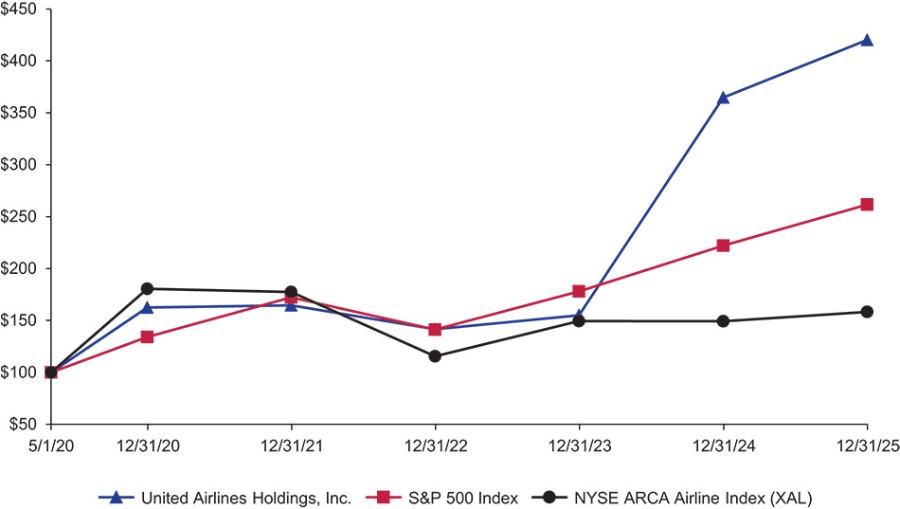
| (1) | Adjusted Pre-Tax Margin and Adjusted Diluted EPS are non-GAAP financial measures. Please refer to Appendix A for additional information and a reconciliation of each measure to the most directly comparable GAAP financial measure. |
| |
82 |
|
Compensation Discussion and Analysis
Executive Compensation Program Overview
The Committee oversees our executive compensation program, which includes elements designed to support our compensation objectives and the achievement of our financial goals and other business objectives. These compensation objectives include attracting, motivating and retaining the key executives who drive our success and industry leadership in a dynamic, innovative and competitive environment and rewarding and incentivizing specific aspects of our financial and operational priorities that the Board believes are critical to the Company’s strategy and the creation of stockholder value. We use a mix of base salary, annual short-term cash awards and long-term equity awards to accomplish these objectives. After reviewing our financial and operational performance, our share price performance, the individual performance of our executives and broader market trends, the Committee determined that the structure of our executive compensation program continues to be appropriate.
EXECUTIVE COMPENSATION PHILOSOPHY
Our core executive compensation philosophy is based on achieving the following objectives:
| ||
| ALIGNING THE INTERESTS OF OUR STOCKHOLDERS AND EXECUTIVES | The 2025 Program was designed to align with the interests of our stockholders by linking executive pay to performance measures that we view as key to our financial and operational priorities, which help us to achieve success that will deliver long-term stockholder value. Further, our 2025 Program considered feedback we received on our executive compensation program during our annual stockholder engagement efforts. All of our LTI awards granted in 2025 are equity awards that provide a direct link to the creation of stockholder value. We also maintain robust stock ownership guidelines for our NEOs that are designed to further align the financial interests of our executives with our stockholders’ interests. Further, our compensation clawback policy helps ensure that our executives are accountable and includes both mandatory and discretionary compensation recovery elements. |
| | |
| LINKING EXECUTIVE PAY TO PERFORMANCE | Our executives’ total compensation packages include a mix of fixed and variable components, with a meaningful portion of total compensation at-risk (including a balance of both short-term and long-term focus on improved financial performance). Our STI program design promotes and rewards teamwork given that it emphasizes company-wide financial goals and other business objectives that apply consistently across many levels, from our Chief Executive Officer through all of our management and administrative employees. This consistency increases shared accountability for success and alignment with interests of our customers. Further, our 2025 Program used STI performance measures that are based upon our business plan for the fiscal year, helping to align pay with annual performance. For example, the NPS metric in the 2025 STI program directly linked a portion of incentive payouts to customer satisfaction outcomes, contributing to our highest full-year Net Promoter Score since 2022 among on-time passengers, allowing us to continue to build the United brand into the preferred choice for airline travel and winning brand-loyal customers. Performance measures for our regular annual PBRSUs (tranche 1 of the Performance-Based RSUs granted in 2025, tranche 2 of the Performance-Based RSUs granted in 2024 and tranche 3 of the Performance-Based RSUs granted in 2023) were similarly focused on financial goals and other business objectives deemed by the Committee to be critical to motivating management’s focus on our sustained performance and building long-term stockholder value. For example, the Adjusted Diluted EPS metric in the 2025 LTI directly linked payout opportunities to earnings performance, reinforcing management’s focus on Adjusted Diluted EPS, which increased year-over-year in 2025 notwithstanding industry challenges. Overall, the Committee believes that the performance measures under the 2025 Program helped to drive United’s achievement of its financial goals and other business objectives throughout 2025 and beyond. |
| | |
| |
2026 Proxy Statement | 83 |
Compensation Discussion and Analysis
| ATTRACTING, RETAINING AND APPROPRIATELY REWARDING OUR EXECUTIVES IN LINE WITH MARKET PRACTICES | We seek to attract world-class executives and to retain our existing executives by setting our compensation and benefits at competitive levels relative to companies of similar size, scope and complexity. Because we believe that our management team has skills that are transferrable across industries and recruit for talent both within the airline industry and from a broad spectrum of leading businesses, we compare the overall compensation levels of our executive officers with the compensation provided to similarly-situated executive officers of a compensation peer group comprised both of major US-based airline competitors and similarly-sized companies outside the airline industry that face comparable operating environments. Compensation decisions are also considered and balanced in light of responsibility levels and value added to the organization while taking into account internal pay parity. See “Executive Compensation Setting Governance and Process” below for further discussion of factors, in addition to the competitive market analysis, that the Committee uses to set total compensation for our executives. |
| |
84 |
|
Compensation Discussion and Analysis
Below is a summary of our key compensation and corporate governance practices.
| WHAT WE DO | |
| WHAT WE DO NOT DO | ||
| | ● Maintain stock ownership guidelines that reinforce the alignment of executive officer and stockholder interests (including requiring stock ownership of 6x base salary for the Chief Executive Officer) ● Promote long-term focus through multi-year vesting requirements ● Link pay to performance with multiple performance measures aimed at supporting stockholder value creation and promoting long-term focus ● Deliver a significant majority of our target pay opportunities for our NEOs in the form of variable and at-risk pay tied to strong performance ● Target pay with reference to peer group median levels ● Have trading blackout periods under our securities trading policy and require officers to pre-clear trades in Company securities with our Corporate Secretary’s Office ● Retain an independent compensation consultant ● Have a Committee comprised solely of independent directors, which considers and approves all compensation for our Section 16 reporting officers ● Solicit investor feedback on our compensation program and potential enhancements through an extensive stockholder engagement program ● Hold an annual Say-on-Pay vote ● Have a strong compensation clawback policy that includes a mandatory recovery element to comply with the incentive-based compensation recovery provisions of the Dodd-Frank Act and Nasdaq listing standards and a discretionary element that permits United to seek recovery of compensation if a covered executive commits certain misconduct ● Maintain standardized severance benefits for our officers, as set forth in severance plans applicable by officer level ● Have “double-trigger” acceleration on a change in control for LTI awards | | | | ● No excise tax gross-ups related to change in control transactions ● No employment agreements or fixed employment terms ● No enhanced severance multiple upon a change in control ● No payment of dividends or dividend equivalents on unearned equity awards under our LTI plan ● No repricing of underwater stock options under our LTI plan without stockholder approval ● No hedging or pledging of our securities by our officers or directors ● No design elements in our incentive plans that encourage excessive risk-taking ● No “single-trigger” change in control payments |
| | | | | | |

| |
2026 Proxy Statement | 85 |
Compensation Discussion and Analysis
2025 TARGET COMPENSATION BENCHMARKS
The following charts provide an overview of the 2025 target executive compensation components for the Chief Executive Officer and other NEOs and highlights the percentage of total target compensation that is variable and at risk.
| 2025 CHIEF EXECUTIVE OFFICER TARGET PAY TOTAL TARGET COMPENSATION
| ● 94% of target pay at-risk and fluctuating based on our performance and/or our stock price ● 80% of target pay delivered in LTI equity incentives with multi-year vesting |
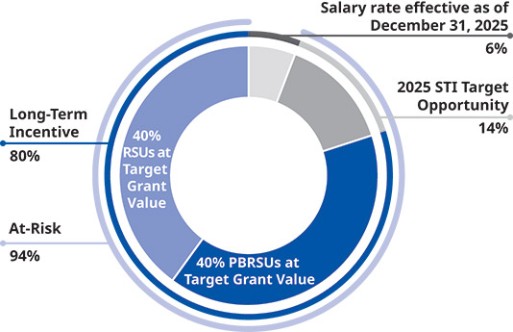
| 2025 AVERAGE OTHER NEO TOTAL TARGET COMPENSATION
| ● 89% of target pay at-risk and fluctuating based on our performance and/or our stock price ● 73% of target pay delivered in LTI equity incentives with multi-year vesting |
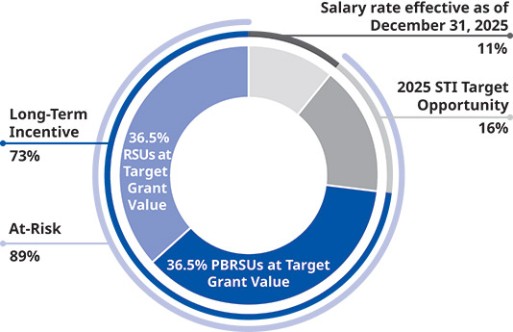
This target pay mix supports the core elements of our executive compensation philosophy by emphasizing long-term, stock-based incentives while providing competitive annual cash components, thus aligning our executive compensation program with our business strategy and the creation of stockholder value.
The target compensation levels described above reflect the regular foundation of our 2025 executive pay program (including, for the long-term incentive levels, the target values associated with the annual 2025 award of PBRSUs only).
| |
86 |
|
Compensation Discussion and Analysis
Executive Compensation Setting Governance and Process
SETTING PERFORMANCE MEASURES AND MAKING COMPENSATION DETERMINATIONS
The Committee establishes the design of our executive compensation program in accordance with its charter, which can be viewed on our investor relations website at ir.united.com, and also approves cash compensation (base salary levels and target annual short-term incentive levels), target annual long-term incentive award size as well as perquisites, life insurance and certain other benefits of each of our executive officers.
AFTER end of year |
| Beginning of Year | ||
| | | | |
The Committee certifies performance results under the STI program for the prior year and performance results for Performance-Based RSU performance periods scheduled to vest at the end of the prior year. The Committee also determines the design and components of current compensation programs, including setting the performance measures for each performance-based compensation component, which we believe is consistent with “best practices” in corporate governance, reduces the risk of selecting a grant date with a preferential stock price and positions the Committee to consider the full results for the prior year in determining equity grants. | | The Committee makes annual compensation determinations for Section 16 officers. The Committee’s objective is to offer the opportunity for earned compensation at a level consistent with the level of performance delivered. | ||
| | | | |
| |
| | |
| | | | |
before END OF YEAR |
| during the year | ||
| | | ||
The Committee reviews the existing compensation program, including its design and components, to determine if any changes should be made to the program for the next fiscal year. The Committee also reviews market data to provide insight on compensation for our Section 16 officers. Before reviewing market data, the Committee reviews and approves our compensation peer group used by our independent consultant to generate market data. | | The Committee meets regularly throughout the year, with management and in executive session, and reviews United’s performance results to date against the performance measures set forth in our executive compensation program. The Committee also reviews the executive compensation program to assess whether it remains appropriate, competitive and aligned with our stockholders’ interests and the other principles of the program. The Committee’s independent consultant attends Committee meetings at the invitation of the Committee. | ||
Annual LTI awards are typically approved in or near the
To help achieve its design objectives and align the executive compensation program with our overall pay philosophy, the Committee considers a variety of inputs, including stockholder feedback from our engagement sessions, results of our annual “Say-on-Pay” vote, the advice of the Committee’s independent compensation consultant, market considerations and the compensation programs of our peer group, Company and NEO-focused considerations, the input of our Chief Executive Officer and President (except with respect to compensation for themselves), internal pay parity and management and risk mitigation considerations. We address each of these inputs here.
Ultimately, the Committee makes all final decisions regarding the executive compensation program design, performance measures and the compensation levels of United’s executive officers following its review and consideration of all recommendations and data it deems appropriate.
| |
2026 Proxy Statement | 87 |
Compensation Discussion and Analysis
Contacted
approximately 61%
of our top stockholders
STOCkholder Engagement
Our Board and the Committee deeply value the continued interest of and feedback from our stockholders on our executive compensation program and are committed to maintaining an active dialogue with our stockholders to allow us to take into account their perspectives.
Feedback received from our stockholders through ongoing engagement discussions informs the Committee’s deliberations as it reviews the incentive structures in place on an ongoing basis.
As in prior years, we have continued our active stockholder engagement program, discussing compensation and a broad range of corporate governance topics with stockholders representing approximately 61% of our outstanding shares of Common Stock since our 2025 annual meeting of stockholders. During our stockholder engagement program, we learned that certain of our stockholders expressed concerns related to the special retention LTI awards that we granted in July 2024, which were deemed critical to incentivizing our executive team to maintain their employment with the Company given the intense competition for the talented executives in the aviation industry and were awarded as a motivational vehicle to drive key financial metrics. In 2025 we did not grant any retention or special awards outside of our regular annual STI or LTI program to any of our NEOs and further, we do not currently intend to grant any retention or special awards outside of our regular annual STI or LTI program to any of our NEOs in 2026 except in the case of extraordinary circumstances. The Committee, however, continues to review the design and performance measures of our incentive programs as part of its regular annual process and may make refinements to the structure or performance measures of our ongoing STI and LTI programs from time to time to further align pay with performance and stockholder interests.
The Committee was otherwise mindful of the support our stockholders expressed for our philosophy and our practice of aligning pay with performance and, as a result, in evaluating our compensation practices in fiscal year 2025, the Committee determined to keep our 2025 executive compensation program generally consistent with the 2024 program with the exception of certain refinements to our STI and LTI program, each as described in the “Key Executive Compensation Program Changes in 2025” section above.
| |
88 |
|
Compensation Discussion and Analysis
CONSIDERATION OF ANNUAL SAY-ON-PAY VOTE
In 2025, stockholders continued their strong support for our executive compensation program with approximately 86.3% of the votes cast in favor of the Say-on-Pay proposal. However, as discussed above, certain stockholders, including certain of those who opposed our Say-on-Pay proposal in 2025, expressed concerns regarding the special retention LTI awards that we granted in July 2024. In 2025 we did not grant any retention or special awards outside of our regular annual STI or LTI program to any of our NEOs and further, we do not currently intend to grant any retention or special awards outside of our regular annual STI or LTI program to any of our NEOs in 2026 except in the case of extraordinary circumstances. The Committee continues to review the design and performance measures of our incentive programs as part of its regular annual process and may make refinements to further align pay with performance and stockholder interests or otherwise in consideration of stockholder feedback. Given the outcome of the 2025 Say-on-Pay Vote indicated relatively strong support of our executive compensation program and the Committee’s ongoing analysis of the executive compensation program’s ability to support our compensation objectives and the execution of our business strategy, we did not make any changes to the structure of our executive compensation program in 2025 in response to the 2025 Say-on-Pay vote. We did, however, refine our program to further align the program with our compensation philosophy and business strategy. See “Key Executive Compensation Program Changes in 2025” and “Elements of 2025 Executive Compensation” for a further discussion of this refinement. Consistent with United’s strong interest in stockholder engagement and the importance of aligning pay with performance, the Committee continues to evaluate our executive compensation program to assess and refine its alignment between executive and stockholder interests. In addition, as noted above, we actively solicited feedback from stockholders and other stakeholders throughout the year to understand their perspectives on corporate governance and other topics and offered additional insights on a wide range of topics, including our executive compensation program. We take feedback and insights from our engagement with stockholders and other stakeholders into consideration as we review and evolve our executive compensation practices and disclosures and further share them with our Board as appropriate, including when considering potential changes to the design or performance measures used in our incentive compensation programs. The results of these discussions are noted in the “Board and Corporate Governance Matters—Communications with Directors and Stockholder Engagement—Stockholder Engagement and Responsiveness” section of the Proxy Statement on pages 58-59. |
|
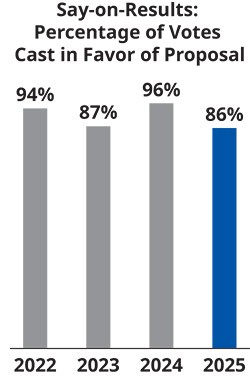
ADVICE FROM INDEPENDENT COMPENSATION CONSULTANT
During 2025, final executive compensation decisions with respect to the NEOs were made by the Committee, after considering input from Exequity, the Committee’s independent compensation consultant. Exequity provides the Committee with background materials, including preparation of reports to inform our compensation peer group composition and participates in Committee meetings to support the Committee’s executive compensation decision-making process. Exequity services also include consultation regarding the targeted levels of executive pay, the design of incentives, technical issues (such as tax and accounting implications of pay) and assisting the Committee in performing an annual compensation risk assessment of United’s compensation programs. Exequity reports directly to the Committee and the Committee has the authority to retain and terminate Exequity and to review and approve Exequity’s fees and other retention terms.
The Committee has adopted an “Independent Executive Compensation Consultant Conflict of Interest Policy” pursuant to which Exequity is required to provide the Committee with regular reports on any work that it performs for United. During 2025, Exequity did not perform any work on behalf of United other than the executive compensation services provided to the Committee and director compensation advice provided to the Nominating/Governance Committee. The Committee has assessed the independence of Exequity pursuant to SEC rules and the Nasdaq Listing Rules and concluded that Exequity’s work for the Committee does not raise any conflicts of interest.
| |
2026 Proxy Statement | 89 |
Compensation Discussion and Analysis
MARKET CONSIDERATIONS AND PEER GROUP USED FOR 2025 PAY ANALYSIs
Market Considerations
As part of its annual compensation review process, the Committee considers pay levels of our peers, among other factors, as a reference point when determining individual pay decisions and assessing the overall competitiveness and reasonableness of the Company’s compensation program. Exequity annually conducts and shares with the Committee a review of compensation for our NEOs by reference to the range of compensation paid to similarly-situated executives of our compensation peer group, including compensation information compiled from publicly filed disclosures of our primary peer group. We supplement this market data with information gleaned from our experience recruiting for executive positions at United. While this market data and supplemental data inform the decisions of the Committee on the range of compensation opportunities, the actual level of our NEOs’ total direct compensation is determined based on both individual and corporate performance and can vary based on such factors as performance, breadth, scope and complexity of the NEO’s role, expertise, skill set, experience, retention considerations and advancement potential.
United’s Peer Group
The Committee annually reviews the appropriateness of the compensation peer group used by Exequity to generate competitive executive pay data for the Committee’s review in connection with compensation decisions. Based on this review, the Committee periodically updates our peer group as our business and market environment continues to evolve. The peer group during 2025 was composed of relevant airline peers and other comparably sized companies in general industry that have similar business attributes and that are considered to be representative of the competitive talent market for United.
For the peer group used for 2025 compensation, the following primary factors were considered in identifying the most appropriate peer companies that are size-relevant (generally 0.5x-2.0x the Company’s revenue) for compensation benchmarking purposes: the labor market for United’s executive talent, including a focus on geographic proximity; the three most size-relevant U.S.-based airline peers (American, Delta and Southwest); and well-run companies in the general industry, with a primary focus on travel, transportation and other customer-centric companies with a leading specialty brand and sophisticated digital technology platform.
Using these factors as a guide, the Committee removed 3M Company, Cummins Inc. and Northrop Grumman from our peer group to accommodate the addition of several new peers viewed as better aligned with United’s prospective strategic positioning, and added American Express Company, Booking Holdings Inc., NIKE, Inc., PayPal Holdings, Inc., Starbucks Corporation and Uber Technologies, Inc. to better reflect United’s evolving business model that relies more heavily on specialty branding and competitive advantages offered by a leading digital technology platform. Accordingly, the composition of the benchmarking peer group for 2025 compensation decisions includes the 19 comparator companies noted below.
| PEER GROUP COMPANIES | ||
● American Airlines Group, Inc. ● American Express Company ● The Boeing Company ● Booking Holdings Inc. ● Carnival Corporation ● Caterpillar Inc. ● Deere & Company ● Delta Air Lines, Inc. ● FedEx Corporation ● General Dynamics Corporation | ●Honeywell International Inc. ●Marriott International, Inc. ●NIKE, Inc. ●PayPal Holdings, Inc., ●Southwest Airlines Co. ●Starbucks Corporation ●Uber Technologies, Inc. ●Union Pacific Corporation ●United Parcel Service, Inc. | ||
| |
90 |
|
Compensation Discussion and Analysis
Company and NEO Focused Matters
The Committee also generally considered the following Company and NEO focused matters in making fiscal year 2025 compensation decisions, among other factors:
Company-Focused Matters | | Key NEO-Focused Matters |
● Company performance in prior years and expectations for the future; ● The anticipated degree of difficulty inherent in the targeted incentive performance measures; ● The level of risk-taking the program would reward; ● The general business environment; and ● Practices and developments in compensation design and governance among our peers and more broadly, in general industry. | | ● Individual performance history and long-term leadership potential; ● Changes in an NEO’s tenure, roles and responsibilities since the NEO’s total target compensation was last increased; ● Internal pay parity; and ● Retention risks related to the competitive market for talent. |
Input from our Chief Executive Officer AND OTHER Management
Mr. Kirby, our Chief Executive Officer and Mr. Hart, our President, attend Committee meetings and provide input to the Committee with respect to the compensation of the management team other than themselves. Management also supports the Committee in making executive compensation decisions as needed. Mr. Kirby and Mr. Hart do not attend portions of the meetings relating to their compensation.
| SELECTING PERFORMANCE MEASURES AND TARGETED PERFORMANCE LEVELS | An important part of designing incentive compensation programs is the selection of performance measures and targets. To support the Committee’s pay-for-performance philosophy, selected performance measures are tied to our business strategy and stockholder value creation. In addition, performance targets are set at levels designed to balance investor expectations against achievability, without incentivizing undue risk-taking. As appropriate, members of our management team prepare background materials and participate in discussions with the Committee relating to the Company’s financial plan, customer-centered initiatives and results, operational excellence, strategic initiatives and proposed performance measures under the executive compensation program. |
| ASSESSING COMPANY PERFORMANCE | Financial performance is a significant component of our incentive programs. Members of our internal audit group provide special reports to the Committee outlining the review of procedures and calculations relating to the degree of achievement of performance measures and payout of incentives for completed performance periods. |
| ASSESSING individual PERFORMANCE | During 2025, Mr. Kirby and Mr. Hart attended Committee meetings and had opportunities to provide input regarding individual performance assessments during the Committee’s executive sessions with respect to NEOs other than themselves. |
The Committee regularly holds executive sessions to discuss executive compensation practices without members of management present. No NEO plays a direct role in his or her own compensation determination.
Internal PAY PARIty
The Committee also reviews our NEOs’ target annual compensation levels to maintain relative parity of pay levels among the executive team and to provide an executive compensation program that is viewed as competitive, equitable and performance based. In addition, as circumstances warrant, we may provide compensation to executives outside of our regular compensation structure in connection with their hiring, promotion or retention.
| |
2026 Proxy Statement | 91 |
Compensation Discussion and Analysis
Compensation risk oversight
In September 2025, the Committee retained Exequity to conduct a risk review of our compensation policies, practices and programs and assess whether any of such policies, practices and programs, either individually or in the aggregate, would encourage our executives or employees to undertake unnecessary or inappropriate risks that were reasonably likely to have a material adverse impact on us. The Committee reviewed this external risk assessment and considered several factors, including the various design elements of our compensation plans, the impact of our leadership and culture and the presence of risk-mitigating controls.
In agreement with the overall findings of the 2025 risk assessment conducted by Exequity, the Committee concluded that the structure of United’s compensation policies, practices and programs currently in place do not create risks that are reasonably likely to have a material adverse effect on United.
Notably in this regard:
| ● | the establishment of United’s executive compensation opportunities references median market levels; |
| ● | current and other outstanding awards employ an array of financial and non-financial performance measures, which help to create a “portfolio” of incentive opportunities, because this design structure reduces motivation to manipulate a single measure to generate a big payout, and goals apply equally to all participants to encourage a unified and responsible approach to achieving financial and non-financial performance measures; |
| ● | we allocate compensation among base salary, annual short-term cash incentive and long-term incentives, such as RSUs and Performance-Based RSUs that include both time-based and performance-based criteria; |
| ● | targets for performance-based awards are set based on United’s Board-approved budgets, updated forecast information, current business strategy and expectations regarding the evolution of business conditions; |
| ● | our program incorporates a focus on the customer experience in the incentive programs, helping to balance the safeguards against financial risk and behaviors that could contribute to reputational risk; |
| ● | for performance-based awards, the Committee provides written certification of performance based on results reviewed by internal audit before payments are made; |
| ● | the annual short-term cash incentive component includes cash-based awards with payouts tied to the achievement of pre-established performance objectives; |
| ● | Performance-Based RSUs vest over multiple years for a long-term performance horizon, which mitigates short-term behavioral incentives and reinforces retention; |
| ● | all short-term and long-term performance-based awards include a cap on maximum payout opportunities, as this mitigates against the possibility of excessively high earn-out potentials that could motivate inappropriate behavior; |
| ● | the annual Performance-Based RSU awards include a liquidity condition requiring achievement of a cash hurdle for the awards to be paid; |
| ● | executives are required to own a specified level of shares of Common Stock in order to comply with the stock ownership guidelines described in “Robust Stock Ownership Guidelines” below, which discourage short-term risks that disadvantage the long-term stock price; |
| ● | as described below under “Compensation Clawback Policy,” we have a clawback policy applicable to all Company officers that is designed to allow us to recover compensation in the event of certain misconduct and also provides for mandatory recoupment under certain circumstances to comply with the Dodd-Frank requirements and the Nasdaq listing standards regarding recovery of erroneously awarded incentive-based compensation in the event of an accounting restatement; |
| ● | as described below under “Policy Prohibiting Hedging and Pledging,” we have a policy that prohibits our officers, directors and management and administrative employees from hedging, pledging or short sale transactions involving Company stock; and |
| ● | the Committee retains discretion to reduce short-term incentive payouts below the formulaic operational results. |
| |
92 |
|
Compensation Discussion and Analysis
2025 Compensation Program Design
2025 Executive Compensation Overview
The following table provides information regarding the elements of our fiscal year 2025 executive compensation program.
| Pay Element | Vehicle | Rationale and Link to Stockholder Value |
FIXED | BASE SALARY
| Cash | Fixed cash compensation rewards individual performance and scope of responsibility to attract and retain top talent. |
AT RISK / PERFORMANCE-BASED | SHORT-TERM INCENTIVES
| Cash | Promotes strong short-term business results by rewarding key value drivers without creating an incentive to take excessive risk. Serves as key compensation vehicle for rewarding annual results based upon our business plan for the fiscal year, helping to align pay with annual performance. |
LONG-TERM INCENTIVES
| Performance-Based RSUs (paid in shares of Common Stock) Time-based RSUs (paid in shares of Common Stock) | Performance-Based RSUs reward achievement of financial goals and other business objectives as well as retention through the three-year performance period. Equity awards provide a significant stake in the long-term financial success of United that is aligned with stockholder interests and promotes employee retention. Time-based RSUs vest one-third per year over a three-year period, which enhances retention of our NEOs, aligns with compensation practices of our peers and supports stockholder value creation. | |
OTHER | RETIREMENT BENEFITS | 401(k) plan and excess 401(k) cash direct and cash match program | Creates shared responsibility for retirement through matching contributions. |
PERQUISITES | Non-cash benefits, such as active flight benefits, health-related benefits and reimbursement for certain tax and financial services | Enhances retention and strengthens our relationships with our executives and generally aligns with market practice for perquisites provided to executives at similar levels at companies within the airline industry and general industry groups. |


| |
2026 Proxy Statement | 93 |
Compensation Discussion and Analysis
Elements of 2025 Executive Compensation
Base Salary
The Committee generally reviews and approves base salaries annually in February, with the new rates effective as of April 1, and makes periodic adjustments in connection with promotions, changes in roles and/or responsibilities or to reward individual performance and promote market competitiveness. In making any such adjustments, the Committee considers individual performance, the NEO’s experience, the breadth, scope and complexity of the NEO’s role, internal pay parity, whether the NEO’s base salary is appropriately positioned relative to similarly-situated executives in our peer group, compensation tally sheets summarizing the NEO’s total target and expected actual compensation, recent compensation adjustments and the average compensation of similarly situated executives in the Company’s peer group, among other factors.
Considering these factors, the Committee determined to increase Mr. Leskinen’s base salary in order to reward Mr. Leskinen for his continued strong performance and contributions to the Company. Each other NEO’s 2025 base salary remained unchanged compared to the NEO’s 2024 base salary.
| | | | | | | | | |
| | | | | | | | | |
| | Base Salary (Annualized Rate) |
| ||||||
| | | | | | | | | |
Named Executive Officer | | 2024(1) | | 2025(2) | | % Change |
| ||
| | | | | | | | | |
Scott Kirby | | $ | 1,200,000 | | $ | 1,200,000 |
| - | % |
Brett Hart | | $ | 1,000,000 | | $ | 1,000,000 |
| - | % |
Torbjorn Enqvist | | $ | 880,000 | | $ | 880,000 |
| - | % |
Andrew Nocella | | $ | 808,500 | | $ | 808,500 |
| - | % |
Michael Leskinen | | $ | 770,000 | | $ | 800,000 | | 3.9 | % |
| (1) | Represents the annual base salary rate for each of the NEOs as of the end of Fiscal 2024. |
| (2) | Represents the annual base salary rate that took effect on April 1, 2025. |
Short-Term Incentive Program
The 2025 STI program was designed to sharpen management’s focus on key financial, operational and customer service objectives that are consistent with our business plan for the fiscal year, helping to align pay with annual performance. Executing on our business plan in turn allows us to achieve success that will deliver long-term stockholder value. The awards are paid in cash.
The 2025 STI program was structured with a target opportunity granted to each NEO (based on a percentage of base salary), with an entry payout equal to 50% of the target opportunity, a target payout equal to 100% of the target opportunity and a stretch (also called “maximum”) payout equal to 200% of the target opportunity. The 2025 STI awards were earned on December 31, 2025 and were paid out in March 2026 after the Committee certified performance.
The graphic below illustrates the calculation used to determine 2025 STI payouts:
Earned Base Salary | X | STI TARGET OPPORTUNITY % | X | Performance Against Annual MEASURES | = | ACTUAL STI AWARD PAYOUT |
Determined by reviewing: ● Individual performance ● Level of responsibility ● Specialized qualifications ● Experience ● Internal pay parity ● Internal and market-based peer group data | | Established using: ● Level of responsibility ● Internal and market-based peer group data ● Internal pay parity ● Company financial performance | | ● Relative Adjusted EBITDAR Margin (33%) ● Net Promoter Score (NPS) (33%) ● Operational Excellence (33%) | | ● Capped at 200% of target |
| |
94 |
|
Compensation Discussion and Analysis
STI Target Opportunities
The target opportunities as a percentage of base salary for 2025 for our NEOs are shown below.
Such STI target opportunities are determined by the Committee after considering a number of factors, including the breadth, scope and complexity of the NEO’s role, whether the target annual incentive is competitive with target annual incentives for similarly situated executives in our peer group, consideration of internal pay parity and our recent and projected financial performance. In light of these factors, the Committee determined to increase the STI opportunities for each of Messrs. Enqvist, Nocella and Leskinen. The STI target opportunity for each NEO is expressed as a percentage of the executive’s base salary.
| | | | | | | |
| | | | | | | |
| | 2025 STI Target Opportunity | |||||
| | Percentage of Base Salary | |||||
Named Executive Officer | | 2024 | | 2025 | | % Change | |
| | | | | | | |
Scott Kirby |
| 250 | % | 250 | % | — | % |
Brett Hart |
| 175 | % | 175 | % | — | % |
Torbjorn Enqvist |
| 125 | % | 140 | % | 12.0 | % |
Andrew Nocella |
| 120 | % | 125 | % | 4.2 | % |
Michael Leskinen |
| 120 | % | 125 | % | 4.2 | % |
Performance Measures Underlying the STI Program
At the beginning of the performance year, the Committee undertakes a rigorous, holistic process to establish predefined performance measures that it believes will motivate our executives appropriately to deliver the high performance that supports stockholder value creation in both the short- and long-term in accordance with our compensation philosophy. The 2025 STI program had a performance period of January 1, 2025 through December 31, 2025.
Our 2025 STI performance measures were as follows, with the metrics selected and the targets set by the Committee in February 2025. The Committee believes the performance measures selected appropriately link compensation outcomes to our business strategy in 2025, which is in part focused on maintaining a best-in-class travel experience for our customers and executing certain financial objectives that help us meet our financial guidance, which will enhance long-term value for our stockholders.
| |
2026 Proxy Statement | 95 |
Compensation Discussion and Analysis
2025 MEASURE and Weighting | | What It Is | | Why It’s Important |
FY2025 Adjusted EBITDAR Margin relative to industry weighted average Adjusted EBITDAR Margin (33%) | | - Adjusted EBITDAR is a non-GAAP financial measure calculated as EBITDAR (earnings before interest, taxes, depreciation, amortization and aircraft rent expense) excluding operating and nonoperating special charges (credits) and unrealized (gains) losses on investments, and, as applicable, adjusted for refinery and fuel hedges. - Adjusted EBITDAR Margin is calculated as Adjusted EBITDAR divided by operating revenue. - Industry Adjusted EBITDAR Margin is calculated to reflect the difference between our Adjusted EBITDAR Margin relative to the revenue weighted average of our industry peers (excluding United) during 2025. | | A critical measure of annual profitability aligning our management’s interests with those of our stockholders; this metric focused on our profit levels as compared with that of our industry peers during 2025. Payout at the entry level required United’s performance to be above the weighted average of certain industry peers, while payout at the stretch level required United to be the leader relative to selected industry peers. |
Operational Excellence (33%) | | Three Key Airline Operational Metrics: - 33% Customer D:00 (CD:00) (An industry reference for on-time performance that measures departures early or at the scheduled departure time.) (1) - 33% Mishandled Baggage Rate (MBR) (This metric measures the number of customer complaints for delayed, damaged or pilfered bags per total bags handled.) - 33% Seat Cancel Rate (This metric measures the number of cancelled seats divided by scheduled seats. It is a measure of passengers impacted by flight cancellations.) (1) For purpose of this metric, flights otherwise planned to arrive on-time that are intentionally delayed to hold for passenger connections are considered to be on-time departures. | | A measure of operational reliability that focuses management on ensuring reliable and top-tier operations as we expanded our network and operated the largest mainline schedule in Company history over the full year. It is aligned with the operational priorities within the Company’s business plan, key value drivers and industry benchmarks. |
Net Promoter Score (33%) | | Based on United Customer Survey Results “How likely are you to recommend United Airlines to a friend, relative or colleague?” Stratified based on reliability, mainline/express mix, international/domestic mix and normalized to match United’s 2018 Basic Economy passenger mix. NPS has no standardized industry meaning and, therefore, is not the same as similarly titled measures presented by other companies. | | A measure of customer feedback that provides continued focus on customer satisfaction and tied to the Company’s strategic plan of positioning United to win more brand-loyal customers. |
| |
96 |
|
Compensation Discussion and Analysis
2025 STI Outcomes
Threshold, target and maximum performance levels are evaluated independently by the Committee and are set to provide appropriate awards across a range of performance outcomes. In establishing performance measures and levels each year, the Committee considers, among other things: budget; operational priorities; long-term strategic plans; historical performance and external factors, including external expectations; competitive developments; the unique challenges and conditions expected for our business in the upcoming year; and the regulatory environment. The achievement of threshold, target and maximum performance levels were set by the Committee taking into account past performance and long-term plans and were established to be rigorous and challenging to attain and require strong performance and execution to achieve without encouraging unnecessary or excessive risk-taking. Consistent with our long-term focus, the STI program historically measures performance against our strategic and operational priorities during the fiscal year, rather than a fixed growth rate or an average of growth rates from prior years, to account for short-term economic and competitive conditions and anticipated strategic investments that may have adverse short-term profit implications.
The payouts for the 2025 STI program were based on an executive’s target bonus amount and the total payout percentage. Company performance results for the year led to a formulaic payout percentage of 135% of target for 2025. The calculation was based on the following performance against the performance measures shown below. To balance transparency with the need to protect competitively sensitive information, the Company has not disclosed certain specific performance targets and results, particularly those relating to detailed business and operational initiatives, where such disclosure could cause competitive harm. However, the Company believes the information provided conveys the rigor of the performance goals and the extent to which they were achieved.
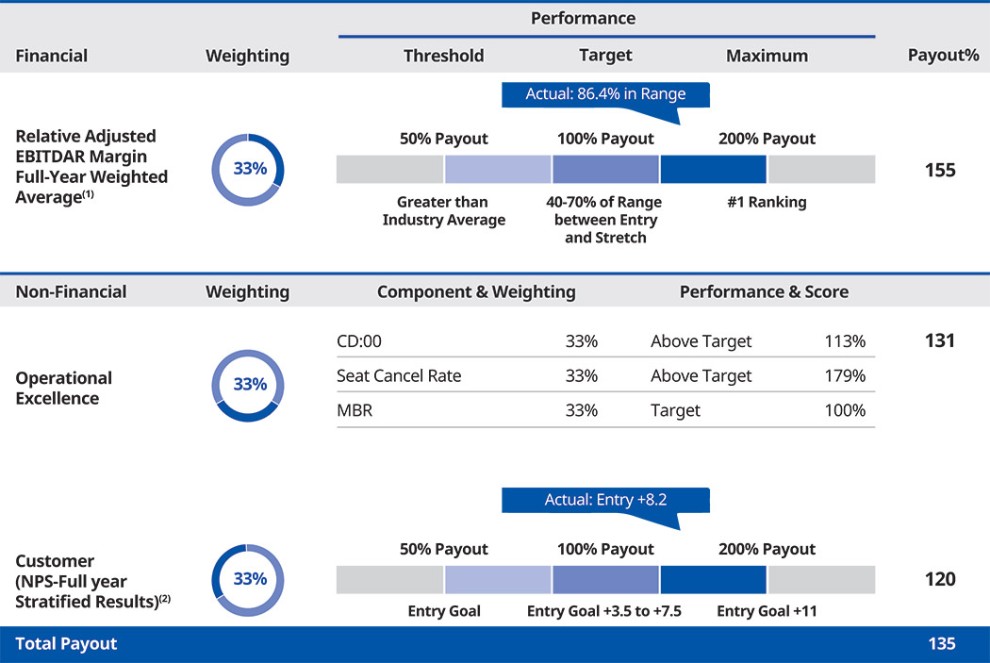
| (1) | The target range for the Relative Adjusted EBITDAR Margin metric was achievement between 40-70% of the difference between the industry weighted average Adjusted EBITDAR Margin and the Adjusted EBITDAR Margin of the peer with highest Adjusted EBITDAR Margin among the select industry peers. |
| (2) | NPS has no standardized industry meaning and, therefore, is not the same as similarly titled measures presented by other companies. As noted above, the performance levels set for NPS were designed to be challenging to attain. |
| |
2026 Proxy Statement | 97 |
Compensation Discussion and Analysis
2025 STI Payments
The actual 2025 STI awards paid to our NEOs are shown in the table below and are also included in the 2025 Summary Compensation Table under the Non-Equity Incentive Plan Compensation column:
EARNED BASE SALARY | X | STI BLENDED TARGET OPPORTUNITY % | X | PERFORMANCE AGAINST ANNUAL MEASURES | = | ACTUAL STI AWARD PAYOUT |
| | | | | | | | | | | | | | |
| | | | | | | | | | | | | | |
| | | | | 2025 STI | | | | | |
| |||
| | | | | 2025 STI | | | | | | | | |
|
| | Annual Base Salary | | Target | | 2025 STI Target | | Formulaic | | Final |
| |||
Named Executive Officer | | (as of 12/31/25) | | Opportunity | | Opportunity (1) | | Payout | | Award |
| |||
| | | | | | | | | | | | | | |
Scott Kirby | | $ | 1,200,000 |
| 250 | % | $ | 3,000,000 |
| 135 | % | $ | 4,050,000 | |
Brett Hart | | $ | 1,000,000 |
| 175 | % | $ | 1,750,000 |
| 135 | % | $ | 2,362,500 | |
Torbjorn Enqvist | | $ | 880,000 |
| 140 | % | $ | 1,199,452 |
| 135 | % | $ | 1,619,260 | |
Andrew Nocella | | $ | 808,500 |
| 125 | % | $ | 1,000,657 |
| 135 | % | $ | 1,350,887 | |
Michael Leskinen | | $ | 800,000 |
| 125 | % | $ | 981,260 |
| 135 | % | $ | 1,324,701 | |
| (1) | 2025 STI target opportunity ($) is determined based on a blended rate, which is the product of the NEO’s (x) blended 2025 STI Target Opportunity (%) and (y) blended base salary rate for 2025 (i.e., generally reflecting the lower STI and salary (as applicable) in effect prior to April 1, 2025 for 25% of the year and the STI and salary rates in effect on and after April 1, 2025 for 75% of the year). |
Long-Term Incentive Program
2025 Long-Term Incentive Program Summary
The Committee administers our LTI program with respect to our NEOs and determines, in its informed judgment and in accordance with the terms of the compensation plans, the recipients who may be granted awards, the form and amount of awards, the terms and conditions of awards (including vesting and forfeiture conditions), the timing of awards and the form and content of award agreements. Our LTI program, like our STI program, is designed to focus the efforts of our executives on key drivers of both short- and long-term success and on stockholder value creation. A significant percentage of our NEOs’ compensation is in the form of equity with three-year vesting periods, which is designed to promote retention and closely tie the interests of our NEOs to the interests of our stockholders.
In 2025, we continued to grant two types of long-term award vehicles, which each served a different purpose:
| ● | Performance-Based RSUs: we grant Performance-Based RSU awards that become earned based on the achievement of key financial goals and strategic initiatives determined based on the Company’s business plan for the fiscal year, in order to motivate management to contribute to our future success. The Committee links award payouts to the achievement of clear, preset, measurable performance measures that are designed to be appropriately rigorous and challenging to attain, require strong performance and execution to achieve, support our strategic and operational priorities and promote the creation of sustained stockholder value while at the same time taking care to not incentivize our executives to take inappropriate risk. |
When establishing our LTI program, the Committee carefully considers the design of the program, including the length of the performance period. Since 2022, when the Company returned to its practice of awarding long-term Performance-Based RSUs, the Company has utilized a structure whereby performance measures are set in one-third increments at the beginning of each year of the three-year performance periods. Over the past three years, the structure of this program has been successful for the Company in its ability to both incentivize management towards performance measures that are aligned with evolving market conditions, strategic priorities and our financial forecasts, as well as to retain our key executives. As a result, the Committee continued to employ this structure in the 2025 LTI program.
| |
98 |
|
Compensation Discussion and Analysis
The three-year nature of each Performance-Based RSU grant means that in any year, a NEO can have Performance-Based RSUs relating to up to three performance periods outstanding at any time. Amounts earned for each of these one-year tranches are accrued and paid at the end of the full three-year award cycle, contingent on continued employment through this period, subject to limited exceptions. Each tranche represents the performance measures and targets established by the Committee with respect to 1/3 of the target opportunity under the Performance-Based RSUs. Given that each year’s awards have an overlapping performance period from the prior year, we believe these awards provide the right balance between short-term and long-term focus.
Performance-Based RSUs awarded in 2025 as part of our regular LTI Program are referred to herein as “2025 Performance-Based RSUs,” the Performance-Based RSUs awarded in 2024 are referred to as “2024 Performance-Based RSUs” and the Performance-Based RSUs awarded in 2023 are referred to as “2023 Performance-Based RSUs.”
| | | ||||||||
| | 2023 | | 2024 | | 2025 | | 2026 | | 2027 |
2023 PBRSU | | Year 1 ● Relative CASM-ex(1) ● Strategic ● United Next ● Liquidity Condition | | Year 2 ● Relative Adjusted Pre-Tax Margin(2) ● Absolute Adjusted EPS(3) ● Strategic ● Liquidity Condition | | Year 3 ● Relative Adjusted Pre-Tax Margin(2) ● Absolute Adjusted EPS(3) ● Strategic ● Liquidity Condition | | | | |
| | | | | | | | | | |
| | 2024 PBRSU | | Year 1 ● Same as above, plus relative total stockholder return (TSR) modifier over three-year performance period | | Year 2 ● Same as above, plus relative TSR modifier over three-year performance period | | Year 3 ● Performance measures determined in 2026 | | |
| | | | | | | | | | |
| | | | | | | | | | |
| | | | 2025 Pbrsu | | Year 1 ● Same as above, but excluding relative TSR modifier | | Year 2 ● Performance measures determined in 2026 | | Year 3 ● Performance measures to be determined in 2027 |
| | | | | | | | | | |
| (1) | CASM-ex (adjusted cost or operating expense per available seat mile) is a measure that is not calculated in accordance with GAAP. CASM-ex is calculated as cost or operating expense per available seat mile excluding fuel expense, profit sharing, third-party business expenses and special charges (credits). For tranche 1 of the 2023 Performance-Based RSUs, the relative CASM-ex metric measures the relative change in CASM-ex from 2019 compared to the industry average. |
| (2) | Adjusted Pre-Tax Margin is a measure that is not calculated in accordance with GAAP. Please refer to Appendix A for additional information and a reconciliation of Adjusted Pre-Tax Margin to the most directly comparable GAAP financial measure. |
| (3) | Adjusted EPS is a measure that is not calculated in accordance with GAAP. Please refer to Appendix A for additional information and a reconciliation of Adjusted EPS to the most directly comparable GAAP financial measure. |
| |
2026 Proxy Statement | 99 |
Compensation Discussion and Analysis
| ● | Time-Based RSUs: reward long-term Company performance, support executives’ stock ownership and align with stockholders’ interests. In addition, time-based RSUs are designed to balance performance with stability and retention of our executive leadership team by vesting ratably over three years, generally subject to continued employment requirements. Granting time-based RSUs is also consistent with our compensation peer group’s practices. |
The following table provides an overview of the key elements of our 2025 Performance-Based RSUs and Time-Based RSUs granted to our NEOs.
Performance-Based RSUs | Time-Based RSUs | |
Proportion of Annual Grant | PBRSUs represent 50% of each annual LTI grant at target and each tranche of PBRSUs represents one-third of the annual grant of PBRSUs | Time-based RSUs represent 50% of each annual grant |
2025 Measures & Weighting | Absolute Adjusted EPS: 40% Relative Adjusted Pre-Tax Margin: 40% Strategic (three strategic initiatives related to technology): 20% Liquidity hurdle: $8 billion in liquidity at end of three-year performance period | Number of shares earned based on continued employment, the value of which increases or decreases with fluctuations in the value of Common Stock |
Min / Max Payout (% of Target Units) | 0% / 200% | N/A |
Vesting | Three-Year Cliff | Three-Year Ratable, with vesting occurring on an annual basis |
The following table summarizes the equity awards awarded to our NEOs in 2025. The Committee increased LTI opportunities for each of our NEOs in 2025 after consulting with Exequity and considering the competitive market data. In determining the size of the individual LTI awards granted to our NEOs in 2025 (including whether to make potential increases to 2024 levels), the Committee considered each NEO’s total pay and each individual element of pay to similarly-situated executives in our peer group; individual performance; the NEO’s experience; the breadth, scope and complexity of the NEO’s role; internal pay parity; the NEO’s total target compensation; as well as any outstanding or recently paid special awards and recent compensation adjustments, among other factors. The Committee also considered business factors, including annual financial forecasts, capital expenditure budgets and United’s annual business plan. Ultimately, the Committee determined to increase the LTI opportunities for each of our NEOs primarily in order to align the NEOs’ total target pay with the total target pay of similarly-situated executives in our peer group while ensuring that the NEOs’ total target pay primarily consists of at-risk elements designed to retain executives and support stockholder value creation.
| | | | | | | | | | |
| | | | | | | | | | |
| | Target Grant Value | | Grant Value | | | |
| ||
| | of PBRSUs | | of RSUs | | Total Target 2025 |
| |||
| | Awarded in | | Granted in | | Equity Compensation |
| |||
Named Executive Officer | | 2025 (1) | | 2025 | | ($)(2) |
| |||
| | | | | | | | | | |
Scott Kirby | | $ | 8,250,000 | | $ | 8,250,000 | | $ | 16,500,000 | |
Brett Hart | | $ | 5,125,000 | | $ | 5,125,000 | | $ | 10,250,000 | |
Torbjorn Enqvist | | $ | 2,332,000 | | $ | 2,332,000 | | $ | 4,664,000 | |
Andrew Nocella | | $ | 2,021,250 | | $ | 2,021,250 | | $ | 4,042,500 | |
Michael Leskinen | | $ | 1,800,000 | | $ | 1,800,000 | | $ | 3,600,000 | |
| (1) | Represents the annual RSU and Performance-Based RSU awards made in February 2025, assuming target performance for PBRSUs. The number of shares of Common Stock subject to the awards was determined by dividing the applicable value in the table by the closing stock price on the grant date and rounding down to the nearest whole unit. |
| |
100 |
|
Compensation Discussion and Analysis
| (2) | The target grant values associated with the 2025 Performance-Based RSUs in this table reflect the full target value of all three regular annual tranches of such awards, despite the fact that the portions attributable to performance measures in 2026 and 2027 will not be treated as formally “granted” for purposes of the executive compensation tables following this CD&A until the performance measures for those future tranches are established. Accordingly, the target values reflected in this table differ from those of the subsequent tables, which, consistent with disclosure rules, include the value of PBRSU grants only when the performance measures for each year are established. |
2025 Performance-Based RSUs
2025 Performance-Based RSU awards have a target opportunity of 100% of the target award value and a maximum or “stretch” opportunity equal to 200% of the target award value. Payment opportunities under PBRSU awards are subject to linear interpolation between performance levels.
The primary performance measures and weights used for tranche 3 of the 2023 Performance-Based RSUs, tranche 2 of the 2024 Performance-Based RSUs and tranche 1 of the 2025 Performance Based RSUs, are identical to each other and are set forth in the table below. The Committee chose the below three performance measures because it believed that, together, they represented an appropriate mix of financial goals and other business objectives to deliver long-term value to our stockholders, transform the customer experience, attract more brand-loyal customers and assist with achieving our financial objectives that help us meet our financial guidance. The performance metrics and goals were established based on the Company’s financial plan and operating and strategic initiatives and were designed to be challenging but attainable with strong management performance. To balance transparency with the need to protect competitively sensitive information, the Company has not disclosed certain specific performance targets and results, particularly those relating to longer-term strategic and operational initiatives, where such disclosure could cause competitive harm. However, the Company believes the information provided conveys the rigor of the performance goals and the extent to which they were achieved.
Performance Measures | Entry (50%) | Target (100%) | Stretch (200%) |
Absolute Adjusted EPS (40%) | | | |
United’s 2025 Adjusted EPS | $7.50 | $11.50 - $13.50 | $15.50 |
Relative Adjusted Pre-Tax Margin (40%) | | | |
Adjusted Pre-Tax Margin relative to the weighted average Adjusted Pre-Tax Margin of a focused set of industry peers. Achievement at the entry level required United’s performance to be greater than the industry weighted average and achievement at the stretch level required United to be the leader relative to the selected industry peers. The target range for the relative Adjusted Pre-Tax Margin metric was achievement between 40-70% of the difference between the industry weighted average Adjusted Pre-Tax Margin and the Adjusted Pre-Tax Margin of the peer with highest Adjusted Pre-Tax Margin among the peer group. | Greater than average | 40%-70% of range between entry and stretch levels | #1 Rank |
STRATEGIC (20%) | | | |
Increase mobile app usage on the day of travel | 79% of customer passenger name records (“PNRs”) | 83% of customer PNRs | 86% of customer PNRs |
Installation of Starlink connectivity on United Express aircraft and enable new advertising channels | Complete initial installation of Starlink on UAX aircraft and enable new advertising channels | 247 UAX aircraft | 330 UAX aircraft |
One quantitative and one qualitative indicator, each weighted equally, related to transitioning towards retiring legacy mainframe systems required for daily operations | ● 60% of quantitative indicator ● Completion of pre-established qualitative indicator | ● 80% of quantitative indicator ● Completion of pre-established qualitative indicator | ● 100% of quantitative indicator ● Completion of pre-established qualitative indicator |
| |
2026 Proxy Statement | 101 |
Compensation Discussion and Analysis
In addition to the above performance measures for calendar year 2025, payout of the Performance-Based RSUs are contingent on the achievement of a cash liquidity hurdle ($8 billion) as of the end of the three-year performance period.
2025 Time-Based RSUs
Time-Based RSUs make up the remaining 50% of our executives’ target long-term equity incentives. Each grant of RSUs vests one-third on each of February 28, 2026, February 28, 2027 and February 28, 2028. Time-based RSUs enhance retention of our NEOs, align with compensation practices of our peers and support stockholder value creation.
2023 Performance-Based RSUs and 2024 Performance-Based RSUs
Details relating to the performance measures established in 2023 for the 2023 Performance-Based RSUs (applies to tranche 1 of the 2023 Performance-Based RSUs, tranche 2 of the 2024 Performance-Based RSUs and tranche 3 of the 2025 Performance-Based RSUs) are set forth on pages 102 through 104 of United’s 2024 proxy statement filed with the SEC on April 12, 2024.
Details relating to the performance measures established in 2024 for the 2024 Performance-Based RSUs (applies to tranche 1 of the 2024 Performance-Based RSUs and tranche 2 of the 2025 Performance-Based RSUs) are set forth on pages 100 through 101 of United’s 2025 proxy statement filed with the SEC on April 10, 2025.
| |
102 |
|
Compensation Discussion and Analysis
Payout of 2023 Performance-Based RSUs (Completed Performance Period)
Under the terms of the 2023 Performance-Based RSUs, 2025 represented the final year of the three-year performance period. The 2023 Performance-Based RSUs vested based on performance measures established on an annual basis during the three-year performance period commencing January 1, 2023 and ending December 31, 2025. The 2023 Performance-Based RSUs were divided into three tranches that were each weighted as 1/3 of the target 2023 Performance-Based RSUs. The 2023 Performance-Based RSUs had a continued service condition, generally requiring the NEO’s continued employment through the end of 2025 to vest.
Below is a summary of the Company’s performance results under the performance measures of the 2023 Performance-Based RSUs, which resulted in an overall vesting level 134% of target. The performance measures and targets were designed to be challenging to attain and require strong management performance and execution to achieve, which was ultimately reflected by the overall vesting level of 134% of target.
The awards vested at the end of 2025 and were settled in the first quarter of 2026 and are included in the “Option Exercises and Stock Vested for 2025” table.
| | | ||||||||
| Performance Measures (1) | Tranche | Entry (50%) | Target (100%) | Stretch (200%) | Actual Results | Payout | Final | ||
Tranche 1 | | CASM-ex (2, 3) | 40% | Equal to industry avg | 1 to 2 pts better than industry avg | 4 pts better than industry avg | 1.97 pts better than industry avg | 100% | | |
| Technician Hiring (4) | 13% | Target level -5% | Significantly higher than historical levels | Target level +5% | Between Target and Stretch | 160% | | ||
| United Next Actions | 27% | (5) | (5) | (5) | (5) | 183% | | ||
| Strategic Actions (# of actions completed) (6) | 20% | Environmental : 6 | Environmental : 8 | Environmental : 10 People & Responsible Sourcing : 8 | Environmental : 9 People & Responsible | 125% | | ||
| | | | | | | | | 135% | |
Tranche 2 | | Absolute Adjusted EPS (7) | 40% | $5 | $9 - $11 | $13 | $10.61 | 100% | | |
| Relative Adjusted Pre-Tax Margin (8) | 40% | -0.5% | +0.5% - +1.0% | 2.0% | 2.7% | 200% | | ||
| Strategic Actions (# of actions completed) (6) | 20% | Environmental: 6 People & Responsible Sourcing: 6 | Environmental: 8 People & Responsible Sourcing: 7 | Environmental: 10 | Environmental: 8 | 150% | | ||
| | | | | | | | | 150% | |
| | | | | | | | | | |
Tranche 3 | | Absolute Adjusted EPS (7) | 40% | $7.50 | $11.50 - $13.50 | $15.50 | $10.62 | 89% | | |
| Relative Adjusted Pre-Tax Margin (8) | 40% | Greater than average | 40%-70% of range between entry and stretch levels | #1 rank | 87.0% in range | 157% | | ||
| Strategic Action: Mobile App Usage | 6.66% | 79% of customer PNRs | 83% of customer PNRs | 86% of customer PNRs | 83% of customer PNRs | 100% | | ||
| Strategic Action: Starlink Installation | 6.66% | Complete initial installation of Starlink on UAX aircraft and enable new advertising channels | 247 UAX aircraft | 330 UAX aircraft | 277 UAX aircraft | 136% | | ||
| Strategic Action: Retirement of legacy mainframe system | 6.66% | 60% of quantitative factor Completion of pre-established qualitative factor | 80% of quantitative factor Completion of pre-established qualitative factor | 100% of quantitative factor Completion of pre-established qualitative factor | 50% of quantitative factor Completion of target level pre-established qualitative factor | 50% | | ||
| | | | | | | | | | |
| | | | | | | | | | 117% |
| | | | | | | | | | |
| | | | Total payout under 2023 Performance-Based RSUs (as % of target) (9) | 134% | |||||
| (1) | For a detailed description of the performance measures established in 2023 for tranche 1 of the 2023 Performance-Based RSUs, see pages 102 through 104 of United’s 2024 proxy statement filed with the SEC on April 12, 2024. For a detailed description of the performance measures established in 2024 for tranche 2 of the 2023 Performance-Based RSUs, see page 100 of United’s 2025 proxy statement filed with the SEC on April 10, 2025. For a detailed description of the performance measures for tranche 3 of the 2023 Performance-Based RSUs, see “2025 Performance-Based RSUs” above on page 101. |
| (2) | CASM-ex is a non-GAAP financial measure. CASM-ex is calculated as cost or operating expense per available seat mile excluding fuel expense, profit sharing, third-party business expenses and special charges (credits). |
| (3) | The performance measure is based on the relative change in 2023 CASM-ex from 2019 as compared with the industry average. |
| (4) | This performance measure is the number of frontline technicians hired (as a % of 4th quarter authorization). |
| (5) | Below sets forth the entry, target, stretch and actual achievement levels for each of the six United Next metrics within this performance measure for tranche 1 of the 2023 Performance-Based RSUs. |
| |
2026 Proxy Statement | 103 |
Compensation Discussion and Analysis
Metric | Entry (50%) | Target (100%) | Stretch (200%) | Actual Results |
1. Tech Ops line maintenance footprint expansion | | Significantly expand our current maintenance location footprint | Above Stretch | |
2. Aircraft parking position | EWR + 4 other hubs | EWR + 5 other hubs | All 7 hubs | Stretch |
3. Aircraft parts supply/availability | 1 pt improve | 1.25 pts improve | 1.5 pts improve | Above Stretch |
4. AirTop surface/air traffic mgmt. simulation model | 57% of hub departures | 75% of hub departures | 85% of hub departures | Stretch |
5. Leverage FAA system-wide info management | Build and test an air traffic management tool | Implementation of an enhanced air traffic management tool and the management of 50% of Ground Delay Program traffic | Implementation of an enhanced air traffic management tool and the management of 85% of Ground Delay Program traffic | Stretch |
6. Enhance efficiency of air traffic flow | Develop TOS capability | TOS testing 1 location | TOS in live operation | Target |
| (6) | The Compensation Committee incorporated this objective and measurable performance metric into the Company’s LTI to reflect the Company’s focus on long-term value creation for its stockholders by incentivizing management to reach various performance indicators that will assist the Company in achieving certain key commitments and initiatives relating to its environmental sustainability, people impact and responsible sourcing programs. The performance indicators were designed to be challenging but achievable with strong management performance. |
| (7) | Absolute Adjusted EPS is a measure that is not calculated in accordance with GAAP. Please refer to Appendix A for additional information and a reconciliation of Adjusted EPS to the most directly comparable GAAP financial measure. |
| (8) | Adjusted Pre-Tax Margin is a measure that is not calculated in accordance with GAAP, with relative Adjusted Pre-Tax Margin measured by comparing our Adjusted Pre-Tax Margin against performance of selected industry peers. Please refer to Appendix A for additional information and a reconciliation of Adjusted Pre-Tax Margin to the most directly comparable GAAP financial measure. |
| (9) | Vesting of the 2023 Performance-Based RSUs was also subject to an $8 billion cash liquidity hurdle at the end of the three-year performance period, which was achieved. |
Additionally, Mr. Leskinen received a promotional PBRSU award in 2023 that vested 50% based on performance measures established in 2024 and 50% based on performance measures established in 2025, consistent with performance measures and results set forth in the table above on the rows “Tranche 2” and “Tranche 3,” respectively. This resulted in an overall vesting level of 134% of target.
Open Performance Periods
Performance under the 2024 Performance-Based RSUs and 2025 Performance-Based RSUs will be determined following the end of the three-year performance periods ending December 31, 2026 and 2027, respectively, given that certain underlying performance measures (including the liquidity condition and, for the 2024 Performance-Based RSUs, the relative TSR modifier) are still outstanding. The performance metrics and relative weights for the 2025 Performance-Based RSUs are set forth above on page 101 in the table under the heading “2025 Performance-Based RSUs.”
Performance under the remaining two tranches of the 2024 Retention LTI Awards (as described below) will be determined following the end of the annual performance periods on June 30, 2026 and June 30, 2027, respectively, given that underlying performance measures remain outstanding. The performance measures and relative weights for the remaining two tranches of the 2024 Retention LTI Awards are set forth on pages 103-104 of the Company’s 2025 Proxy Statement filed with the SEC on April 10, 2025.
Payout of Transformation Incentive Awards (Completed Performance Period)
In September 2022, the Committee approved performance-based incentive awards (the “Transformation Incentive Awards”) to each of our NEOs other than Mr. Leskinen. The Transformation Incentive Awards provided an incentive opportunity of 50% to 150% of the target opportunity (or 0% to 150% with respect to Mr. Kirby) based on the achievement of a pre-established human capital performance measure during the period January 1, 2023 through June 30, 2025, with a service-based vesting condition over a three year period beginning September 22, 2022 and ending September 22, 2025. For recipients other than Mr. Kirby, the Transformation Incentive Award vested with respect to 25% of the target opportunity on each of September 22, 2023 and September 22, 2024. Mr. Kirby’s Transformation Incentive Award did not include interim vesting dates and his Transformation Award opportunity vested on September 22, 2025.
| |
104 |
|
Compensation Discussion and Analysis
In September 2025 the Committee certified performance of the Transformation Incentive Awards at 132% of the total target opportunity level based on achievement of the underlying performance measure and subsequently, based on the level of performance achieved: (i) each of Messrs. Hart, Enqvist and Nocella received the remaining portion of their award, reduced by the amounts received on the interim vesting dates, as follows: Mr. Hart—$2,870,000; Mr. Enqvist—$2,050,000; and Mr. Nocella—$1,640,000, as reflected in the “2025 Summary Compensation Table,” (ii) Mr. Kirby received the entire cash portion of his Transformation Incentive Award, which was equal to $3,960,000, as reflected in the “2025 Summary Compensation Table,” and (iii) the equity portion of Mr. Kirby’s Transformation Incentive Award vested on September 22, 2025, as reflected in the “Option Exercises and Stock Vested for 2025” table. Below is a summary of the Company’s performance results under the performance measure for the Transformation Incentive Award.
| | | ||
Performance Measure | Entry (0% or 50%) | Target (100%) | Stretch (150%) | Actual Results |
Annualized number of pilots hired, trained and available to fly at end of performance period (1) | 1.0x | 2.0x | 4.6x | 3.68x |
| (1) | Measured as a multiple of the average annual number of pilots hired from 2013-2018. |
Payout of First Tranche of 2024 Retention LTI Awards (Completed Performance Period)
In July 2024, the Committee awarded each of our NEOs an award of Performance-Based RSUs, which were designed to motivate, retain and reward our executive team in a period of retention vulnerabilities within the industry and incentivize our executives to maintain and drive key financial metrics (the “2024 Retention LTI Awards”). The 2024 Retention LTI Awards vested or will vest in one-third increments over three years, subject to achievement of the following performance measures:
| ● | Absolute Adjusted EPS (First Tranche and Second Tranche) — The first and second tranches of the 2024 Retention LTI Awards became earned or may become earned based on our positive Adjusted EPS during the four quarters ending June 30, 2025 and June 30, 2026, respectively, as well as continued employment through each applicable vesting date. |
| ● | Relative Adjusted Pre-Tax Margin (Third Tranche) — The third tranche of the 2024 Retention LTI Awards may become earned based on our Adjusted Pre-Tax Margin during the four quarters ending June 30, 2027 relative to the weighted average Adjusted Pre-Tax Margin of selected industry peers during the same period and is also subject to an Adjusted EPS performance measure. Continued employment through the applicable vesting date is required. |
During 2025, the Committee certified performance of the first tranche of the 2024 Retention LTI Awards. As a result of the Company’s net positive Adjusted EPS during the four quarters ending June 30, 2025 equal to $11.37, the first tranche of the 2024 Retention LTI Awards resulted in an overall vesting level of 100% of target. The first tranches vested on July 25, 2025 and were settled in shares shortly thereafter and are included in the “Option Exercises and Stock Vested for 2025” table.
Use of Adjustments in Incentive Programs
Our goal is to pay incentives based on the same underlying business trends and results that our investors are using to measure United performance. To incentivize management to make decisions that have positive, long-term impacts, even at the expense of shorter-term results, and to prevent one-time gains and losses from having too great of an impact on incentive payouts, the Committee reviews whether to adjust results under the 2025 STI program, tranches 1, 2 and 3 of the 2023 Performance-Based RSU awards, tranches 1 and 2 of the 2024 Performance-Based RSU awards, and tranche 1 of the 2025 Performance-Based RSU awards, although no such adjustment has been made as of the Record Date with respect to such awards.
| |
2026 Proxy Statement | 105 |
Compensation Discussion and Analysis
Other Elements of the Executive Compensation Program
As part of a comprehensive and competitive executive compensation package, executives may be eligible for additional benefits as summarized below. These benefits are designed to attract and retain the executive talent needed to achieve our business and financial objectives.
RETIREMENT BENEFITS
United maintains a tax qualified 401(k) plan and an excess 401(k) cash direct and cash match program for management and administrative employees, including the NEOs. We believe these benefits encourage retention and are part of delivering an overall competitive pay package necessary to recruit and retain talented executives.
Mr. Enqvist participates in a legacy retirement plan, the Continental Retirement Plan (“CARP”). Details about this retirement plan and Mr. Enqvist’s benefits thereunder are provided below under the headings “2025 Pension Benefits Table” and “Narrative to Pension Benefits Table.”
PERQUISITES AND OTHER EXECUTIVE BENEFITS
The Committee annually oversees perquisites for our executives and, when evaluating potential perquisites, the Committee considers many factors, including the cost relative to the anticipated business benefit, perceived value to our executives and corporate governance considerations. Based on the Committee’s review, we offer our officers, including our NEOs, certain perquisites that we believe are appropriate and generally consistent with those provided to executives at similar levels at companies within the airline industry and general industry groups. In December 2024, in consultation with Exequity, the Committee’s independent compensation consultant, the Committee conducted a review of perquisites and other personal benefits and determined that they remained generally consistent with relevant market practice. We believe that providing certain benefits to our executives, rather than cash, enhances recruitment and retention, results in a cost savings to United and strengthens our relationships with our executives.
For example, travel privileges on United flights provide the opportunity to become familiar with our network, product and locations and to interact with customers and employees. The incremental cost to United of providing such flight benefits is minimal, while we believe United benefits from providing these benefits and the value of these benefits to our executives is perceived by them to be high. Consistent with historic practice and the travel policies at other airlines, United provides tax indemnification on the travel benefits provided to our NEOs during employment, subject to an annual limit as applicable.
In addition, the Company engaged an independent outside security firm that specializes in executive protection to perform a comprehensive security assessment with respect to Mr. Kirby and provide recommendations to enhance the Company’s overall executive protection controls and update the Company’s executive security program. After considering this independent risk assessment, its validation by our internal security team and the highly visible nature of Mr. Kirby’s role as Chief Executive Officer, the Company paid for certain personal security protection services for him in 2025 and related tax reimbursements. Because the Committee believes that it is in the best interests of the Company and its stockholders to protect against possible security threats with respect to Mr. Kirby, Mr. Kirby is required to accept such personal security protection while he serves as Chief Executive Officer.
The Company’s executive security program—which prescribes the level of personal security to be provided to the Chief Executive Officer and certain other executive officers, as applicable—is based on bona-fide, business-related security concerns as specified in the independent risk assessment described above and are an integral part of the Company’s overall risk management and security program. The Committee believes that the safety and well-being of our executive officers are critical to the Company and its stockholders to reduce business continuity risk. Therefore, the Committee considers the scope and minimal costs associated with their security are reasonable and appropriate when deemed necessary by our internal security team, particularly in light of the heightened risk environment in the airline industry, and are for the benefit of Company and not a personal benefit. The Committee implemented an annual process to provide oversight of the nature and cost of personal security protection services for our executives. Although the Company views the costs associated with these benefits to be appropriate business expenses, SEC disclosure rules require that these amounts be treated as compensation. The aggregate incremental costs of the personal security protection services, which constitutes a small percentage of Mr. Kirby’s total compensation, are reported under applicable SEC disclosure rules in the “All Other Compensation” column of the 2025 Summary Compensation Table.
| |
106 |
|
Compensation Discussion and Analysis
In sum, we offer the following perquisites to our NEOs:
| ● | Active flight benefits up to an annual travel limit pursuant to United’s Officer Travel Policy, including a tax indemnification on the flight benefits while an executive up to an annual cap as applicable and other travel-related benefits. |
| ● | Cybersecurity / identity protection services to certain individuals. |
| ● | Basic and supplemental life insurance. |
| ● | Voluntary employee-paid group insurance benefits (supplemental disability, supplemental life insurance and personal excess liability coverage). |
| ● | An annual executive physical available through preferred providers. |
| ● | Health Club Membership Reimbursement for health club membership dues and services up to a $2,500 annual limit. |
| ● | Reimbursement for certain tax preparation and financial services, with annual reimbursement limited to $20,000 for our Chief Executive Officer and $10,000 for our other NEOs. |
| ● | Parking benefits. |
| ● | Community Support Travel Program: NEOs are eligible to direct a donation of a limited number of tickets to qualifying charitable organizations and nominate one United Club Membership per calendar year. |
| ● | Package delivery services. |
| ● | Personal security protection services and related tax reimbursements. |
The aggregate incremental cost of providing these perquisites and other benefits to our NEOs is detailed in footnote 6 to the 2025 Summary Compensation Table below.
SEVERANCE AND CHANGE IN CONTROL BENEFITS
In order to attract and retain high-performing NEOs, we believe it is appropriate to provide severance to an executive officer in certain circumstances. Each of our NEOs is covered by the terms of United’s Executive Severance Plan, which provides for certain payments and benefits upon qualifying termination events, as described in “Potential Payments Upon Termination or Change in Control” below. Based on the advice of Exequity, we believe that our severance benefits are in line with market practices and provide appropriate levels of compensation and terms and conditions related to executive separations. Further, we believe that these arrangements are an important component of our compensation packages in terms of attracting and retaining top caliber talent in senior leadership roles and in defining terms and conditions of executive separation events. We do not gross up for excise taxes that may be imposed as a result of severance payments and, for payments payable upon or following a change in control, we generally require a qualifying termination of employment in addition to the change in control, with limited exceptions. See “Potential Payments upon Termination or Change in Control” below for a discussion and estimate of the potential compensation and benefits provided pursuant to these arrangements.
| |
2026 Proxy Statement | 107 |
Compensation Discussion and Analysis
Significant Compensation Policies and Other Information Regarding Executive Compensation
COMPENSATION Clawback Policy
Accountability is a fundamental value of United. To reinforce this value through our executive compensation program, we have a compensation clawback policy (the “clawback policy”) that is applicable to our executive officers. Our clawback policy includes both (1) a mandatory recovery element applicable to our current and former Section 16 officers to comply with the incentive-based compensation recovery provisions of the Dodd-Frank Act and the Nasdaq listing standards regarding recovery of erroneously awarded compensation in the event of certain accounting restatements on a “no fault” basis and (2) a discretionary element that permits United to seek recovery of compensation (including any incentive-based compensation, which may be in the form of cash or equity, variable compensation, bonus, severance or sign-on compensation, including, without limitation, time-based and performance-based awards) over a three year look-back period awarded or paid to any current or former officer of United and/or United Airlines, Inc. at the level of Vice President or above if such covered executive committed a significant legal or compliance violation, irrespective of whether such violation occurred in connection with a restatement. The clawback policy was filed as Exhibit 97 to United’s 2025 Annual Report on Form 10-K.
Robust Stock Ownership GUIDELINES
Our executive officers and certain other senior executives are required to maintain a minimum equity stake in United. We believe that the current levels of stock ownership specified in our stock ownership guidelines provide an appropriate balance between keeping executive stock ownership at a level that supports alignment with stockholder interests while also providing officers sufficient flexibility. Each covered executive is required to acquire and maintain ownership of shares of Common Stock equal to a specified multiple of his or her base salary, which for our NEOs ranges from 3 to 6 times base salary, as shown in the table below. Each covered executive must retain 50% of all net shares (post-tax) that vest until achieving his or her minimum share ownership requirement. Covered executives are required to achieve compliance with the stock ownership guidelines within five years of becoming subject to such guidelines. If a covered executive is promoted to a higher level, the covered executive will have five years (beginning on the date of such promotion) to achieve the ownership target associated with the higher officer level.
| | | |
| | | |
| | Stock Ownership Guideline | |
Named Executive Officer | | (Multiple of Salary) | |
| | | |
Scott Kirby | | 6.0x | |
Brett Hart | | 4.0x | |
Torbjorn Enqvist | | 3.0x | |
Andrew Nocella | | 3.0x | |
Michael Leskinen | | 3.0x | |
| WHAT COUNTS AS OWNERSHIP | |
| WHAT DOES NOT COUNT AS OWNERSHIP | ||
| | ● Shares owned outright by the executive ● Outstanding time-based RSU awards that will settle in shares of Common Stock ● Restricted stock awards | | | | ● Unexercised stock options ● Unvested Performance-Based RSUs |
| | | | | | |
The Committee reviews compliance with these stock ownership guidelines annually. Based on the most recent annual evaluation, all of our NEOs are in compliance with the stock ownership guidelines.
| |
108 |
|
Compensation Discussion and Analysis
Policy Prohibiting Hedging and Pledging
Under our Securities Trading Policy, officers, directors and all of our management and administrative employees are prohibited from engaging in speculative and derivative trading, short-selling or otherwise hedging our securities. This restriction includes “short sales,” “short sales against the box,” the purchase and sale of “put” and “call” options, warrants and hedging transactions (such as forward-sale contracts, equity swaps, collars and exchange funds). Our officers, directors and management and administrative employees are also prohibited from pledging our securities. None of our directors or executive officers has pledged shares of our stock as collateral for a loan or holds shares of our stock in a margin account.
ACCOUNTING CONSIDERATIONS
We account for stock-based compensation in accordance with FASB ASC Topic 718, which requires us to recognize compensation expense for share-based payments, including time-based RSUs, PBRSUs, shares of Common Stock and other forms of equity compensation.
| |
2026 Proxy Statement | 109 |
Compensation Discussion and Analysis
Compensation Committee Report
The following Compensation Committee Report does not constitute soliciting material and shall not be deemed filed or incorporated by reference into any filing under the Securities Act or the Exchange Act, except to the extent we specifically incorporate such information by reference.
The Committee has reviewed and discussed the above section of this Proxy Statement entitled “Compensation Discussion and Analysis” prepared in accordance with Item 402(b) of Regulation S-K with management. Based on such review and related discussions, the Committee recommended to the Board that the Compensation Discussion and Analysis be included in this Proxy Statement and United’s Annual Report on Form 10-K for the year ended December 31, 2025.
Respectfully submitted,
Compensation Committee
| |
| |
| |
| |
james M. whitehurst | | ROSALIND BREWER | | matthew friend | | EDWARD L. SHAPIRO | |
Compensation Committee Chairperson | | Compensation Committee Member | | Compensation Committee Member | | Compensation Committee Member | |




| |
110 |
|
Executive Compensation
2025 Summary Compensation Table
The following table provides information regarding our NEOs for fiscal year 2025, determined in accordance with applicable SEC disclosure rules. The table provides information for 2025, 2024 and, to the extent required by applicable SEC disclosure rules, 2023.
| | | | | | | | | | | | | | | | | |
| | | | | | | | | | | | Change in | | | | | |
| | | | | | | | | | Non-Equity | | Pension Value | | | | | |
| | | | | | | | | | Incentive | | Non-Qualified | | | | | |
| | | | | | | | Stock | | Plan | | Deferred Compensation | | All Other | | | |
| | | | Salary | | Bonus | | Awards | | Compensation | | Earnings | | Compensation | | Total | |
Name and Principal Position | | Year | | ($)(1) | | ($) | | ($)(2) | | ($)(3) | | ($)(4) | | ($)(5) | | ($) | |
Scott Kirby | | 2025 | | 1,200,000 | | — | | 22,565,804 | | 8,010,000 | | — | | 506,449 | | 32,282,253 | |
Chief Executive Officer | | 2024 | | 1,175,000 | | 3,000,000 | | 24,405,267 | | 5,141,223 | | — | | 203,498 | | 33,924,988 | |
| | 2023 | | 1,075,000 | | — | | 10,705,744 | | 6,636,815 | | — | | 155,740 | | 18,573,299 | |
Michael Leskinen | | 2025 |
| 783,750 | | — | | 4,799,695 | | 1,324,701 | | — | | 143,264 |
| 7,051,410 | |
Executive Vice President and | | 2024 | | 761,250 | | 569,307 | | 5,045,623 | | 1,580,451 | | — | | 150,215 | | 8,106,846 | |
Chief Financial Officer | | 2023 | | 447,103 | | 1,128,240 | | 988,963 | | 770,131 | | — | | 109,090 | | 3,443,527 | |
Brett Hart | | 2025 | | 1,000,000 | | — | | 13,905,113 | | 5,232,500 | | — | | 148,078 | | 20,285,691 | |
President | | 2024 |
| 975,000 | | 4,200,000 | | 15,263,264 | | 2,986,356 | | — | | 225,159 | | 23,649,779 | |
| | 2023 |
| 868,750 | | 3,875,000 | | 6,420,817 | | 3,687,526 | | — | | 132,851 | | 14,984,944 | |
Torbjorn Enqvist | | 2025 |
| 880,000 | | — | | 6,417,260 | | 3,669,260 | | 17,923 | | 115,384 |
| 11,099,827 | |
Executive Vice President and | | 2024 | | 860,000 | | 2,220,980 | | 7,568,878 | | 1,881,489 | | — | | 115,635 |
| 12,646,982 | |
Chief Operations Officer | | 2023 | | 775,000 | | 1,525,000 | | 2,996,475 | | 2,121,677 | | 19,595 | | 116,480 |
| 7,554,227 | |
Andrew Nocella | | 2025 |
| 808,500 | | — | | 5,447,921 |
| 2,990,887 |
| — |
| 115,885 |
| 9,363,193 | |
Executive Vice President and | | 2024 |
| 798,875 |
| 2,600,000 | | 6,464,807 |
| 1,677,748 |
| — |
| 103,174 |
| 11,644,604 | |
Chief Commercial Officer | | | | | | | | | | | | | | | | | |
(1) | Represents the actual salary earned by each NEO in 2025. |
(2) | For each named executive officer’s rows for 2025, represents the grant date fair value of time-vested RSUs as well as the Performance-Based RSUs granted in 2025 (i.e., tranche 1), the Performance-Based RSUs granted in 2024 (i.e., tranche 2) and the Performance-Based RSUs granted in 2023 (i.e., tranche 3), each as computed in accordance with FASB ASC Topic 718. For Mr. Leskinen, the amount also includes the second half of his 2023 promotional PBRSU award, for which half of the award vested based on performance measures established in 2024 and half of the award vested based on performance measures established in 2025. |
For Performance-Based RSUs, the grant date fair value is based on the closing price of Common Stock on the date of grant for the portion of awards based on performance conditions and for Performance-Based RSUs granted in 2024, on a Monte Carlo valuation for the portion of awards attributable to the relative TSR modifier. The Monte Carlo simulation was performed using the remaining performance period of 3.0 years and assuming an expected volatility of 40.3% and risk-free interest rate of 4.00%. The expected volatility was based on an analysis of the historical volatility of Common Stock on the grant date for 1.75 years. The risk-free interest rate corresponding with the remaining performance period was calculated using a forward rate curve based on the U.S. Treasury yield curve as of the measurement date. For a discussion of the assumptions made in the valuation referenced in this column, see note 5 to the consolidated financial statements in the Company’s 2025 Annual Report on Form 10-K. As discussed in the CD&A, the Committee designed the 2025, 2024 and 2023 Performance-Based RSUs so that the performance measures and levels are set in one-third increments at the beginning of each year of the three-year performance Period (January 1, 2025 – December 31, 2027 for the 2025 Performance-Based RSUs, January 1, 2024 – December 31, 2026 for the 2024 Performance-Based RSUs and January 1, 2023 – December 31, 2025 for the 2023 Performance-Based RSUs). The Committee will set or has set performance measures for the remaining two-thirds of the 2025 Performance-Based RSU awards in each of 2026 and 2027 and for the remaining one-third of the 2024 Performance-Based RSU awards in 2026. Values with respect to Performance-Based RSUs were calculated based on the probable satisfaction of the applicable performance conditions as of the date of grant (which was target performance).
| |
2026 Proxy Statement | 111 |
Executive Compensation
The following table reflects the aggregate grant date fair value at the maximum or “stretch” level of (i) the third tranche of 2023 Performance-Based RSUs (the “stretch” level is 200% of the target level), (ii) the second tranche of the 2024 Performance-Based RSUs (the “stretch” level is 300% of the target level assuming maximum application of the relative TSR modifier) and (iii) the first tranche of the 2025 Performance-Based RSUs (the “stretch” level is 200% of the target level). For Mr. Leskinen, the below table also discloses the maximum value of the second-half of his 2023 promotional PBRSU award, as noted in footnote (a) below.
| | | | | | | | | |
| | | | | | | | | |
| | | | 2023 | | 2024 | | 2025 | |
| | | | Performance-Based | | Performance-Based | | Performance-Based | |
| | | | RSUs Maximum | | RSUs Maximum | | RSUs Maximum | |
Name | | Grant Date | | Value ($) | | Value ($) | | Value ($) | |
| | | | | | | | | |
Scott Kirby |
| 2/28/25 |
| 9,298,635 | | 20,749,824 | | 5,499,893 | |
Michael Leskinen | | 2/28/25 | | 157,226 | | 4,341,622 | | 1,199,830 | |
| | 2/28/25 | | 1,748,056 | (a) | — | | — | |
Brett Hart |
| 2/28/25 |
| 5,623,347 | | 12,780,677 | | 3,416,560 | |
Torbjorn Enqvist |
| 2/28/25 |
| 2,646,380 | | 5,954,494 | | 1,554,619 | |
Andrew Nocella | | 2/28/25 | | 2,264,011 | | 4,862,830 | | 1,347,487 | |
(a) | Represents the maximum value of the second half of Mr. Leskinen’s 2023 promotional PBRSU award at “stretch” level of performance (200% of target). |
For the time-vested RSU awards, the grant date fair value was calculated by multiplying the number of RSUs awarded by the closing price per share of Common Stock on the date of grant. See the footnotes to the Grants of Plan-Based Awards for 2025 table below for the share price on the date of grant.
(3) | The amounts reported for 2025 in this column include: (i) for each NEO, payments under the 2025 STI program, for which our 2025 Company performance resulted in achievement at 135% of the total target opportunity level and (ii) for each of Mr. Kirby ($3,960,000), Mr. Hart ($2,870,000), Mr. Enqvist ($2,050,000) and Mr. Nocella ($1,640,000), the payout of the Transformation Incentive Awards which vested on September 22, 2025 following certification of achievement of the underlying performance metric, resulting in payout of 132% of the total target opportunity level. See “Short-Term Incentive Program” and “Transformation Incentive Awards” in the CD&A above for additional details. |
(4) | Prior to the 2010 merger, Mr. Enqvist participated in pension benefits provided as part of the compensation program of Continental Airlines (“Continental”), including the CARP. None of the other NEOs participate in the pension benefits programs. The amounts are calculated based on the difference in the present value of accumulated benefits determined as of December 31, 2025, December 31, 2024 and December 31, 2023. These benefits are frozen, but the values of the frozen benefits continue to fluctuate based on changes in actuarial assumptions and the passage of time. Decreases in pension values are shown as zeroes in the Summary Compensation Table. See “Narrative to Pension Benefits Table” below for a discussion of the assumptions used to calculate the present values of these pension benefits and further information on the provisions of the plans. |
Executive Compensation
(5) | The following table provides details regarding amounts disclosed in the “All Other Compensation” column for 2025: |
| | | | | | | | | | | | | | | | | |
| | | | | | | | | | | | | | | | | |
| | Insurance | | | | 401(k) Cash | | | | | | | | | | | |
| | Premiums | | | | Direct and | | Charitable | | Perquisites | | | | | | | |
| | Paid by | | 401(k) Company | | Cash Match | | Ticket | | and Other | | Air Travel Tax | | Personal | | | |
| | Company | | Contributions | | Program | | Donation | | Benefits | | Indemnification | | Security | | Total | |
Name | | ($)(a) | | ($)(b) | | ($)(b) | | ($)(c) | | ($)(d) | | ($)(e) | | ($)(f) | | ($) | |
| | | | | | | | | | | | | | | | | |
Scott Kirby |
| 13,850 | | 24,500 | | 59,500 | | 33,000 | | 69,754 | | 32,723 | | 273,122 | | 506,449 | |
Michael Leskinen |
| 3,485 | | 22,750 | | 32,175 | | 3,800 | | 46,993 | | 34,061 | | — | | 143,264 | |
Brett Hart |
| 11,883 | | 24,500 | | 45,500 | | — | | 40,908 | | 25,287 | | — | | 148,078 | |
Torbjorn Enqvist |
| 8,372 | | 28,000 | | 42,400 | | 3,800 | | 24,958 | | 7,854 | | — | | 115,384 | |
Andrew Nocella |
| 9,617 | | 24,500 | | 32,095 | | 7,600 | | 23,265 | | 18,808 | | — | | 115,885 | |
(a) | Represents premiums paid by the Company for supplemental life insurance provided to the named executive officers. |
(b) | Amounts shown represent Company contributions to the 401(k) plan. The 401(k) cash direct and cash match program provides cash payments equivalent to direct and matching contributions that could not be made to the applicable 401(k) plan as a result of contribution limits imposed under the Internal Revenue Code. |
(c) | Amounts represent the aggregate incremental cost of complimentary positive air space travel donated to qualified charitable organizations selected by the NEO, as discussed in the CD&A under the caption “Perquisites and Other Executive Benefits” above. |
(d) | This column includes: (i) for each NEO, the Company’s incremental cost of providing the NEO air travel on flights operated by the Company or any UAL subsidiary or operated as “United Express,” tax and financial planning services and an annual executive physical; (ii) for each of Messrs. Kirby, Leskinen, Hart and Enqvist, cybersecurity / identity protection services; and (iii) for Messrs. Leskinen, Hart and Nocella, the Company’s incremental costs related to reserved parking at the Company’s offices. The NEOs also have access to certain other travel-related benefits with no incremental cost to the Company, such as access to our United Club facilities and status in our MileagePlus programs for the executives and their immediate family members, complimentary car rentals provided by certain travel partners and flight privileges on certain other air carriers. In connection with the Company’s sponsorship of certain events and partnerships with various organizations and venues, certain perquisites that have no additional aggregate incremental cost to the Company, including tickets, memberships and parking access, are made available to the CEO and, in certain circumstances, other officers of the Company. Officers also have access to certain package delivery services, which are provided at no incremental cost to the Company. Officers of the Company also are eligible to purchase on a voluntary basis group excess liability or “umbrella” insurance. The Company has no interest in these policies and does not subsidize the cost or make any other payment with respect to such coverage. |
(e) | In each case, this amount represents taxes paid on behalf of the NEO with respect to air travel on flights operated by the Company or any UAL subsidiary or operated as “United Express.” |
(f) | Amount reported in this column for Mr. Kirby represents the aggregate incremental costs to the Company of Company-mandated executive security services, including related tax reimbursements ($25,362). The aggregate incremental cost for the security services were based on the amount accrued for payment or paid directly to the third-party vendor providing such services. |
Executive Compensation
Grants of Plan-Based Awards for 2025
The following table sets forth information regarding plan-based awards granted during 2025 to our NEOs. These awards include the 2025 STI cash awards, Performance-Based RSUs for the 2023-2025 performance period (representing one-third of the award with respect to which performance measures were established in 2025), Performance-Based RSUs for the 2024-2026 performance period (representing one-third of the award with respect to which performance measures were established in 2025), Performance-Based RSUs for the 2025-2027 performance period (representing one-third of the award with respect to which performance measures were established in 2025), Mr. Leskinen’s 2023 promotional PBRSU award (representing the second half of the award with respect to which performance measures were established in 2025) and time-vested RSU awards. Each of these awards were granted pursuant to the 2021 Plan.
| | | | | | | | | | | | | | | | | | | | | |
| | | | | | | | | | | | | | | | | | | | | |
| | | | | | | | | | | | | | | | | | All Other | | Grant |
|
| | | | | | | | | | | | | | | | | | Stock | | Date |
|
| | | | | | | | | | | | | | | | | | Awards: | | Fair Value |
|
| | | | | | | | | | | | | | | | | | Number of | | of Stock |
|
| | | | | | Estimated Future Payouts Under | | Estimated Future Payouts Under | | Shares of | | and |
| ||||||||
| | | | | | Non-Equity Incentive Plan Awards | | Equity Incentive Plan Awards | | Stock or | | Option |
| ||||||||
| | Grant | | Approval | | Threshold | | Target | | Maximum | | Threshold | | Target | | Maximum | | Units | | Awards | |
Name |
| Date |
| Date |
| ($) |
| ($)(7) |
| ($) |
| (#) |
| (#) |
| (#) | | (#) | | ($)(8) | |
Scott Kirby |
| 2/28/25 (1) |
| 2/27/25 |
| 1,500,000 | | 3,000,000 | | 6,000,000 |
| - |
| - |
| - |
| - |
| - | |
| | 2/28/25 (2) | | 2/27/25 | | - |
| - |
| - | | 24,781 | | 49,561 | | 99,122 | | - |
| 4,649,317 | |
| | 2/28/25 (3) | | 2/27/25 | | - |
| - |
| - | | 25,280 | | 50,560 | | 151,680 | | - | | 6,916,608 | |
| | 2/28/25 (4) | | 2/27/25 | | - |
| - |
| - | | 14,657 | | 29,314 | | 58,628 | | - | | 2,749,946 | |
|
| 2/28/25 (5) | | 2/27/25 |
| - |
| - |
| - |
| - |
| - |
| - |
| 87,943 |
| 8,249,933 | |
Michael Leskinen |
| 2/28/25 (1) |
| 2/27/25 |
| 490,630 | | 981,260 | | 1,962,521 |
| - |
| - |
| - |
| - |
| — | |
| | 2/28/25 (2) | | 2/27/25 | | - | | - | | - | | 419 | | 838 | | 1,676 | | - |
| 78,613 | |
| | 2/28/25 (3) | | 2/27/25 | | - |
| - |
| - | | 5,290 | | 10,579 | | 31,737 | | - | | 1,447,207 | |
| | 2/28/25 (4) | | 2/27/25 | | - |
| - |
| - | | 3,198 |
| 6,395 |
| 12,790 |
| - |
| 599,915 | |
| | 2/28/25 (6) | | 2/27/25 | | - |
| - |
| - | | 4,659 | | 9,317 | | 18,634 | | - | | 874,028 | |
|
| 2/28/25 (5) | | 2/27/25 |
| - |
| - |
| - |
| - |
| - |
| - |
| 19,187 |
| 1,799,932 | |
Brett Hart |
| 2/28/25 (1) |
| 2/27/25 |
| 875,000 | | 1,750,000 | | 3,500,000 |
| - |
| - |
| - |
| - |
| — | |
| | 2/28/25 (2) | | 2/27/25 | | - | | - | | - | | 14,986 | | 29,972 | | 59,944 | | - |
| 2,811,673 | |
| | 2/28/25 (3) | | 2/27/25 | | - |
| - |
| - | | 15,571 | | 31,142 | | 93,426 | | - | | 4,260,226 | |
| | 2/28/25 (4) | | 2/27/25 | | - |
| - |
| - | | 9,105 | | 18,210 | | 36,420 | | - | | 1,708,280 | |
|
| 2/28/25 (5) | | 2/27/25 |
| - |
| - |
| - |
| - |
| - |
| - |
| 54,631 |
| 5,124,934 | |
Torbjorn Enqvist |
| 2/28/25 (1) |
| 2/27/25 |
| 599,726 | | 1,199,452 | | 2,398,904 |
| - |
| - |
| - |
| - |
| — | |
| | 2/28/25 (2) | | 2/27/25 | | - | | - | | - | | 7,053 | | 14,105 | | 28,210 | | - |
| 1,323,190 | |
| | 2/28/25 (3) | | 2/27/25 | | - |
| - |
| - | | 7,255 | | 14,509 | | 43,527 | | - | | 1,984,831 | |
| | 2/28/25 (4) | | 2/27/25 | | - |
| - |
| - | | 4,143 | | 8,286 | | 16,572 | | - | | 777,310 | |
|
| 2/28/25 (5) | | 2/27/25 |
| - |
| - |
| - |
| - |
| - |
| - |
| 24,858 |
| 2,331,929 | |
Andrew Nocella |
| 2/28/25 (1) |
| 2/27/25 |
| 500,329 | | 1,000,657 | | 2,001,314 |
| - |
| - |
| - |
| - |
| — | |
| | 2/28/25 (2) | | 2/27/25 | | - | | - | | - | | 6,034 | | 12,067 | | 24,134 | | - |
| 1,132,005 | |
| | 2/28/25 (3) | | 2/27/25 | | - |
| - |
| - | | 5,925 | | 11,849 | | 35,547 | | - | | 1,620,943 | |
| | 2/28/25 (4) | | 2/27/25 | | - |
| - |
| - | | 3,591 | | 7,182 | | 14,364 | | - | | 673,743 | |
|
| 2/28/25 (5) | | 2/27/25 |
| - |
| - |
| - |
| - |
| - |
| - |
| 21,546 |
| 2,021,230 | |
(1) | Represents the 2025 STI cash award for the performance period January 1, 2025 through December 31, 2025. As described in the CD&A, the 2025 STI awards paid out in March 2026 with overall performance at 135% of the target level after the Committee certified performance. |
| |
114 |
|
Executive Compensation
(2) | Represents award opportunities for one-third of the full number of shares for which performance measures were established in 2025 for the Performance-Based RSUs granted for the performance period January 1, 2023 through December 31, 2025. See also footnote 8, below. |
(3) | Represents award opportunities for one-third of the full number of shares for which performance measures were established in 2025 for the Performance-Based RSUs granted for the performance period January 1, 2024 through December 31, 2026. See also footnote 8, below. |
(4) | Represents award opportunities for one-third of the full number of shares for which performance measures were established in 2025 for the Performance-Based RSUs granted for the performance period January 1, 2025 through December 31, 2027. See also footnote 8, below. |
(5) | Represents 2025 LTI awards granted as time-based RSUs that are scheduled to vest in one-third increments on February 28, 2026, 2027 and 2028, subject to the NEO’s continued employment through the applicable vesting date or qualifying termination of employment. |
(6) | Represents award opportunity for the second half of the full number of shares for which performance measures were established in 2025 for Mr. Leskinen’s 2023 promotional PBRSU award. See also footnote 8, below. |
(7) | Represents the product of the NEO’s (x) blended FY2025 STI Target Opportunity (%) and (y) the NEO’s blended base salary rate for 2025. |
(8) | Represents the 2025 grant date fair value of the 2023, 2024 and 2025 Performance-Based RSU awards (with respect to tranches 3, 2 and 1, respectively), the second half of Mr. Leskinen’s 2023 promotional PBRSU award and the time-vested RSU awards, determined in accordance with ASC Topic 718. In accordance with ASC Topic 718, only the portion of the annual Performance-Based RSUs for which the performance measures were established in 2025 (i.e., one-third of the total number of shares subject to the 2023, 2024 and 2025 Performance-Based RSU awards and the second half of Mr. Leskinen’s 2023 promotional PBRSU award) is reflected in this table. Performance measures with respect to the remaining one-third of the 2024 Performance-Based RSUs and performance measures with respect to the remaining two-thirds of the 2025 Performance-Based RSUs will be established in 2026 and 2027, and will be reported in the Summary Compensation Table and Grants of Plan-Based Awards Table for the applicable year in which the performance measures are established. In accordance with the SEC disclosure rules, the aggregate grant date fair value of all Performance-Based RSUs was calculated based on the target level (100%) of performance, which was the probable outcome of the required performance conditions as of the grant date, and for Performance-Based RSUs granted in 2023 and 2025, on the closing price of Common Stock on the date of grant ($93.81 per share). For Performance-Based RSUs granted in 2024, the grant date fair value was also based on a Monte Carlo valuation for the portion of the awards attributable to the relative TSR modifier, resulting in a per share value of $136.80. For additional details regarding the assumptions used in these calculations, see footnote 2 to the 2025 Summary Compensation Table. For the time-vested RSUs, the amount was calculated by multiplying the number of RSUs awarded by the closing price per share of Common Stock on the date of grant ($93.81 per share). |
| |
2026 Proxy Statement | 115 |
Executive Compensation
Outstanding Equity Awards at 2025 Fiscal Year-End
The following table presents information regarding the outstanding equity awards held by each NEO as of December 31, 2025. In accordance with SEC reporting requirements, if performance through 2025 has exceeded the entry level, then the year-end number of Performance-Based RSUs that have not yet vested and the related payout value shown in the table below is based on achieving the next higher performance measure that exceeds the performance achieved through the 2025 fiscal year.
At year-end 2025, (i) the first-third of the 2024 Performance-Based RSUs, the second-third of the 2024 Performance-Based RSUs and the first-third of the 2025 Performance-Based RSUs were each estimated at above the target level and therefore are shown at the stretch level (200% of the target opportunity for the 2025 Performance-Based RSUs and 300% (assuming maximum application of the relative TSR modifier) of the target opportunity for the 2024 Performance-Based RSUs) and (ii) the Retention LTI Awards were estimated at above the target level and therefore are shown at the stretch level (133% of the target opportunity). The final value of these awards will be based on the Committee’s determination of the achievement of the performance conditions and the value of Common Stock at the time of vesting.
| |
116 |
|
Executive Compensation
| | | | | | | | | | | | | | | | | |
| | | | | | | | | | | | | | | | | |
| | Option Awards | | Stock Awards | | ||||||||||||
| | | | | | | | | | | | | | Equity | | Equity | |
| | | | | | | | | | | | | | Incentive | | Incentive | |
| | | | | | | | | | | | | | Plan | | Plan | |
| | | | | | | | | | | | | | Awards; | | Awards; | |
| | | | | | | | | | | | | | Number | | Market or | |
| | | | | | | | | | | | | | of | | Payout | |
| | | | | | | | | | Number | | Market | | Unearned | | Value of | |
| | | | | | | | | | of | | Value of | | Shares, | | Unearned | |
| | | | | | | | | | Shares or | | Shares or | | Units or | | Shares, | |
| | | | | | | | | | Units of | | Units of | | Other | | Units | |
| | Number of | | Number of | | | | | | Stock | | Stock | | Rights | | or Other | |
| | Securities | | Securities | | | | | | That | | That | | That | | Rights | |
| | Underlying | | Underlying | | | | | | Have | | Have | | Have | | That | |
| | Unexercised | | Unexercised | | Option | | Option | | Not | | Not | | Not | | Have Not | |
| | Options (#) | | Options (#) | | Exercise | | Expiration | | Vested | | Vested | | Vested | | Vested | |
Name | | Exercisable | | Unexercisable | | Price ($) | | Date | | (#) | | ($) | | (#) | | ($) | |
| | | | | | | | | | | | | | | | | |
Scott Kirby |
| 159,321 | (1) | - | | 58.69 |
| 8/29/26 |
| - | | - | | - | | - | |
|
| 168,775 | (2) | 138,090 | (2) | 110.21 |
| 12/04/29 |
| - | | - | | - | | - | |
|
| - | | - | | - |
| - |
| 49,561 | (3) | 5,541,911 | (6) | - | | - | |
|
| - | | - | | - |
| - |
| 101,121 | (4) | 11,307,350 | (6) | - | | - | |
| | - | | - | | - |
| - |
| 87,943 | (5) | 9,833,786 | (6) | - | | - | |
|
| - | | - | | - |
| - |
| - | | - | | 303,360 | (7) | 33,921,715 | (10) |
| | - | | - | | - |
| - |
| - | | - | | 58,628 | (8) | 6,555,783 | (10) |
|
| - | | - | | - |
| - |
| - | | - | | 189,783 | (9) | 21,221,535 | (10) |
Michael Leskinen |
| - | | - | | - |
| - |
| 838 | (3) | 93,705 | (6) | - | | - | |
|
| - | | - | | - |
| - |
| 6,212 | (11) | 694,626 | (6) | - | | - | |
|
| - | | - | | - |
| - |
| 21,158 | (4) | 2,365,888 | (6) | - | | - | |
| | - | | - | | - |
| - |
| 19,187 | (5) | 2,145,490 | (6) | - | | - | |
| | - | | - | | - |
| - |
| - | | - | | 63,474 | (7) | 7,097,663 | (10) |
| | - | | - | | - |
| - |
| - | | - | | 12,790 | (8) | 1,430,178 | (10) |
|
| - | | - | | - |
| - |
| - | | - | | 47,446 | (9) | 5,305,412 | (10) |
Brett Hart |
| 21,521 | (12) | - | | 77.56 |
| 6/14/27 |
| - | | - | | - | | - | |
|
| - | | - | | - |
| - |
| 29,972 | (3) | 3,351,469 | (6) | - | | - | |
|
| - | | - | | - |
| - |
| 62,285 | (4) | 6,964,709 | (6) | - | | - | |
|
| - | | - | | - |
| - |
| 54,631 | (5) | 6,108,838 | (6) | - | | - | |
|
| - | | - | | - |
| - |
| - | | - | | 186,852 | (7) | 20,893,791 | (10) |
| | - | | - | | - |
| - |
| - | | - | | 36,420 | (8) | 4,072,484 | (10) |
|
| - | | - | | - |
| - |
| - | | - | | 123,359 | (9) | 13,794,003 | (10) |
Torbjorn Enqvist |
| - | | - | | - |
| - |
| 14,105 | (3) | 1,577,221 | (6) | - | | - | |
|
| - | | - | | - |
| - |
| 29,018 | (4) | 3,244,793 | (6) | - | | - | |
|
| - | | - | | - |
| - |
| 24,858 | (5) | 2,779,622 | (6) | - | | - | |
|
| - | | - | | - |
| - |
| - | | - | | 87,051 | (7) | 9,734,043 | (10) |
| | - | | - | | - |
| - |
| - | | - | | 16,572 | (8) | 1,853,081 | (10) |
|
| - | | - | | - |
| - |
| - | | - | | 66,424 | (9) | 7,427,532 | (10) |
Andrew Nocella |
| - | | - | | - |
| - |
| 12,067 | (3) | 1,349,332 | (6) | - | | - | |
|
| - | | - | | - |
| - |
| 23,698 | (4) | 2,649,910 | (6) | - | | - | |
|
| - | | - | | - | | - |
| 21,546 | (5) | 2,409,274 | (6) | - | | - | |
|
| - | | - | | - | | - |
| - | | - | | 71,091 | (7) | 7,949,396 | (10) |
| | - | | - | | - | | - | | - | | - | | 14,364 | (8) | 1,606,182 | (10) |
|
| - | | - | | - |
| - |
| - | | - | | 56,935 | (9) | 6,366,472 | (10) |
(1) | Represents premium-priced stock options that Mr. Kirby was granted in connection with joining the Company, which have an exercise price that was set at 25% higher than the closing stock price on the date of grant. |
(2) | In connection with the CEO transition process, Mr. Kirby received an award in December 2019 of premium-priced stock options (with an exercise price that was set 25% higher than the closing stock price on the date of grant). The options have a ten-year term and vest in accordance with the following schedule: (i) 11% of the options vested on May 20, 2023; (ii) 22% of the options vested on May 20, 2024; (iii) 22% of the options vested on May 20, 2025; (iv) 22% of the options will vest on May 20, 2026; (v) 11% of the options will vest on May 20, 2027; and (vi) 12% of the options will vest on May 20, 2028, subject to continued employment through each vesting date or qualifying termination of employment. |
| |
2026 Proxy Statement | 117 |
Executive Compensation
(3) | Represents RSUs granted in 2023 which vested in one-third increments on February 28, 2024, 2025 and 2026, subject to continued employment through each vesting date or qualifying termination of employment. |
(4) | Represents RSUs granted in 2024 which vested or will vest in one-third increments on February 28, 2025, 2026 and 2027, subject to continued employment through each vesting date or qualifying termination of employment. |
(5) | Represents RSUs granted in 2025 which vested or will vest in one-third increments on February 28, 2026, 2027 and 2028, subject to continued employment through each vesting date or qualifying termination of employment. |
(6) | The market value shown in the table was calculated based on the number of RSUs held as of December 31, 2025 multiplied by the closing price per share of Common Stock on December 31, 2025 ($111.82). |
(7) | Represents two-thirds of the 2024 Performance-Based RSU awards assuming that each one-third of the award achieves the “stretch” level of performance (300% of the target opportunity, assuming maximum application of the relative TSR modifier) with respect to the portions of the award with respect to which performance measures have been established. Vesting of each one-third of these awards is subject to the Committee’s certification of performance measures established and measured on an annual basis during the January 1, 2024 through December 31, 2026 performance period (and is also subject to the liquidity hurdle), with vesting of both tranches occurring on December 31, 2026, subject to continued employment or qualifying termination of employment. Additional details about performance measures for the 2024 Performance-Based RSU awards can be found on page 100 of United’s 2025 proxy statement filed with the SEC on April 10, 2025 (for the first one-third) and under the heading “2025 Performance-Based RSUs” in the CD&A (for the second one-third). |
(8) | Represents one-third of the 2025 Performance-Based RSU award assuming that the one-third achieves the “stretch” level of performance (200% of the target opportunity) with respect to the portion of the award with respect to which performance measures have been established. Vesting of this award is subject to the Committee’s certification of achievement of performance measures established and measured on an annual basis during the January 1, 2025 through December 31, 2027 performance period (and is also subject to the liquidity hurdle), with vesting occurring on December 31, 2027, subject to continued employment or qualifying termination of employment. Additional details about performance measures for tranche 1 of the 2025 Performance-Based RSU awards can be found under the heading “2025 Performance-Based RSUs” in the CD&A. |
(9) | Represents the remaining two-thirds of the 2024 Retention LTI Awards assuming that the award achieves the “stretch” level of performance (133% of the target opportunity). Each one-third tranche of the Retention LTI Award vests or vested on July 25, 2025, 2026 and 2027, respectively, based on achievement of pre-established financial measures during each performance period (July 1, 2024 through June 30, 2025 for the first tranche, July 1, 2025 through June 30, 2026 for the second tranche and July 1, 2026 through June 30, 2027 for the third tranche). |
(10) | The market value of the unvested Performance-Based RSUs (including the 2024 Retention LTI Awards) shown in the table was calculated based on the number of unvested PBRSUs as of December 31, 2025 that represent the level of performance as reflected in footnotes 7, 8 and 9 to this table, respectively, multiplied by the closing price per share of Common Stock on December 31, 2025 ($111.82). Subject to achievement of the specified performance conditions, the Performance-Based RSUs (including the 2024 Retention LTI Awards) will be settled in shares of Common Stock. |
(11) | Represents an RSU award granted to Mr. Leskinen on September 25, 2023 in accordance with his promotion to Executive Vice President and Chief Financial Officer. This award vested or will vest in one-third increments on February 28, 2024, 2025 and 2026, subject to continued employment through each vesting date or qualifying termination of employment. |
(12) | Represents a special stock option award granted to Mr. Hart on June 14, 2017. This award is fully vested. |
| |
118 |
|
Executive Compensation
Option Exercises and Stock Vested for 2025
The following table presents information regarding the vesting of RSUs and Performance-Based RSUs during 2025. There were no option exercises by the NEOs during 2025.
| | | | | |
| | | | | |
| | Stock Awards | | ||
| | Number of Shares Acquired on Vesting | | Value Realized on Vesting | |
Name | | (#) | | ($) | |
| | | | | |
Scott Kirby | | 53,419 | (1) | 5,011,236 | (1) |
| | 49,561 | (2) | 4,649,317 | (2) |
| | 50,560 | (3) | 4,743,034 | (3) |
| | 71,347 | (4) | 6,500,425 | (4) |
| | 76,633 | (5) | 7,983,626 | (5) |
| | 199,235 | (6) | 22,278,458 | (6) |
Michael Leskinen | | 1,094 | (1) | 102,628 | (1) |
| | 838 | (2) | 78,613 | (2) |
| | 10,579 | (3) | 992,416 | (3) |
| | 17,836 | (4) | 1,625,038 | (4) |
| | 3,367 | (6) | 376,498 | (6) |
| | 24,970 | (7) | 2,792,145 | (7) |
| | 6,211 | (8) | 582,654 | (8) |
Brett Hart | | 13,756 | (1) | 1,290,450 | (1) |
| | 29,972 | (2) | 2,811,673 | (2) |
| | 31,142 | (3) | 2,921,431 | (3) |
| | 46,375 | (4) | 4,225,226 | (4) |
| | 120,486 | (6) | 13,472,745 | (6) |
Torbjorn Enqvist | | 4,487 | (1) | 420,925 | (1) |
| | 14,104 | (2) | 1,323,096 | (2) |
| | 14,508 | (3) | 1,360,995 | (3) |
| | 24,971 | (4) | 2,275,108 | (4) |
| | 56,699 | (6) | 6,340,082 | (6) |
Andrew Nocella | | 14,023 | (1) | 1,315,498 | (1) |
| | 12,067 | (2) | 1,132,005 | (2) |
| | 11,848 | (3) | 1,111,461 | (3) |
| | 21,404 | (4) | 1,950,118 | (4) |
| | 48,509 | (6) | 5,424,276 | (6) |
| | 8,546 | (9) | 819,476 | (9) |
(1) | Represents the vesting on February 28, 2025 of one-third of the time-vested RSUs granted in 2022 and valued based on the closing price per share of Common Stock on the vesting date ($93.81). |
(2) | Represents the vesting on February 28, 2025 of one-third of the time-vested RSUs granted in 2023 and valued based on the closing price per share of Common Stock on the vesting date ($93.81). |
(3) | Represents the vesting on February 28, 2025 of one-third of the time-vested RSUs granted in 2024 and valued based on the closing price per share of Common Stock on the vesting date ($93.81). |
| |
2026 Proxy Statement | 119 |
Executive Compensation
(4) | Represents the first tranche of the 2024 Retention LTI Awards that vested based on the Company’s achievement with respect to an Adjusted EPS performance metric. Pursuant to the terms of the award agreements, the first tranche of the 2024 Retention LTI Awards were settled in stock following the July 25, 2025 vesting date. The Committee certified performance achieved for the first tranche of the 2024 Retention LTI Awards in July 2025 at 100% of target. The value realized on vesting as shown in the table is based on the closing price per share of Common Stock on the vesting date ($91.11 per share). |
(5) | Represents Mr. Kirby’s Transformation Incentive Award that vested based on the Company’s achievement with respect to a pre-established human capital performance measure. Pursuant to the terms of the award agreement, Mr. Kirby’s award was settled in stock following the September 22, 2025 vesting date. The Committee certified performance achieved for the Transformation Incentive Awards in September 2025 at 132% of target. The value realized on vesting as shown in the table is based on the closing price per share of Common Stock on the vesting date ($104.18 per share). |
(6) | Represents the 2023 Performance-Based RSU awards that vested based on the Company’s achievement with respect to performance measures for each of the three tranches as discussed in the CD&A on page 103. Pursuant to the terms of the award agreements, the 2023 Performance-Based RSU awards were settled in stock in February 2026 upon certification by the Committee of performance achieved (134% of target). The value realized on vesting as shown in the table is based on the closing price per share of Common Stock at the end of the performance period ($111.82 per share on December 31, 2025). |
(7) | Represents Mr. Leskinen’s 2023 promotional PBRSU award that vested 50% based on performance measures established in 2024 and 50% based on performance measures established in 2025, consistent with performance measures and results described in the CD&A on page 104. Pursuant to the terms of the award agreements, Mr. Leskinen’s 2023 promotional PBRSU award was settled in stock in February 2026 upon certification by the Committee of performance achieved (134% of target). The value realized on vesting as shown in the table is based on the closing price per share of Common Stock at the end of the performance period ($111.82 per share on December 31, 2025). |
(8) | Represents the vesting on February 28, 2025 of one-third of the time-vested RSUs granted to Mr. Leskinen in September 2023 and valued based on the closing price per share of Common Stock on the vesting date ($93.81). |
(9) | Represents the vesting on February 21, 2025 of one-third of a special award granted to Mr. Nocella in the form of time-vested RSU awards and valued based on the closing price per share of Common Stock on the vesting date ($95.89). |
| |
120 |
|
Executive Compensation
2025 Pension Benefits Table
The following table sets forth information as of December 31, 2025 for Mr. Enqvist concerning the present value of his accumulated benefits under the CARP, which was frozen with respect to all management and administrative employees, including officers, as of December 31, 2013.
| | | | | | | | | |
| | | | | | | | | |
| | | | | | Present Value of | | Payments During | |
| | | | Number of Years | | Accumulated | | Last Fiscal | |
| | | | of Credited Service | | Benefit | | Year | |
Name | | Plan Name | | (#)(1) | | ($)(2) | | ($) | |
| | | | | | | | | |
Torbjorn Enqvist |
| CARP |
| 17.4 | | 269,478 |
| - | |
(1) | Actual Company service (including Continental service) through December 31, 2013 is shown. |
(2) | The assumptions used to calculate the present value of accumulated benefits under CARP, including those shown in the 2025 Summary Compensation Table, are set forth in the table below. These assumptions are primarily the same as those used for pension plan accounting under FASB ASC Topic 715-20 “Compensation—Retirement Benefits—Defined Benefit Plans—General”, as of each measurement date with three exceptions: pre-retirement mortality; pre-retirement turnover; and the age at which participants are assumed to retire. |
Narrative to Pension Benefits Table
| | Measurement Date | ||||
Assumption | | 12/31/2023 | | 12/31/2024 | | 12/31/2025 |
Discount Rate and Lump Sum Interest Rate: | | | | | | |
· CARP | | 5.08% | | 5.74% | | 5.67% |
Lump Sum Election | | 100% | | 100% | | 100% |
Pre-retirement Turnover | | None | | None | | None |
Mortality Assumption: | | | | | | |
· Pre-retirement | | None | | None | | None |
· Lump Sum—CARP | | 2025 IRS | | 2025 IRS | | 2025 IRS |
| | 417(e) Table | | 417(e) Table | | 417(e) Table |
| | projected with | | projected with | | projected with |
| | IRS-modified mortality | | IRS-modified mortality | | IRS-modified mortality |
| | improvement scale | | improvement scale | | improvement scale |
| | MP-2021 through the | | MP-2021 through the | | MP-2021 through the |
| | year of | | year of | | year of |
| | commencement | | commencement | | commencement |
| | | | | | |
Assumed Retirement Age (earliest unreduced age): | | | | | | |
| | | | | | |
· CARP | | Age 65 | | Age 65 | | Age 65 |
| | (or current age if | | (or current age if | | (or current age if |
| | older) | | older) | | older) |
CARP. The CARP is a non-contributory, defined benefit pension plan in which substantially all of Continental’s non-pilot domestic employees (including Mr. Enqvist) were entitled to participate. During 2025, the Company did not contribute to the CARP.
| |
2026 Proxy Statement | 121 |
Executive Compensation
Effective December 31, 2013, the Company froze benefit accruals under the CARP for all management and administrative employees, including Mr. Enqvist. Effective January 1, 2014, all management and administrative employees of the Company, including the NEOs, participate in defined contribution plans. In addition, management employees with compensation greater than the tax-qualified plan limit, including officers, participate in the United Airlines, Inc. Management Cash Direct & Cash Match Program. The Company’s decision to freeze the CARP was part of the Company’s efforts to standardize management and administrative employee benefits following the 2010 merger with Continental.
The CARP benefit is based on a formula that utilizes final average compensation and service while the participant was an eligible employee of Continental. Compensation used to determine benefits is regular pay, which includes salary deferral elections under broad-based employee programs (such as United’s 401(k) plan), but excludes bonuses, taxable income derived from group term life insurance, payments pursuant to profit sharing plans and any form of non-cash or incentive compensation. A limit of $170,000 is applied to each year of compensation. Final average compensation is based on the highest five consecutive calendar years of compensation of the ten most recent calendar years of employment. The final average compensation used to calculate the frozen accrued CARP benefit for Mr. Enqvist is $170,000.
The benefit under the CARP is calculated as (A) times (B), where:
(a) | is 1.19% of final average compensation plus 0.45% of the final average compensation in excess of the participant’s average Social Security wage base; and |
(b) | is credited service, limited to 30 years. |
Normal retirement under the CARP is age 65, but a participant is entitled to receive a reduced benefit after attaining either age 55 with 10 years of service or age 50 with 20 years of service. The early retirement benefit is the same as the normal retirement benefit, but actuarially reduced from age 65 to the early retirement age. Mr. Enqvist was eligible for early retirement as of December 31, 2025.
The CARP benefit can be received as a single life annuity or an actuarially equivalent contingent annuity with 50%, 66-2∕3%, 75%, or 100% of the participant’s payments continuing for the life of the surviving spouse following the participant’s death, or as an actuarially equivalent lump sum. The lump sum payment option is not available if the participant terminates their employment before being eligible for either normal or early retirement.
| |
122 |
|
Executive Compensation
Potential Payments upon Termination or Change in Control
This section quantifies and describes the potential payments and benefits that the NEOs may become entitled to upon termination of employment and/or upon a change in control of the Company, assuming that such event had occurred on December 31, 2025. The types and amounts of these potential payments vary depending on the following circumstances: (i) retirement (only Messrs. Enqvist and Hart were eligible as of December 31, 2025) or resignation without “good reason”; (ii) termination due to death or disability; (iii) involuntary termination without “cause” or voluntary termination for “good reason;” and (iv) a change in control. The terms “cause” and “good reason” are defined under the Executive Severance Plan. The term “change in control” is defined the 2021 Plan.
The termination benefits described in this section are as provided under the terms of the Company’s Executive Severance Plan and, as applicable, outstanding incentive compensation awards. A table quantifying the estimated payments and benefits for each of the applicable NEOs is set forth below for each of these scenarios.
The narrative descriptions and table below do not describe or quantify payments that already were earned or vested as of December 31, 2025, such as each NEO’s accrued but unpaid base salary, accrued but unpaid 2025 STI award, or vested but unpaid LTI awards.
Retirement or Resignation without “Good Reason”
Messrs. Enqvist and Hart were retirement eligible as of December 31, 2025. The description below outlines the retirement benefits that Messrs. Enqvist and Hart could have received in connection with a retirement.
The remaining NEOs were not retirement eligible as of December 31, 2025 and therefore a voluntary separation would be treated as resignation without “good reason.” In this scenario, the only separation benefit would be lifetime flight benefits, which each of Messrs. Kirby and Nocella were eligible for as of December 31, 2025.
| ● | Performance-Based RSUs. Retirement eligible participants would be eligible for payments (pro-rata through the retirement date) under the Performance-Based RSUs (including the 2024 Retention LTI Awards; provided that, for the Retention LTI Awards, pro-ration only applies to the tranche for which vesting is in progress at the time of termination of employment and any other unearned tranches are forfeited) if and when actively employed participants receive payments based on the Company’s actual performance results through the end of the performance period. |
No amounts would be payable under the Performance-Based RSU awards (including the 2024 Retention LTI Award) upon a voluntary resignation without “good reason” for individuals who were not retirement eligible as of December 31, 2025.
| ● | Time-vested RSUs. Retirement eligible participants would vest on a pro-rata basis with respect to the portion of the award scheduled to vest on the next vesting date and the remainder of the time-vested RSUs would be forfeited. |
No amounts would be payable under the time-vested RSU awards upon a voluntary resignation without “good reason” for individuals who were not retirement eligible as of December 31, 2025.
| ● | Stock Options. The unvested stock options held by Mr. Kirby would be forfeited upon his resignation without “good reason.” Mr. Kirby is the only named executive officer who held unvested stock options on December 31, 2025. |
| ● | Flight Benefits. Flight benefits under United’s Officer Travel Policy would be provided to each of Messrs. Kirby, Hart, Enqvist and Nocella for the remainder of the executive’s lifetime, subject to an annual cap and not including any tax indemnification. Mr. Leskinen will not be entitled to post-employment flight benefits in the resignation without “good reason” scenario until he has been in an Executive Vice President position for five years. |
| |
2026 Proxy Statement | 123 |
Executive Compensation
Termination Due to Death or Disability
If a named executive officer terminated employment due to death or disability on December 31, 2025, in addition to applicable benefits as described above, the officer would have been entitled to the following:
| ● | Performance-Based RSUs. Each of the named executive officers’ Performance-Based RSU awards would vest at the target level of performance on a pro-rata basis. For the 2024 Retention LTI Awards, pro-ration would apply to the second tranche only and is based on the named executive officer’s time employed during the vesting period in which the termination of employment occurs; the remaining tranche of the award would be forfeited if not previously earned. For all other Performance-Based RSU awards, pro-ration is based on the named executive officer’s time employed during the three-year performance period. |
| ● | Time-Vested RSUs. Each of the named executive officers’ time-vested RSU awards would vest in full. |
| ● | Stock Options. Mr. Kirby’s outstanding unvested stock options would vest in full. Mr. Kirby is the only named executive officer who held unvested stock options on December 31, 2025. |
| ● | Life Insurance Benefit. In the case of death, each named executive officer’s beneficiaries would be entitled to receive proceeds of life insurance benefits equal to three times their respective base salary (up to a maximum of $3 million) at the time of death. In the case of disability, the named executive officer would be eligible to receive monthly benefits under the Company’s applicable disability policies. There is no additional cost to the Company associated with payments under these disability policies and therefore no additional amounts are included in the tables with respect to these policies. |
| ● | Flight Benefits. Flight benefits under United’s Officer Travel Policy would be provided to each of Messrs. Kirby, Hart, Enqvist and Nocella for the remainder of the executive’s lifetime, subject to an annual cap and not including any tax indemnification. Mr. Leskinen will not be entitled to post-employment flight benefits in the disability scenario until he has been in an Executive Vice President position for five years. No flight benefits would be provided upon the named executive officer’s death. |
Involuntary Termination Without “Cause” or Voluntary Termination for “Good Reason”
If a named executive officer’s employment was terminated by the Company without “cause” or terminated voluntarily for “good reason” on December 31, 2025, the named executive officer would have been entitled to the following:
| ● | Cash Severance. Under the Executive Severance Plan, the named executive officers would receive a cash severance payment equal to two times the sum of the executive’s (i) base salary and (ii) annual incentive target bonus percentage multiplied by year-end base salary. |
| ● | Performance-Based RSUs. Retirement-eligible named executive officers would be eligible to receive payment for the Performance-Based RSUs based on their retirement eligibility described above. For the remaining NEOs, such awards would be forfeited. |
| ● | Time-vested RSUs. Retirement-eligible named executive officers would vest in a portion of the time-vested RSUs based on their retirement eligibility as described above, and their remaining time-vested RSUs would be forfeited. For the remaining NEOs, such awards would be forfeited. |
| ● | Stock Options. Mr. Kirby’s unvested stock options would be forfeited. |
| ● | Continuation Coverage Benefits. Under the Executive Severance Plan, the named executive officers would be eligible for continued coverage under the Company’s welfare benefit plans for themselves and their eligible dependents and continued life insurance for 24 months following termination or, if earlier, until the executive receives similar benefits from a subsequent employer. The continuation coverage benefits require the executives to pay for the benefits at rates equivalent to those paid by similarly-situated employees who continue in service and are subject to any Medicare or other coordination of benefits provisions under the applicable welfare benefit plan. |
| ● | Outplacement Services. Outplacement consulting services would be provided for 12 months following termination. |
| ● | Flight Benefits. Flight benefits under United’s Officer Travel Policy would be provided to each named executive officer for the remainder of the executive’s lifetime, subject to an annual cap and not including any tax indemnification. |
| |
124 |
|
Executive Compensation
“Change in Control”
If a “change in control” of the Company had occurred on December 31, 2025, no payments or benefits would have been provided to the named executive officers unless there was also a qualifying termination of employment on or within a specified period following a change in control, as noted below. A “qualifying termination” includes an involuntary termination without “cause” and voluntary termination for “good reason.”
| ● | Cash Severance. The named executive officers would receive the same cash severance payment as described above with respect to a qualifying termination occurring not in connection with a change in control. |
| ● | Time-vested RSUs. Each of the named executive officers’ outstanding time-vested RSU awards would vest in full if the named executive officer experiences a qualifying termination within two years following the change in control. |
| ● | Performance-Based RSUs. Upon a change in control, the performance measures under the Performance-Based RSU awards would be deemed satisfied at the target level (for the 2024 Retention LTI Awards, this treatment applies to all current or not yet commenced performance periods), but payment requires continued employment through the end of the performance period or, if earlier, the named executive officer’s qualifying termination. |
| ● | Stock Options. Mr. Kirby’s outstanding unvested stock options would vest in full if he experiences a qualifying termination within two years following a change in control. |
| ● | Continuation Coverage Benefits. The named executive officers would receive the same continuation coverage benefits as described above with respect to a qualifying termination occurring not in connection with a change in control. |
| ● | Outplacement Services. The named executive officers would receive the same outplacement consulting services as described above with respect to a qualifying termination occurring not in connection with a change in control. |
| ● | Flight Benefits. The named executive officers would receive the same flight benefits as described above with respect to a qualifying termination occurring not in connection with a change in control. |
None of our named executive officers will be entitled to indemnification with respect to excise taxes under Section 4999 of the Code for a change in control. Instead, under the Executive Severance Plan payments that would be subject to the excise tax will be reduced to the level at which the excise tax will not be applied unless the executive would be in a better net after-tax position by receiving the full payments and paying the excise tax.
Restrictive Covenants and Release Requirement
Our equity incentive awards include restrictive covenants related to non-solicitation, non-competition and no-hire provisions for a period of one year following termination of employment. The non-competition covenant does not apply upon an involuntary termination by the Company without “cause” or by the named executive officer for “good reason.” Similar restrictive covenants apply under the terms of the stock option award granted to Mr. Kirby in 2019 and pursuant to surviving obligations under the prior employment agreements between the Company and Messrs. Hart and Enqvist. In addition, each of the named executive officers is bound by an obligation of confidentiality and non-disparagement for an indefinite duration.
The Company’s Executive Severance Plan contains a requirement to execute a release of claims in favor of the Company to receive the separation benefits provided under the plan as described above, which includes any post-termination flight benefits.
| |
2026 Proxy Statement | 125 |
Executive Compensation
Potential Payments Upon Termination Table
| | | | | | | | | | | | |
| | | | | | | | | | | | |
| | | | | | | | | | Involuntary | | |
| | | | Resignation | | | | | | Termination | | |
| | |
| without Good | | | | |
| without Cause |
| Change in |
| | |
| Reason or | | | | |
| or Voluntary |
| Control With |
| | |
| Retirement | | | | |
| Resignation for | | Qualifying |
| | | | (If Eligible) | | Death | | Disability |
| Good Reason | | Termination |
Name (1) | | Type of Payment or Benefit | | ($) | | ($) | | ($) | | ($) | | ($) |
| | | | | | | | | | | | |
Scott Kirby |
| |
| |
| |
| |
| |
| |
|
| Cash Severance | | - | | - | | - | | 8,400,000 | | 8,400,000 |
|
| Equity Acceleration(2) | | - | | 44,147,529 | | 44,147,529 | | - | | 69,656,171 |
|
| Continuation Coverage Benefits(3) | | - | | - | | - | | 56,343 | | 56,343 |
|
| Life Insurance Benefit(4) | | - | | 3,000,000 | | - | | - | | - |
|
| Outplacement Services(5) | | - | | - | | - | | 25,000 | | 25,000 |
|
| Flight Benefits(6) | | 137,714 | | - | | 137,714 | | 137,714 | | 137,714 |
Michael Leskinen |
| |
|
|
|
|
|
|
|
|
|
|
|
| Cash Severance | | - | | - | | - | | 3,600,000 | | 3,600,000 |
|
| Equity Acceleration(2) | | - | | 9,044,998 | | 9,044,998 | | - | | 14,983,097 |
|
| Continuation Coverage Benefits(3) | | - | | - | | - | | 56,413 | | 56,413 |
|
| Life Insurance Benefit(4) | | - | | 2,400,000 | | - | | - | | - |
|
| Outplacement Services(5) | | - | | - | | - | | 25,000 | | 25,000 |
|
| Flight Benefits(6) | | - | | - | | - | | 144,001 | | 144,001 |
Brett Hart |
| |
| |
| |
| |
| |
| |
|
| Cash Severance | | - | | - | | - | | 5,500,000 | | 5,500,000 |
|
| Equity Acceleration(2) | | 19,597,934 | | 27,152,940 | | 27,152,940 | | 19,597,934 | | 36,332,330 |
|
| Continuation Coverage Benefits(3) | | - | | - | | - | | 102,037 | | 102,037 |
|
| Life Insurance Benefit(4) | | - | | 3,000,000 | | - | | - | | - |
|
| Outplacement Services(5) | | - | | - | | - | | 25,000 | | 25,000 |
|
| Flight Benefits(6) | | 105,524 | | - | | 105,524 | | 105,524 | | 105,524 |
Torbjorn Enqvist |
| |
| |
| |
| |
| |
| |
|
| Cash Severance | | - | | - | | - | | 4,224,000 | | 4,224,000 |
|
| Equity Acceleration(2) | | 9,227,320 | | 12,702,797 | | 12,702,797 | | 9,227,320 | | 20,832,960 |
|
| Continuation Coverage Benefits(3) | | - | | - | | - | | 58,042 | | 58,042 |
|
| Life Insurance Benefit(4) | | - | | 2,640,000 | | - | | - | | - |
|
| Outplacement Services(5) | | - | | - | | - | | 25,000 | | 25,000 |
|
| Flight Benefits(6) | | 44,534 | | - | | 44,534 | | 44,534 | | 44,534 |
Andrew Nocella |
| |
| |
| |
| |
| |
| |
|
| Cash Severance | | - | | - | | - | | 3,638,250 | | 3,638,250 |
|
| Equity Acceleration(2) | | - | | 10,658,514 | | 10,658,514 | | - | | 16,596,324 |
|
| Continuation Coverage Benefits(3) | | - | | - | | - | | 34,609 | | 34,609 |
|
| Life Insurance Benefit(4) | | - | | 2,425,500 | | - | | - | | - |
|
| Outplacement Services(5) | | - | | - | | - | | 25,000 | | 25,000 |
|
| Flight Benefits(6) | | 75,691 | | - | | 75,691 | | 75,691 | | 75,691 |
(1) | The payments and benefits set forth in the table above reflect the estimated payments and benefits assuming the applicable triggering event took place on December 31, 2025. |
(2) | The amounts shown in this row reflect the value of outstanding time-vested RSUs and Performance-Based RSUs held by the named executive officers in each of the scenarios listed based on the extent to which the equity award becomes vested as of termination of employment, as described in the narrative above. The value of accelerated vesting of time-vested RSUs, Performance-Based RSUs and Mr. Kirby’s stock options is based on the closing price per share of Common Stock as of December 31, 2025 ($111.82), less, for Mr. Kirby’s stock option, the exercise price, and, for Performance-Based RSUs, assumes achievement of the target level of performance in all scenarios (though as noted in the narrative description above, in the case of a named executive officer’s resignation without good reason or retirement, accelerated vesting would be subject to actual achievement of underlying performance measures). Performance-Based RSUs |
| |
126 |
|
Executive Compensation
granted in 2023 are not included in the table above, as those awards became vested per their terms on December 31, 2025, subject to the subsequent performance determination.
(3) | The amounts shown in this row for “Involuntary Termination without Cause or Voluntary Resignation for Good Reason" and "Change in Control with Qualifying Termination" reflect expected future present values of continued medical, prescription drug and life insurance coverage. Medical and prescription drug insurance coverage was calculated based on 2026 employer gross costs, including employer contributions to the health savings and health reimbursement accounts less employee contributions based on 2026 coverage elections and using a discount rate of 5.43%. The estimates use a health care cost trend related to the medical and prescription drug benefits (including employer and employee contributions) of 7.00% in 2026 and 2027, grading down to 4.5% in 2037. For Mr. Hart, the amount includes a tax gross-up on the medical and prescription drug benefits pursuant to a historical arrangement with the Company. The value of continued life insurance benefits included in these amounts was calculated using the January 2026 term life insurance cost to the Company of purchasing this coverage. |
(4) | The amounts shown in this row for "Death" include the value of life insurance benefits paid to each named executive officer's beneficiaries, as described in the narrative above. |
(5) | The amounts shown in this row reflect the estimated costs of outplacement services based on our current contracted rates and officer position. |
(6) | The value of lifetime travel privileges included in this row was determined by utilizing the following assumptions: (i) executive and eligible family members and significant others continue to utilize the travel benefit for a period of 20 years following termination; (ii) the level of usage for each year is the same as the actual usage was for the executive and such persons for 2025; and (iii) the incremental cost to the Company for providing travel benefits for each year is the same as the actual incremental cost incurred by the Company for providing travel benefits to the executive and eligible family members and significant others for 2025. Based on these assumptions, the Company determined the value of lifetime travel benefits by calculating the present value of the assumed incremental cost of providing the benefit to the executive and the executive’s eligible family members over a 20-year period using a discount rate of 5.43%. |
| |
2026 Proxy Statement | 127 |
Executive Compensation
2025 CEO Pay Ratio
As required by Section 953(b) of the Dodd-Frank Wall Street Reform and Consumer Protection Act and Item 402(u) of Regulation S-K, we are providing information about the relationship of the annual total compensation of our employees and the annual total compensation of our CEO, Scott Kirby. The CEO pay ratio included below is a reasonable estimate calculated in a manner consistent with Item 402(u) of Regulation S-K. In complying with the CEO pay ratio disclosure requirements, companies are permitted to use a variety of assumptions and methodologies. As a result, the CEO pay ratio reported by other companies may not be comparable with the ratio reported below since all results are impacted by the nature of each company’s compensation reward structure and employee demographics and the chosen assumptions and methodologies permitted under the SEC rules.
Ratio. For the fiscal year that ended December 31, 2025, the estimated median annual total compensation of all employees of the Company (including our consolidated subsidiaries but excluding our CEO) was $96,670 and the 2025 annual total compensation of our CEO, Mr. Kirby, was $32,282,253, as reported in the “Total” column of the 2025 Summary Compensation Table on page 111. Based on the foregoing, the estimated 2025 ratio of the annual total compensation of our CEO to the median of the annual total compensation of all employees is estimated to be approximately 334 to 1.
Identifying the Median Employee and Calculating Total Compensation.
The CEO pay ratio disclosure rules require companies to identify a median employee only once every three years and to calculate total compensation for that median employee each year, provided that there has not been a significant change to the company’s employee population or employee compensation arrangements. We have determined that, since December 31, 2023 (the date used to identify the 2023 median employee), there have not been any changes in the Company’s employee population or employee compensation arrangements that we reasonably believe would result in a significant change to our 2025 CEO pay ratio disclosure. The median employee identified in 2023 remained employed by the Company in 2025; however, the employee’s compensation for the year was no longer representative due to changes in hours worked. Accordingly, as permitted under the CEO pay ratio disclosure rules, we selected another employee whose compensation was substantially similar to that of the originally identified median employee.
For purposes of identifying the median employee in 2023, we utilized the dollar amount reported in Box 5 of the 2023 Form W-2 Wage and Tax Statement provided for each U.S. employee on the Company’s payroll as of December 31, 2023. This consistently applied compensation measure was chosen because it is a readily available measure for all U.S. employees and we believe it is a reasonable measure of total annual compensation. For purposes of identifying the median employee as of December 31, 2023, we determined that there were approximately 102,500 active employees, of which approximately 85% were represented by various labor organizations. These employee totals are based on our internal payroll records and include employees of Company subsidiaries. In our process for identifying the 2023 median employee, we also identified a group of alternate median employees with 2023 compensation substantially similar to the original median employee, which facilitated the selection of a substitute median employee when the originally identified employee’s compensation was determined to be anomalous.
As of December 31, 2023, approximately 4,700 of our employees were located outside of the United States. Pursuant to the de minimis exemption provided under Item 402(u) of Regulation S-K, because our non-U.S. employees accounted for less than 5% of our total U.S. and non-U.S. employees, a majority of our international employees (except for the those located in the United Kingdom) were excluded from the determination of the median employee. Our Guam employees are included with our U.S. employees for purposes of these calculations.
As of December 31, 2023, our international employee locations and the number of excluded employees in each location were as follows: Argentina—130; Aruba—2; Australia—44; Bahamas—2; Belgium—47; Belize—17; Brazil—865; Canada—12; Cayman Islands—1; Chile—9; China—78; Colombia—49; Costa Rica—119; Dominican Republic—82; Ecuador—33; El Salvador—71; France—88; French Polynesia—3; Germany—136; Ghana—4; Greece—1; Guatemala—68; Honduras—51; Hong Kong—72; India—776; Ireland—16; Israel—30; Italy—18; Jamaica—1; Japan—471; Jordan—3; Korea (Republic of)—1; Marshall Islands—26; Mexico—878; Micronesia (Federated States)—82; Netherlands—28; New Zealand—3; Nicaragua—20; Nigeria—4; Palau—32; Panama—60; Peru—40; Philippines—10; Portugal—27; Singapore—26; Saint Maarten—1; South Korea—1; South Africa—8; Spain—30; Sweden—1; Switzerland—12; Taiwan—96; Trinidad/Tobago—4; and United Arab Emirates—6. After taking into account the de minimis exemption, approximately 97,800 employees in the United States and the United Kingdom were considered for identifying the median employee.
| |
128 |
|
Executive Compensation
Pay Versus Performance
This section provides another view of the compensation provided to our NEOs in comparison to certain performance metrics.
| | | | | | | | | | | | | | | | | |
| | | | | | | | | | | | | | | | | |
Pay Versus Performance | |||||||||||||||||
| | | | | | | | | | Value of Initial Fixed $100 | | | | | | ||
| | | | | | | | | | Investment Based On:(4) | | | | |
| ||
| | | | | | Average | | | | | | | | | | | |
| | Summary | | | | Summary | | Average | | | | | | Net | | | |
| | Compensation | | | | Compensation | | Compensation | | | | Peer Group | | Income | | Absolute | |
| | Table | | Compensation | | Table Total | | Actually Paid | | Total | | Total | | (Loss) | | Adjusted | |
| | Total for | | Actually | | for Non-PEO | | to Non-PEO | | Shareholder | | Shareholder | | (in | | Earnings (Loss) | |
| | PEO | | Paid to PEO | | NEOs | | NEOs | | Return | | Return | | millions) | | Per Share | |
Year(1) | | ($)(2) | | ($)(3) | | ($)(2) | | ($)(3) | | ($) | | ($)(5) | | ($) | | ($)(6) | |
| | | | | | | | | | | | | | | | | |
2025 |
| |
| | | | | |
|
|
| |
| | | ||
2024 |
| |
| | | | | | |
|
| |
| | | ||
2023 |
| | | | | | | | | | | | | | | ||
2022 | | |
| |
| |
| |
|
|
| |
| | | ||
2021 |
| |
| |
| |
| |
|
|
| ( |
| ( | | ||
(1) | The Principal Executive Officer (“PEO”) and NEOs for the applicable years were as follows: |
2025: Scott Kirby served as the Company's PEO and the Company's other NEOs were: Michael Leskinen, Brett Hart, Torbjorn Enqvist and Andrew Nocella.
2024: Scott Kirby served as the Company's PEO and the Company's other NEOs were: Michael Leskinen, Brett Hart, Torbjorn Enqvist and Andrew Nocella.
2023: Scott Kirby served as the Company's PEO and the Company's other NEOs were: Michael Leskinen, Brett Hart, Torbjorn Enqvist, Linda Jojo, Gerald Laderman and Gregory Hart.
2022:
2021: Scott Kirby served as the Company’s PEO and the Company’s other NEOs were: Brett Hart, Gerald Laderman, Linda Jojo and Andrew Nocella.
(2) | Amounts reported in this column represent (i) the total compensation reported in the Summary Compensation Table for the applicable year for Mr. Kirby and (ii) the average of the total compensation reported in the Summary Compensation Table for the applicable year for the Company’s non-PEO NEOs for the applicable year. |
(3) | To calculate the compensation actually paid (“CAP”) as required under SEC disclosure rules, adjustments were made to the amounts reported in the Summary Compensation Table for the applicable year. A reconciliation of the adjustments for each person who served as PEO during the covered period and for the average of the non-PEO NEOs is set forth following the footnotes to this table. |
(4) | Pursuant to rules of the SEC, the comparison assumes $100 was invested on December 31, 2020. Historic stock price performance is not necessarily indicative of future stock price performance. |
(5) | The TSR Peer Group consists of the NYSE Arca Airline Index, an independently prepared index that includes companies in the airline industry and which is used for the stock performance graph in the Company’s 2025 Annual Report on Form 10-K. |
(6) | The Committee selected |
| |
2026 Proxy Statement | 129 |
Executive Compensation
Reconciliation of CAP Adjustments
| | | | | | | | | | | | | | | | | |
| | | | | | | | | | | | | | | | | |
CAP Adjustments—PEO | |||||||||||||||||
|
| |
| |
| |
| |
| |
| Plus/(Minus) |
| Minus |
| | |
|
| |
| |
| |
| |
| |
| Change in Fair |
| Fair Value as of |
| | |
|
| |
| |
| |
| |
| |
| Value as of Vesting |
| Prior Fiscal Year- |
| | |
|
| |
| |
| Plus |
| Plus/(Minus) |
| |
| Date of Option and |
| End of Option and | | | |
| | | | | | Fair Value at Fiscal | | Change in Fair | | Plus | | Stock Awards | | Stock Awards | | | |
| | |
| Minus |
| Year-End of |
| Value of |
| Fair Value at |
| Granted in Prior |
| Granted in Prior | | | |
| | |
| Grant Date Fair |
| Outstanding and |
| Outstanding and |
| Vesting of Option |
| Years for which |
| Fiscal Years that | | | |
| | Summary | | Value of Option |
| Unvested Option |
| Unvested Option |
| and Stock Awards |
| Applicable Vesting |
| Failed to Meet | | | |
| | Compensation | | and Stock Awards |
| and Stock Awards | | and Stock Awards | | Granted in Fiscal |
| Conditions Were |
| Applicable Vesting | | Equals | |
| | Table | | Granted in Fiscal | | Granted in Fiscal | | Granted in Prior | | Year that Vested |
| Satisfied During |
| Conditions During | | Compensation | |
| | Total | | Year | | Year | | Fiscal Years | | During Fiscal Year |
| Fiscal Year |
| Fiscal Year | | Actually Paid | |
Year | | ($)(a) | | ($)(b) | | ($)(c) | | ($)(d) | | ($)(e) | | ($)(f) | | ($)(g) | | ($) | |
| | | | | | | | | | | | | | | | | |
2025 |
| | | | | | | | | | | |
| - |
| | |
2024 |
| |
| |
| |
| |
| |
| |
| - |
| | |
2023 |
| | | | | | | | | - | | | | - | | | |
2022 | | |
| |
| |
| ( |
| - |
| ( |
| - |
| | |
2021 | | |
| |
| |
| ( |
| |
| |
| - |
| | |
| | | | | | | | | | | | | | | | | | | | | |
| | | | | | | | | | | | | | | | | | | | | |
CAP Adjustments—Other Non-PEO NEOs (Average) | |||||||||||||||||||||
| | | | | | | | | | | | | | Minus | | | | | | | |
|
| |
| | | |
| |
| |
| |
| Fair Value |
| |
| |
| | |
|
| |
| | | |
| |
| |
| Plus/(Minus) |
| as of |
| |
| |
| | |
|
| |
| | | |
| |
| |
| Change in Fair |
| Prior Fiscal |
| |
| |
| | |
|
| |
| | | |
| |
| |
| Value as of |
| Year-End |
| |
| | | | |
| | |
| | | |
| |
| |
| Vesting Date of |
| of Option |
| |
| | | | |
| | |
| | | |
| |
| |
| Option |
| and Stock |
| |
| | | | |
| | |
| | | |
| Plus/(Minus) |
| |
| and Stock |
| Awards |
| |
| | | | |
| | |
| | | Plus |
| Change in Fair |
| |
| Awards |
| Granted in |
| Minus | | | | | |
| | | | Minus | | Fair Value at |
| Value of |
| Plus |
| Granted |
| Prior Fiscal |
| Change in | | | | | |
| | | | Grant Date | | Fiscal Year- |
| Outstanding | | Fair Value at |
| in Prior |
| Years |
| Accumulated | | | | | |
| | | | Fair | | End of |
| and | | Vesting of |
| Years for |
| that Failed | | Benefits | | Plus Service | | | |
| | | | Value of | | Outstanding | | Unvested | | Option and |
| which Applicable |
| to Meet | | Under | | Costs Under | | | |
| | | | Option | | and Unvested | | Option and | | Stock Awards |
| Vesting |
| Applicable | | Defined | | Defined | | | |
| | Summary | | and Stock | | Option and | | Stock Awards | | Granted in |
| Conditions |
| Vesting | | Benefit and | | Benefit and | | | |
| | Compensation | | Awards | | Stock Awards | | Granted | | Fiscal Year that |
| Were |
| Conditions | | Actuarial | | Actuarial | | Equals | |
| | Table | | Granted in | | Granted in | | in Prior | | Vested During |
| Satisfied During |
| During | | Pension | | Pension | | Compensation | |
| | Total | | Fiscal Year | | Fiscal Year | | Fiscal Years | | Fiscal Year | | Fiscal Year |
| Fiscal Year | | Plans | | Plans | | Actually Paid | |
Year | | ($)(a) | | ($)(b) | | ($)(c) | | ($)(d) | | ($)(e) | | ($)(f) |
| ($)(g) | | ($)(h) | | ($)(i) | | ($) | |
| | | | | | | | | | | | | | | | | | | | | |
2025 | | | | | | | | | | | | | | - | | | | - | | | |
2024 |
| | | | | | | | | | | | | - | | - | | - | | | |
2023 | | | | | | | | | | - | | | | - | | | | - | | | |
2022 | | |
| | | | | ( | | - | | | | - | | - | | - |
| | |
2021 |
| | | |
| |
| |
| |
| |
| - |
| - |
| - | | | |
(a) | Represents Total Compensation as reported in the Summary Compensation Table for the indicated fiscal year. With respect to the non-PEO NEOs, amounts shown represent averages. |
(b) | Represents the grant date fair value of the option and stock awards granted during the indicated fiscal year, computed in accordance with the methodology used for financial reporting purposes. |
(c) | Represents the fair value as of the indicated fiscal year-end of the outstanding and unvested option and stock awards granted during such fiscal year, computed in accordance with the methodology used for financial reporting purposes and, for awards subject to performance-based vesting conditions, based on the probable outcome of such performance-based vesting conditions as of the last day of the fiscal year. |
(d) | Represents the change in fair value during the indicated fiscal year of the outstanding and unvested option and stock awards held by the applicable NEO as of the last day of the indicated fiscal year, computed in accordance with the methodology used for financial reporting purposes and, for awards subject to performance-based vesting conditions, based on the probable outcome of such performance-based vesting conditions as of the last day of the fiscal year. |
(e) | Represents the fair value at vesting of the option and stock awards that were granted and vested during the indicated fiscal year, computed in accordance with the methodology used for financial reporting purposes. |
(f) | Represents the change in fair value, measured from the prior fiscal year-end to the vesting date, of each option and stock award that was granted in a prior fiscal year and which vested during the indicated fiscal year, computed in accordance with the methodology used for financial reporting purposes. |
| |
130 |
|
Executive Compensation
(g) | Represents the fair value as of the last day of the prior fiscal year of the option and stock awards that were granted in a prior fiscal year and which failed to meet the applicable vesting conditions in the indicated fiscal year, computed in accordance with the methodology used for financial reporting purposes. |
(h) | Represents the change in the actuarial present value of the accumulated benefit under all defined benefit and actuarial pension plans reported in the Summary Compensation Table for the indicated fiscal year. |
(i) | Represents the sum of the actuarial present value of the benefit under all defined benefit and actuarial pension plans attributable to services rendered during the indicated fiscal year, calculated using the same methodology as used in the Company’s financial statements under generally accepted accounting principles. |
Relationship Between Pay and Performance
The graphs below show the relationship of “Compensation Actually Paid” to our PEO and the other NEOs to our net income, Absolute Adjusted EPS and the TSR of both the Company and the NYSE Arca Airline Index, in each of the years reported above.
CAP vs. Net Income
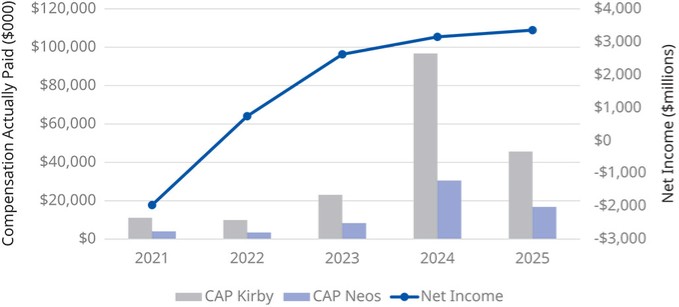
CAP vs. Absolute Adjusted EPS
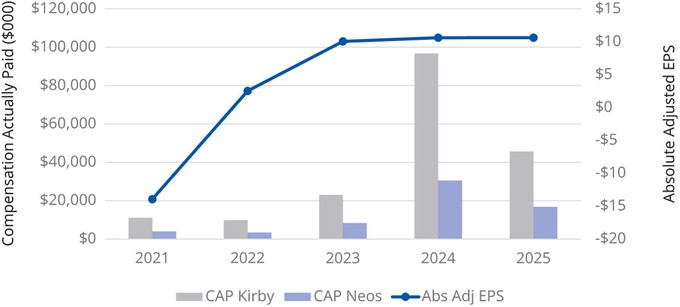
| |
2026 Proxy Statement | 131 |
Executive Compensation
CAP vs. Difference between Company and Peer TSR
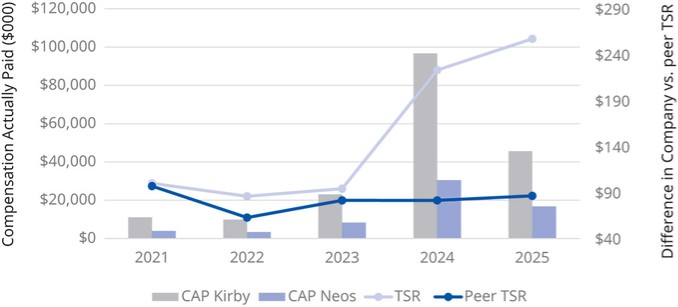
The following is a list of financial performance measures, which in the Company’s assessment are the most important financial performance measures used by the Company to link CAP to the NEOs for 2025 to Company performance.
2025 Most Important Financial Measures (unranked)(1)
| ● |
| ● |
| ● |
| ● |
____________________________________________
(1) | Absolute Adjusted EPS, Relative Adjusted Pre-Tax Margin and Adjusted EBITDAR Margin relative to industry peers are non-GAAP financial measures. |
(a) | Please refer to Appendix A for additional information and a reconciliation of Adjusted EPS to the most directly comparable GAAP financial measure. |
(b) | Relative Adjusted Pre-Tax Margin is measured by comparing our Pre-Tax Margin against performance of selected industry peers. Please refer to Appendix A for additional information and a reconciliation of Adjusted Pre-Tax Margin to the most directly comparable GAAP financial measure. |
(c) | Adjusted EBITDAR is calculated as EBITDAR (earnings before interest, taxes, depreciation, amortization and aircraft rent expense) excluding operating and nonoperating special charges (credits) and unrealized (gains) losses on investments, and, as applicable, adjusted for refinery and fuel hedges, to calculate Adjusted EBITDAR. Adjusted EBITDAR Margin is calculated as Adjusted EBITDAR divided by operating revenue. Industry Adjusted EBITDAR Margin is calculated to reflect the difference between our Adjusted EBITDAR Margin relative to the revenue weighted average of our industry peers (excluding United) during 2025. |
| |
132 |
|
Item 4-Advisory Vote on Stockholder Proposal Regarding Shareholder Right to Act by Written Consent
John Chevedden, 2215 Nelson Avenue, No. 205, Redondo Beach, California 90278, has advised the Company that he intends to present the following stockholder proposal at the Annual Meeting. Mr. Chevedden has indicated that he holds no fewer than 50 shares of Common Stock.
The text of the stockholder proposal and supporting statement appear exactly as received by the Company. All statements contained in the stockholder proposal and supporting statement are the sole responsibility of the proponent and, as a result, the Company is not responsible for any inaccuracies the proposal or statement may contain. The stockholder proposal will be voted on at the Annual Meeting only if properly presented by or on behalf of the proponent.
The Board unanimously recommends a vote “AGAINST” the stockholder proposal based on the reasons set forth in the Company’s Statement in Opposition following the stockholder proposal.
Proposal 4 — Shareholder Right to Act by Written Consent
Shareholders request that the board of directors take the necessary steps to permit written consent by the shareholders entitled to cast the minimum number of votes that would be necessary to authorize an action at a meeting at which all shareholders entitled to vote thereon were present and voting (without any unnecessary restriction based on length of stock ownership or the method by which shareholders hold their shares).
This includes shareholder ability to initiate any appropriate topic for written consent. This includes that any associated request for a record date shall have the lowest allowable figure. This includes that written consent not include a solicitation clause mandating a certain percent of shares be solicited unless legally required.
Shareholders acting by written consent and calling for a special shareholder meeting are 2 means that shareholders of a company can use to put forth a proposal on a timely basis without waiting for the annual shareholder meeting.
It is particularly important for United Airlines (UAL) shareholders to have a right to act by written consent because UAL shares not owned for at least one year are excluded from having a right to call for a special shareholder meeting.
It is believed that no company out of a pool of 3000 companies has ever held a special shareholder meeting, called for by shareholders, with this one-year UAL-type exclusion, highlighting what a deterrent a one-year exclusion is.
There has never been a company, that has responded to a proposal like this, that has ever cited even one special shareholder meeting actually being held that was called for by shareholders of a company that excluded all shares not owned for a full year. Thus the current UAL special meeting right seems to be utterly useless because such a shareholder meeting will likely never happen.
Acting by written consent is hardly ever used by shareholders but the main point of having a right to act by written consent is that it gives shareholders greater standing to engage effectively with management when UAL underperforms.
Since a director can be removed by written consent, enabling shareholders to act by written consent may serve as an incentive for UAL directors to perform better.
UAL stock was at $97 in 2018 and only at $108 in late 2025 in spite of a robust stock market.
Please vote yes:
Shareholder Right to Act by Written Consent – Proposal 4
Item 4 - Advisory Vote on Stockholder Proposal Regarding Shareholder Right to Act by Written Consent
Statement in Opposition to Item 4
The Board has carefully considered the proposal concerning a stockholder right to act by written consent and believes it would not enhance stockholder value and is not in the best interests of the Company and all of its stockholders. The Company’s existing corporate governance framework provides stockholders with the ability to have their voices heard by the Board and management, including pursuant to a right of stockholders to call a special meeting and submit proxy access nominations as well as through regular stockholder engagement by the Company. Moreover, the proposal is inconsistent with stockholder feedback as the Company’s stockholders have twice considered and rejected similar proposals submitted in 2015 and 2020.
The Board is committed to strong corporate governance and responsiveness to the Company’s stockholders. The Board believes in maintaining policies and practices that serve the interests of all stockholders and recognizes that corporate governance is not static. Accordingly, the Board regularly reviews developments in corporate governance and evaluates them in light of the Company’s circumstances, long-term strategy and stockholder base. The Board believes that the Company’s existing stockholder rights provide a transparent and equitable framework with appropriate procedural safeguards for stockholders to raise matters for consideration that are in the best interests of all of our stockholders.
After careful review of the proposal and the Company’s current governance practices, the Board believes that implementation of the proposal is not in the best interests of the Company or its stockholders. For the reasons set forth below, the Board unanimously recommends a vote “AGAINST” this proposal.
| 1. | Stockholder Meetings Offer Important Protections and Advantages that Are Absent from the Written Consent Process |
The Board believes that stockholders are best served when matters requiring stockholder approval are considered at a duly called annual or special meeting, where all stockholders receive notice and have the opportunity hear from, and engage with, the Board and management. For a public company of our size and complexity, the communications and procedures associated with a stockholder meeting are transparent, orderly and equitable and offer important protections and advantages that are not available under a written consent process.
| i. | Requiring that stockholder action be taken at a meeting provides a more open and transparent way for our stockholders to exercise their rights and hear from the Board and management on key matters: Stockholder meetings provide an appropriate forum for stockholders to express their views, ask questions and participate in the governance of the Company. They also allow the Board—which has the responsibility to review and evaluate the Company’s business in order to align the interests of management and stockholders—an opportunity to evaluate proposed actions and provide a recommendation to stockholders that is aligned with the long-term interests of United and our stockholders. Our Board members are intentionally selected based on their experience in fields that align with the Company’s business and long-term strategy in order to provide oversight on behalf of the Company’s stockholders. On the other hand, action by written consent: |
| ● | Could be used to limit the ability of stockholders to engage in discussion, raise concerns or change their vote on significant matters affecting the Company and their interests. |
| ● | Does not afford stockholders the benefit of hearing or considering the view and recommendation of the Board and management before action is taken. The proponent incorrectly states that the proposal would give stockholders “greater standing to engage effectively with management.” In fact, this proposal could allow stockholders to take action without any engagement with management or the Board, denying them the opportunity to consider the merits of the proposed action and offer alternatives for stockholder evaluation. |
Item 4 - Advisory Vote on Stockholder Proposal Regarding Shareholder Right to Act by Written Consent
| ii. | Permitting stockholder action by written consent would have the potential to inappropriately disenfranchise stockholders: Requiring stockholders to act by a special or annual meeting both promotes and protects all stockholders’ interests. In addition, since stockholders already have the right to call special meetings, the ability to act by written consent is unnecessary to facilitate prompt action by stockholders. On the other hand, action by written consent: |
| ● | Could disenfranchise certain stockholders by denying them the ability to vote or otherwise carefully consider matters that are important to the Company. This is because a proponent of a written consent may seek approval from the minimum number of stockholders required to authorize an action, potentially relying on consents obtained before other stockholders are aware that a vote is occurring. This dynamic may enable special-interest investors with short-term agendas to advance proposals for their own narrow interests. Should this happen, the Company would be required to divert its attention and resources from implementing the Company’s strategic goals to respond to such stockholders, potentially to the detriment of the interests of all stockholders. |
| ● | Could permit a small group of stockholders (including those who accumulate a short-term voting position through the borrowing of shares) with no fiduciary duties to other stockholders to initiate corporate action without prior notice either to other stockholders or to the Company. This would deprive stockholders of the opportunity to deliberate in an open and transparent manner, and to consider arguments for and against the proposed action, including other stockholders’ and the Company’s viewpoint. |
| ● | Could encourage short-term stock ownership and manipulation, allowing a small group of stockholders to quietly accumulate large voting positions (including in derivative transactions) and take important corporate action without the waiting periods, requirements and procedural safeguards inherent in the stockholder meeting and voting process. |
| iii. | The proposal, if implemented, could prevent stockholders and the board from receiving prior notice of votes on key matters: Stockholder meetings provide advance notice to all stockholders. Meetings are held at a time, date and venue announced publicly in advance, which help ensure that stockholders have an opportunity to consider, discuss and vote on important decisions that impact the Company in an equitable and transparent manner. This is in part because communications regarding proposed actions to be taken at a meeting are governed by SEC rules that require fair and timely disclosure, which necessitates that accountable, complete and accurate information about any proposed stockholder action is broadly distributed in advance of the meeting through proxy statement materials. On the other hand, action by written consent: |
| ● | Does not require advance notice to all stockholders or provide a defined period for review and deliberation. Therefore, certain stockholders may not be informed about the proposed action until after the action has already been taken, denying these stockholders the ability to exercise their rights. |
| ● | Does not require the prior distribution of a proxy statement containing accountable, comprehensive and standardized disclosure about the proposed action. |
| iv. | Permitting stockholders to act by written consent has the potential to create confusion and disruption and the Board does not believe it is appropriate for the corporate governance of a widely-held public company: Our existing requirement that stockholder action occur at a meeting helps ensure that all stockholders have a meaningful and structured opportunity to exchange views on proposed actions. On the other hand, action by written consent could create confusion and disruption by allowing multiple stockholders or groups to solicit consents on overlapping or conflicting matters at different times. This disruption could also place significant administrative and financial burdens on management, which could divert significant time and focus from management, detracting from their primary focus of operating our business and maximizing long-term stockholder value. |
Item 4 - Advisory Vote on Stockholder Proposal Regarding Shareholder Right to Act by Written Consent
In sum, stockholder interests are best protected when proposed actions are taken at an annual or special meeting of stockholders, which would require all stockholders to receive advance notice and have clearly defined timeframes to evaluate proposals, engage with other stockholders, hear the Board’s and management’s view on the proposals and cast an informed vote.
| 2. | The Company Has Demonstrated a Commitment to Active Stockholder Engagement and Effective Corporate Governance Practices, Which Has Promoted Accountability and Contributed to United’s Leading Financial Performance |
The Board believes that stockholders should evaluate this proposal in the context of the Company’s broader stockholder engagement program and corporate governance framework, which reflect the Board’s and management’s ongoing commitment to accountability and responsiveness as well as to help ensure management executes the strategic initiatives that have driven sustainable, long-term value for shareholders.
As discussed on pages 56-59 of this Proxy Statement, the Company maintains open and regular communication with our stockholders and regularly incorporates feedback from those engagements into our governing documents, policies and practices. Some actions we have taken in consideration of stockholder feedback in the past few years include the following:
| ● | We enhanced our disclosure around our efforts to mitigate employee injuries by including a discussion of our Heat Illness Prevention Plan in our Corporate Impact Report and additional disclosure regarding the Board’s oversight of safety topics, including employee injuries, in our proxy statement. |
| ● | We enhanced our disclosure relating to our Human Rights Policy statement in our Corporate Impact Report, including with respect to our supplier human rights due diligence process. |
| ● | We disclose our climate change strategy as well as our Greenhouse Gas emissions in our Annual Report on Form 10-K and created a comprehensive index that maps our sustainability disclosures across metrics outlined in the Task Force on Climate-related Financial Disclosures framework. |
| ● | We have expanded the United Airlines, Inc. Political and Lobbying Policy regarding our participation in the political process and policy advocacy. |
| ● | We enhanced several disclosures in our proxy statement, including updating our Board skills matrix to account for the skills and qualifications that the Board considers most important for future candidates and adding disclosure on our management succession planning process. |
In addition to our robust stockholder engagement program, the Company has implemented several governance practices that help ensure meaningful stockholder participation, including the following:
| ● | The Company’s Amended and Restated Certificate of Incorporation and Bylaws provide stockholders with the ability to call a special meeting of stockholders outside the annual meeting cycle. A special meeting provides a structured forum for stockholders, the Board and management to engage on matters of importance and allows all stockholders to participate collectively in a single meeting and vote. |
| ● | Our proxy access right allows certain stockholders to include their own director nominations in our proxy statement, as discussed on page 36 of this Proxy Statement. |
| ● | All of our directors are elected annually. |
| ● | Our Amended and Restated Certificate of Incorporation and Bylaws do not require more than a simple or absolute majority stockholder vote on any issue. |
| ● | We have a majority voting standard for the election of directors in uncontested elections. |
| ● | The Board uses robust refreshment practices to enable it to evaluate the continued alignment of the Board’s membership with the needs of Company. The average tenure of our director nominees is 7.31 years, with six of our current directors having joined our Board since 2021. Further, our Board reflects a broad range of experience, skills and perspectives. |
| ● | We have separate Chairman of the Board and CEO roles, and the Chairman of the Board is independent. |
| |
136 |
|
Item 4 - Advisory Vote on Stockholder Proposal Regarding Shareholder Right to Act by Written Consent
| ● | Our Corporate Governance Guidelines set forth significant share ownership requirements for our non-employee directors to ensure that their interests are fully aligned with the interests of our stockholders. |
We have continued to work with management to strengthen our stockholder engagement program and corporate governance framework, which has positioned us to help ensure management executes the strategic initiatives that have created sustained, long-term value for shareholders. Since the May 2020 through year-end 2025, United’s cumulative TSR was over 320%, which was 159 percentage points higher than the cumulative TSR of the Standard and Poor's 500 Index and 262 percentage points higher than the NYSE Arca Airline Index, each over the same period.
| 3. | The Company’s Stockholders Have Previously Rejected this Proposal |
The Board also notes that in 2020 and 2015, the Company’s stockholders considered and rejected a substantially similar proposal from the same proponent. This vote outcome reflects the general view of our stockholders that adopting a written consent right is inappropriate and reinforces the Board’s belief that the Company’s existing meeting-based framework appropriately reflects stockholder preferences.
Conclusion
The Board believes that permitting stockholder action by written consent would weaken important procedural protections by allowing corporate action to occur without a meeting, without advance notice to all stockholders and without an opportunity for collective discussion and consideration. The Company’s Amended and Restated Certificate of Incorporation requires that stockholder actions be taken at duly called annual or special meetings and does not permit action by written consent. The Company’s existing governance framework strikes an appropriate balance between providing stockholders with meaningful rights and a mechanism to influence the direction of the Company while preserving transparency, fairness and informed decision making as well as protecting against the risk of abuse of this proposal by a small group of stockholders—including stockholders with special interests—to the detriment of the best long-term interests of all of our stockholders and the Company.
For these reasons, the Board believes that adoption of this proposal is unnecessary and not in the best interests of the Company or its stockholders and recommends a vote “AGAINST” this proposal.
THE BOARD UNANIMOUSLY RECOMMENDS A VOTE “AGAINST” ITEM 4.
| |
2026 Proxy Statement | 137 |
Item 4 - Advisory Vote on Stockholder Proposal Regarding Shareholder Right to Act by Written Consent
AGAINST Item 4 | |
The Board recommends you vote AGAINST Item 4 | VOTE REQUIRED Approval of Item 4-Advisory Vote on Stockholder Proposal Regarding Shareholder Right to Act by Written Consent -requires the affirmative vote of a majority in voting power of the shares present in person or represented by proxy and entitled to vote on such matter. If you elect to abstain, the abstention will have the same effect as an “AGAINST” vote. Broker non-votes will have no effect on the outcome of this proposal. |
| |
138 |
|
Annual Meeting Information
General Information About the Annual Meeting
Who is soliciting my vote?
The Board is soliciting your vote at the Annual Meeting.
Where and when will the Annual Meeting take place?
The Annual Meeting will be held in a virtual meeting format only, with no physical in-person meeting, on Tuesday, May 19, 2026, at 9:00 a.m., Central Time, via the Internet at www.virtualshareholdermeeting.com/UAL2026.
At our virtual Annual Meeting, stockholders will be able to attend, vote and submit questions via the Internet. Whether or not you plan to attend the Annual Meeting, we urge you to vote and submit your proxy in advance of the meeting by one of the methods described in these proxy materials.
How can I attend the Annual Meeting?
Stockholders as of the Record Date (or their duly appointed proxy holder) may attend, vote and submit questions virtually at the Annual Meeting by logging in at www.virtualshareholdermeeting.com/UAL2026. To log in, stockholders (or their authorized representatives) will need the control number provided on their proxy card, voting instruction form or Notice of Internet Availability of Proxy Materials. For those stockholders who have elected to receive the proxy materials via electronic delivery, you will receive an email from Broadridge (as defined below) containing your control number. If you are not a stockholder or do not have a control number, you may still access the meeting as a guest, but you will not be able to submit questions or vote at the meeting.
The meeting will begin promptly at 9:00 a.m., Central Time, on Tuesday, May 19, 2026. We encourage you to access the meeting prior to the start time. We encourage you to access the Annual Meeting before it begins as participation in the meeting is limited due to the capacity of the host platform and access to the meeting will be accepted on a first come, first served basis once electronic entry begins. If you cannot attend the meeting, it will be webcast and available on our Investor Relations website. Online access will open at 8:45 a.m., Central Time, and you should allow ample time to log in to the meeting webcast and test your computer audio system. We recommend that you carefully review the procedures needed to gain admission in advance. A recording of the meeting will be available at www.virtualshareholdermeeting.com/UAL2026 for one year after the meeting.
Can I ask questions at the virtual Annual Meeting?
Stockholders as of the Record Date who attend and participate in our virtual Annual Meeting will have an opportunity to submit questions live via the Internet during a designated portion of the meeting. Additional rules and procedures regarding asking questions will be available on the virtual meeting website. Stockholders must have available their control number provided on their proxy card, voting instruction form or Notice of Internet Availability of Proxy Materials to ask questions during the meeting. A question and answer session will follow the formal business of the Annual Meeting. To submit questions in advance of the Annual Meeting, visit www.virtualshareholdermeeting.com/UAL2026 before 9:00 a.m. Central Time on May 19, 2026 and enter the control number. To submit a question during the meeting, visit www.virtualshareholdermeeting.com/UAL2026, enter your control number and type your question into the “Ask a Question” field and click “Submit.”
What if I have technical difficulties or trouble accessing the virtual Annual Meeting?
We will have technicians ready to assist you with any technical difficulties you may have accessing the virtual meeting. If you encounter any difficulties accessing the virtual meeting during check-in or during the meeting, please call the technical support number that will be posted on the virtual stockholder meeting login page: www.virtualshareholdermeeting.com/UAL2026.
| |
2026 Proxy Statement | 139 |
Annual Meeting Information
What will I be voting on?
| ● | The election as directors of the applicable nominees named in this Proxy Statement for a one-year term. |
| ● | The ratification of the appointment of Ernst & Young LLP to serve as our independent registered public accounting firm for the fiscal year ending December 31, 2026. |
| ● | A vote to approve, on a nonbinding advisory basis, the compensation of our named executive officers. |
| ● | The stockholder proposal, if properly presented before the Annual Meeting. |
Who is entitled to vote?
If you are a stockholder with shares of our voting stock, including Common Stock, registered in your name with Computershare Investor Services, the Company’s transfer agent and registrar, then you are considered a “stockholder of record.” Stockholders of record at the close of business on March 24, 2026, which is known as the “Record Date” for the Annual Meeting, are entitled to notice of and to vote at the Annual Meeting or any adjournments or postponements thereof.
A list of the names of stockholders entitled to vote at the Annual Meeting will be available to stockholders for ten days prior to the Annual Meeting for any purpose germane to the Annual Meeting. Please contact our Corporate Secretary at UALBoard@united.com if you wish to examine the list prior to the Annual Meeting.
The following chart shows the number of shares of each class of our voting stock outstanding as of the Record Date, the number of record holders of each class as of the Record Date entitled to vote at the Annual Meeting, the votes per share for each class for all matters on which the shares vote, and the directors each class is entitled to elect. The aggregate number of votes to which a class is entitled is equal to the number of shares outstanding of such class.
| | | | | | | | | |
| | | | | | | | | |
| | Shares | | Holders of | | Votes per | | Voting for |
|
Title of Class | | Outstanding(a) | | Record(a) | | Share | | Directors |
|
| | | | | | | | | |
Common Stock |
| 324,649,382 | | 9,100 |
| 1 |
| Class elects 11 directors | |
Class Pilot MEC Junior Preferred Stock(b) |
| 1 |
| 1 |
| 1 |
| Class elects 1 director | |
Class IAM Junior Preferred Stock(b) |
| 1 |
| 1 |
| 1 |
| Class elects 1 director | |
| (a) | As of the Record Date, March 24, 2026. |
| (b) | The holder of record of Class Pilot MEC Junior Preferred Stock is the ALPA. The holder of record of Class IAM Junior Preferred Stock is the IAM. |
How do I vote if I am a stockholder of record?
If you are a stockholder of record that holds shares as of the Record Date, you have four options for delivering your proxy to vote your shares:
Vote by Internet
You can vote via the Internet by logging onto www.proxyvote.com and following the prompts using the control number located on your Notice of Internet Availability of Proxy Materials or proxy card. This vote will be counted immediately, and there is no need to mail your proxy card.
Vote by Telephone
To use the telephone voting procedure, dial 1-800-690-6903 and listen for further directions. You must use a touch-tone telephone in order to respond to the questions. This vote will be counted immediately, and there is no need to mail your proxy card.
| |
140 |
|
Annual Meeting Information
Vote by Mail
Shares eligible to be voted, and for which a properly signed proxy card is returned, will be voted in accordance with the instructions specified on the proxy card.
Vote by QR Code
Scan the QR code here to vote with your mobile device (which may require a free app):

Proxies submitted by Internet (including QR code), telephone or mail must be received by 10:59 p.m., Central Time, on Monday, May 18, 2026, the day before the Annual Meeting.
We encourage you to vote by Internet as instructed on the Notice of Internet Availability of Proxy Materials or proxy card.
How are my shares voted if I do not indicate how to vote on the proxy card?
If we receive a properly signed and dated proxy card and the proxy card does not specify how your shares are to be voted, your shares will be voted in accordance with the recommendations of the Board, including:
| ● | FOR the election of each of the nominees for director (Item 1); |
| ● | FOR the ratification of the appointment of Ernst & Young LLP to serve as our independent registered public accounting firm for the fiscal year ending December 31, 2026 (Item 2); |
| ● | FOR the vote to approve, on a nonbinding advisory basis, the compensation of our named executive officers (Item 3); and |
| ● | AGAINST the advisory vote on the stockholder proposal (Item 4). |
How do I vote if I hold my shares through an account at a broker, bank, trust or other nominee?
If you hold your shares in an account at a broker, bank, trust or other nominee, you are considered the “beneficial owner” of shares held in “street name,” and you should have received a Notice of Internet Availability of Proxy Materials or voting instruction card and voting instructions with these proxy materials from that organization rather than from us. To ensure that your vote is counted, follow the directions set forth on the Notice of Internet Availability of Proxy Materials or voting instruction card and the voting instructions that you receive. To vote during the virtual Annual Meeting, you will need the 16-digit control number included on your Notice of Internet Availability of Proxy Materials or voting instruction card.
How do I vote my shares if I participate in one of the United 401(k) plans?
If you hold shares in an account under the United Airlines 401(k) Savings Plan or the United Airlines Flight Attendant 401(k) Plan (each a “Plan,” and collectively, the “United 401(k) Plans”), Broadridge Financial Solutions, Inc. (“Broadridge”) is sending you the Company’s Notice of Internet Availability of Proxy Materials or proxy materials directly, including the proxy card. You may direct the trustee of the United 401(k) Plans, Newport Trust Company, on how to vote your Plan shares by directing the voting of your Plan shares by Internet, telephone or mail pursuant to the instructions included on the Notice of Internet Availability of Proxy Materials or proxy card. Please note that, in order to permit the trustee for the United 401(k) Plans to tally and vote all of the shares of Common Stock held in the United 401(k) Plans, your instructions, whether by Internet, telephone or proxy card, must be completed and received prior to 10:59 p.m., Central Time, on Sunday, May 17, 2026. You may not change your vote related to such Plan shares after this deadline.
| |
2026 Proxy Statement | 141 |
Annual Meeting Information
If you do not provide voting instructions to the trustee, your Plan shares will be voted by the trustee in the same proportion that it votes shares in other Plan accounts for which it did receive timely voting instructions. The proportional voting policy is detailed under the terms of each Plan and trust agreement.
Why did I receive a notice in the mail regarding the Internet availability of proxy materials instead of a full set of proxy materials?
Pursuant to rules adopted by the SEC, the Company has elected to provide access to its proxy materials via the Internet. Accordingly, the Company is sending a Notice of Internet Availability of Proxy Materials to the Company’s stockholders. All stockholders will have the ability to access the proxy materials on the website referred to in the notice or request a printed set of the proxy materials. Instructions on how to access the proxy materials over the Internet or to request a printed copy may be found in the notice. In addition, stockholders may request proxy materials in printed form by mail or electronically by email on an ongoing basis. The Company encourages stockholders to take advantage of the availability of the proxy materials on the Internet to help reduce the expenses incurred by the Company in connection with the Annual Meeting and to reduce the environmental impact of the Annual Meeting.
How can I get electronic access to the proxy materials?
The Notice of Internet Availability of Proxy Materials will provide you with instructions regarding how to:
| ● | view on the Internet the Company’s proxy materials for the Annual Meeting; and |
| ● | instruct the Company to send future proxy materials to you by email. |
Choosing to receive future proxy materials by email will save the Company the cost of printing and mailing documents to you. If you choose to receive future proxy materials by email, you will receive an email message next year with instructions containing a link to those materials and a link to the proxy voting website. Your election to receive proxy materials by email will remain in effect until you terminate it.
What does it mean if I receive more than one set of proxy materials?
If you receive more than one Notice of Internet Availability of Proxy Materials or sets of proxy materials, your shares are registered in more than one name or are registered in different accounts. In order to vote all of the shares that you own, you must either sign and return all of the proxy cards or follow the instructions for any alternative voting procedure on each of the Notices of Internet Availability of Proxy Materials or proxy cards that you receive.
Who counts the votes?
Representatives of Broadridge will tabulate the votes and act as Inspector of Election at the Annual Meeting.
How is a quorum determined?
A quorum is necessary for conducting a valid Annual Meeting. The presence, in person or represented by proxy, of the holders of outstanding shares representing at least a majority of the total voting power entitled to vote at the Annual Meeting is necessary to constitute a quorum at the Annual Meeting. Virtual attendance at our Annual Meeting constitutes presence in person for purposes of quorum at the meeting. Where a separate vote of a class or series of stock is required, the presence in person or represented by proxy of the holders of outstanding shares representing at least a majority of the total voting power of all outstanding shares of such class or series is necessary to constitute a quorum thereof entitled to take action with respect to such separate vote.
What are “broker non-votes”?
Brokers, banks, trusts or other nominees holding shares on behalf of a beneficial owner may vote those shares in their discretion on certain “routine” matters even if they do not receive timely voting instructions from the beneficial owner. With respect to “non-routine” matters, the broker, bank, trust or other nominee is not permitted to vote shares for a beneficial owner without timely received voting instructions.
| |
142 |
|
Annual Meeting Information
A broker non-vote occurs when a beneficial owner of shares held by a broker, bank, trust or other nominee fails to provide the record holder with specific instructions concerning how to vote on any “non-routine” matters brought to a vote at a stockholders meeting. At the Annual Meeting, brokers will have discretionary authority to vote shares on the ratification of the appointment of the independent registered public accounting firm (Item 2), which is the only “routine” matter to be presented at the Annual Meeting. If brokers exercise this discretionary voting authority on Item 2, such shares will be considered present at the Annual Meeting for quorum purposes and broker non-votes will occur as to each of the other proposals presented at the Annual Meeting, which are considered “non-routine.”
How are abstentions and broker non-votes treated for quorum purposes, and how do they impact the voting results?
Abstentions are counted for purposes of determining whether a quorum is present. Abstentions will have the effect of a vote against the matters presented for a vote of the stockholders, other than the election of directors (Item 1). Abstentions have no effect with respect to the voting results of Item 1.
As explained above under “What are ‘broker non-votes’?,” if brokers exercise their discretionary voting authority on Item 2, such shares will be considered present at the Annual Meeting for quorum purposes and broker non-votes will occur as to each of the other proposals presented at the Annual Meeting, which are considered “non-routine.” Broker non-votes will have no impact on the voting results of the items to be presented for a vote of the stockholders at the Annual Meeting.
If you are a beneficial owner of shares held by a broker, bank, trust or other nominee holding shares on your behalf, we urge you to submit your voting instructions to your broker, bank, trust or other nominee in advance of the Annual Meeting. Please see “How do I vote if I hold my shares through an account at a broker, bank, trust or other nominee?” above for a discussion of the procedures.
What classes of stock vote on each proposal, and what is the vote required?
The holders of Common Stock, Class Pilot MEC Junior Preferred Stock and Class IAM Junior Preferred Stock will vote together as a single class on all proposals presented at the Annual Meeting other than the election of directors (Item 1).
Item 1
Each director will be elected by vote of a majority of the votes cast with respect to that director’s election in person or represented by proxy and entitled to vote on the election of directors. “Majority of the votes cast” means that the number of shares voted FOR a director exceeds the number of shares voted AGAINST that director (with abstentions and broker non-votes not counted as a vote cast either FOR or AGAINST that director’s election). Any incumbent director who is not reelected in an election in which majority voting applies is required to tender his or her resignation promptly following certification of the stockholders’ vote. The Corporate Governance Guidelines require any current director who does not receive a majority of votes cast must tender his or her resignation as a director to the Board promptly following the certification of the stockholder vote. The Nominating/Governance Committee, without participation by any director tendering their resignation, will consider the resignation offer and recommend to the Board whether to accept or reject the resignation offer or take another action. The Board, without participation by any director tendering their resignation, will act on the Nominating/Governance Committee’s recommendation within 120 days following certification of the stockholder vote and promptly disclose its decision by press release, filing of a Current Report on Form 8-K or any other public means of disclosure deemed appropriate.
Items 2-4
The affirmative vote of a majority in voting power of the shares present in person or represented by proxy at the Annual Meeting and entitled to vote on the matter will be required to approve the ratification of the appointment of the independent registered public accounting firm (Item 2), the advisory vote to approve the compensation of the Company’s named executive officers (Item 3) and the advisory vote on a stockholder proposal (Item 4).
| |
2026 Proxy Statement | 143 |
Annual Meeting Information
How does the proxy voting process work?
If you vote using the Internet or telephone procedures, or your proxy card is properly dated, signed and returned by mail, the proxy will be voted at the Annual Meeting in accordance with the instructions indicated by it (or if there are no such instructions, then in accordance with the recommendations of the Board).
If a quorum is not present at the time the Annual Meeting is convened for any particular purpose, or if for any other reason we believe that additional time should be allowed for the solicitation of proxies, we may adjourn the Annual Meeting with the vote of the stockholders then present.
How do I revoke a proxy?
Any proxy may be revoked by the person giving it at any time before it is voted (except as discussed above with respect to shares held in a Plan account). A proxy may be revoked by a later proxy delivered using the Internet or telephone voting procedures or by written notice mailed to the Secretary of the Company prior to the Annual Meeting. If you hold your shares through a broker, bank, trust or other nominee, you should follow their instructions as to how you can revoke a proxy. Attendance at the Annual Meeting will not automatically revoke a proxy, but a holder of Common Stock who is in attendance and entitled to vote at the Annual Meeting may vote during the Annual Meeting, which revokes a previously granted proxy.
Who pays solicitation expenses?
All expenses of the solicitation, including the cost of preparing and mailing this Proxy Statement, will be borne by us. Arrangements will also be made with custodians, nominees and fiduciaries for forwarding of proxy solicitation material to beneficial owners of Common Stock and voting preferred stock held of record, and we may reimburse these individuals for their reasonable expenses. In addition to mailed proxy materials and proxy materials available over the Internet, our directors, officers and employees may also solicit proxies in person, by telephone or by other means of communication. These individuals will not be additionally compensated, but may be reimbursed for out-of-pocket expenses associated with solicitation. To help assure the attendance or representation by proxy of the largest number of stockholders possible, we have engaged D.F. King & Co., Inc. (“D.F. King”), a proxy solicitation firm, to solicit proxies on our behalf. We expect to pay D.F. King a proxy solicitation fee of approximately $19,500 plus reimbursement for reasonable out-of-pocket costs and expenses for its services.
Could other matters be decided at the Annual Meeting?
We do not know of any matters that will be considered at the Annual Meeting other than those described in this Proxy Statement. If any other matters are properly presented at the Annual Meeting, the proxies will be voted at the discretion of the proxy holders.
Submission of Stockholder Proposals and Director Nominations for the 2027 Annual Meeting
If a stockholder of record wishes to submit a proposal for inclusion in the Company’s proxy statement for the 2027 annual meeting of stockholders, the proposal must be received by the Company no later than December 8, 2026 and otherwise comply with SEC rules. Failure to otherwise comply with SEC rules will cause the proposal to be excluded from the proxy materials. All notices must be submitted to the Corporate Secretary—United Airlines Holdings, Inc., 233 S. Wacker Drive, Chicago, Illinois 60606.
Stockholders who intend to submit director nominees for inclusion in the Company’s proxy materials for the 2027 annual meeting of stockholders must comply with the requirements of proxy access as set forth in the Amended and Restated Bylaws. The stockholder or group of stockholders who wish to submit director nominees pursuant to proxy access must deliver the required materials to the Company no earlier than November 8, 2026, and no later than December 8, 2026.
To propose business or nominate a director at the 2027 annual meeting of stockholders without inclusion of such matters in our proxy materials, proper notice must be submitted by a stockholder of record no earlier than January 19, 2027 and no later than February 18, 2027 in accordance with the Amended and Restated Bylaws. The notice must contain the information required by the Amended and Restated Bylaws. No business proposed by a stockholder can be transacted at the 2027 annual meeting of stockholders, and no nomination by a stockholder will be considered, unless the notice satisfies the requirements of the Amended and Restated Bylaws. If we do not receive timely notice of any other matter that a stockholder wishes to raise at the 2027 annual meeting of stockholders, the Amended and Restated Bylaws provide that the matter shall not be transacted and the nomination shall not be considered.
| |
144 |
|
Annual Meeting Information
In addition to satisfying the foregoing requirements under the Amended and Restated Bylaws, to comply with the universal proxy rules, stockholders who intend to solicit proxies in support of director nominees other than the Company’s nominees must provide notice that sets forth the information required by Rule 14a-19 under the Exchange Act, no later than March 22, 2027.
Householding
The rules of the SEC allow us to deliver a single Notice of Internet Availability of Proxy Materials or set of proxy materials to one address shared by two or more of our stockholders. This delivery method is referred to as “householding” and can result in significant cost savings. To take advantage of this opportunity, we have delivered only one Notice of Internet Availability of Proxy Materials or set of proxy materials to multiple stockholders who share an address, unless we have received different instructions from the impacted stockholders prior to the mailing date. We agree to deliver promptly, upon written or oral request, a separate Notice of Internet Availability of Proxy Materials or set of proxy materials, as requested, to any stockholder at the shared address to which a single copy of those documents was delivered. If you prefer to receive separate copies of the Notice of Internet Availability of Proxy Materials and proxy materials, contact Broadridge by telephone at (866) 540-7095 or in writing at Broadridge, Householding Department, 51 Mercedes Way, Edgewood, New York 11717.
If you are currently a stockholder sharing an address with another stockholder and are receiving multiple copies of our Notice of Internet Availability of Proxy Materials or proxy materials and wish to receive only one copy of future Notices of Internet Availability of Proxy Materials and proxy materials for your household, please contact Broadridge at the above telephone number or address.
Other Business
The Company knows of no other matters to be submitted to stockholders at the Annual Meeting, other than the proposals referred to in the Proxy Statement. If any other matters properly come before the stockholders at the Annual Meeting, it is the intention of the proxy holders to vote the shares represented thereby on such matters in accordance with the Board’s recommendations.
| |
2026 Proxy Statement | 145 |
Appendix A: Reconciliation of GAAP and
Non-GAAP Financial Measures
UNITED AIRLINES HOLDINGS, INC.
NON-GAAP FINANCIAL INFORMATION
UAL evaluates its financial performance utilizing various accounting principles generally accepted in the United States of America (GAAP) and non-GAAP financial measures, including adjusted net income, adjusted diluted earnings per share, adjusted pre-tax income, adjusted pre-tax margin, adjusted capital expenditures and free cash flow, among others. The non-GAAP financial measures are provided as supplemental information to the financial measures presented that are calculated and presented in accordance with GAAP and are presented because management believes that they supplement or enhance management’s, analysts’ and investors’ overall understanding of UAL’s underlying financial performance and trends and facilitate comparisons among current, past and future periods.
Because the non-GAAP financial measures are not calculated in accordance with GAAP, they should not be considered superior to and are not intended to be considered in isolation or as a substitute for the related GAAP financial measures presented and may not be the same as or comparable to similarly titled measures presented by other companies due to possible differences in method and in the items being adjusted. We encourage investors to review our financial statements and publicly-filed reports in their entirety and not to rely on any single financial measure.
| | | | |
| | | | |
(in millions, except per share data) | | 2025 |
| |
| | | | |
Net income (GAAP) | | $ | 3,353 | |
Adjusted to exclude: |
| | | |
Special charges |
| | 259 | |
Unrealized gains on investments, net |
| | (4) | |
Debt extinguishment and modification fees |
| | 20 | |
Income tax benefit on adjustments, net |
| | (136) | |
Adjusted net income (Non-GAAP) | | $ | 3,491 | |
Diluted weighted average shares | | | 328.5 | |
| | | | |
Diluted earnings per share (GAAP) | | $ | 10.20 | |
Adjusted to exclude: | | | | |
Special charges |
| | 0.79 | |
Unrealized gains on investments, net |
| | (0.01) | |
Debt extinguishment and modification fees |
| | 0.06 | |
Income tax benefit on adjustments, net |
| | (0.42) | |
Adjusted diluted earnings per share (Non-GAAP) | | $ | 10.62 | |
Appendix A: Reconciliation of GAAP and Non-GAAP Financial Measures
| | | | | | | |
| | | | | | | |
| | | | |
| ||
(in millions, except margins) | | | | 2025 |
| ||
| | | | | | | |
Total operating revenue | | | | | $ | 59,070 | |
| | | | | | | |
Pre-tax income (GAAP) | | | | | $ | 4,306 | |
Adjusted to exclude: | | | | |
| | |
Special charges | | | | |
| 259 | |
Unrealized gains on investments, net | | | | |
| (4) | |
Debt extinguishment and modification fees | | | | |
| 20 | |
Adjusted pre-tax income (Non-GAAP) | | | | | $ | 4,580 | |
Pre-tax margin | | | | |
| 7.3 | % |
Adjusted pre-tax margin (Non-GAAP) | | | | |
| 7.8 | % |
| | | | |
| | |
Net cash provided by operating activities (GAAP) | | | | | $ | 8,431 | |
Net cash used in investing activities (GAAP) | | | | | | (6,350) | |
Adjusted for: | | | | | | | |
Net change in short-term investments | | | | | | 591 | |
Net change in restricted cash | | | | | | 38 | |
Free cash flow (Non-GAAP) | | | | | $ | 2,710 | |
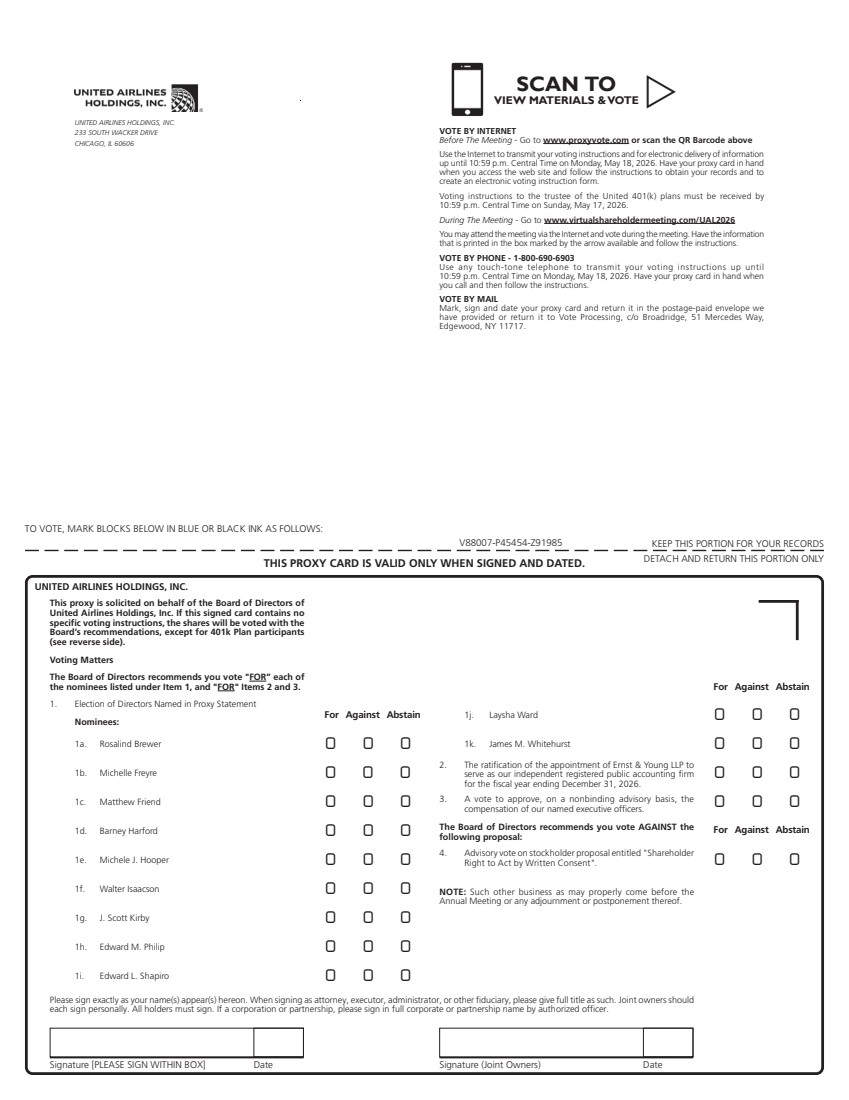
Signature [PLEASE SIGN WITHIN BOX] Date Signature (Joint Owners) Date TO VOTE, MARK BLOCKS BELOW IN BLUE OR BLACK INK AS FOLLOWS: KEEP THIS PORTION FOR YOUR RECORDS DETACH AND RETURN THIS PORTION ONLY THIS PROXY CARD IS VALID ONLY WHEN SIGNED AND DATED. V88007-P45454-Z91985 UNITED AIRLINES HOLDINGS, INC. 233 SOUTH WACKER DRIVE CHICAGO, IL 60606 1a. Rosalind Brewer 1b. Michelle Freyre 1c. Matthew Friend 1d. Barney Harford 1e. Michele J. Hooper 1f. Walter Isaacson 1g. J. Scott Kirby 1h. Edward M. Philip 1i. Edward L. Shapiro For Against Abstain For Against Abstain For Against Abstain ! ! ! ! ! ! ! ! ! ! ! ! ! ! ! ! ! ! ! ! ! ! ! ! ! ! ! ! ! ! ! ! ! ! ! ! ! ! ! ! ! ! UNITED AIRLINES HOLDINGS, INC. Nominees: Voting Matters Please sign exactly as your name(s) appear(s) hereon. When signing as attorney, executor, administrator, or other fiduciary, please give full title as such. Joint owners should each sign personally. All holders must sign. If a corporation or partnership, please sign in full corporate or partnership name by authorized officer. 3. A vote to approve, on a nonbinding advisory basis, the compensation of our named executive officers. 2. The ratification of the appointment of Ernst & Young LLP to serve as our independent registered public accounting firm for the fiscal year ending December 31, 2026. NOTE: Such other business as may properly come before the Annual Meeting or any adjournment or postponement thereof. 4. Advisory vote on stockholder proposal entitled "Shareholder Right to Act by Written Consent". 1. Election of Directors Named in Proxy Statement The Board of Directors recommends you vote "FOR” each of the nominees listed under Item 1, and "FOR" Items 2 and 3. The Board of Directors recommends you vote AGAINST the following proposal: This proxy is solicited on behalf of the Board of Directors of United Airlines Holdings, Inc. If this signed card contains no specific voting instructions, the shares will be voted with the Board’s recommendations, except for 401k Plan participants (see reverse side). 1j. Laysha Ward 1k. James M. Whitehurst SCAN TO VIEW MATERIALS & VOTEw VOTE BY INTERNET Before The Meeting - Go to www.proxyvote.com or scan the QR Barcode above Use the Internet to transmit your voting instructions and for electronic delivery of information up until 10:59 p.m. Central Time on Monday, May 18, 2026. Have your proxy card in hand when you access the web site and follow the instructions to obtain your records and to create an electronic voting instruction form. Voting instructions to the trustee of the United 401(k) plans must be received by 10:59 p.m. Central Time on Sunday, May 17, 2026. During The Meeting - Go to www.virtualshareholdermeeting.com/UAL2026 You may attend the meeting via the Internet and vote during the meeting. Have the information that is printed in the box marked by the arrow available and follow the instructions. VOTE BY PHONE - 1-800-690-6903 Use any touch-tone telephone to transmit your voting instructions up until 10:59 p.m. Central Time on Monday, May 18, 2026. Have your proxy card in hand when you call and then follow the instructions. VOTE BY MAIL Mark, sign and date your proxy card and return it in the postage-paid envelope we have provided or return it to Vote Processing, c/o Broadridge, 51 Mercedes Way, Edgewood, NY 11717.
V88008-P45454-Z91985 Important Notice Regarding the Availability of Proxy Materials for the Annual Meeting: The Notice of 2026 Annual Meeting of Stockholders and the accompanying Proxy Statement, our 2025 Annual Report on Form 10-K and 401(k) Plans Letter are available at www.proxyvote.com. THIS PROXY IS SOLICITED ON BEHALF OF THE BOARD OF DIRECTORS OF UNITED AIRLINES HOLDINGS, INC. FOR THE 2026 ANNUAL MEETING OF STOCKHOLDERS TO BE HELD MAY 19, 2026 9:00 AM CENTRAL TIME The stockholder(s) hereby appoint(s) J. Scott Kirby and Brett J. Hart, or either of them, as proxies, each with the power to appoint his substitute, and hereby authorize(s) them to represent and to vote, as designated on the reverse side of this ballot and, in their discretion, on such other matters as may properly come before the Annual Meeting of Stockholders, all of the shares of Common Stock of United Airlines Holdings, Inc. that the stockholder(s) is/are entitled to vote at the Annual Meeting of Stockholders to be held at 9:00 a.m., Central Time on Tuesday, May 19, 2026, at www.virtualshareholdermeeting.com/UAL2026, and any adjournment or postponement thereof, unless otherwise specified herein. THIS PROXY, WHEN PROPERLY EXECUTED, WILL BE VOTED AS DIRECTED BY THE STOCKHOLDER(S). IF NO SUCH DIRECTIONS ARE MADE THIS PROXY WILL BE VOTED FOR THE ELECTION OF THE NOMINEES LISTED ON THE REVERSE SIDE FOR THE BOARD OF DIRECTORS, AND FOR PROPOSALS 2 AND 3 AND AGAINST ITEM 4. IN THEIR DISCRETION, THE PROXIES ARE EACH AUTHORIZED TO VOTE UPON OTHER BUSINESS AS MAY PROPERLY COME BEFORE THE ANNUAL MEETING. EMPLOYEES/PARTICIPANTS HOLDING SHARES IN UNITED AIRLINES 401(K) PLANS: This card constitutes your voting instructions to Newport Trust Company or its successor, as trustee under the United Airlines 401(k) plans. By signing on the reverse side, you are instructing the trustee to vote the shares of Common Stock of United Airlines Holdings, Inc. held in the 401(k) plan in which you participate with regard to the matters listed on the reverse side of this proxy card and to act in its discretion upon other matters as may properly come before the Annual Meeting of Stockholders or any adjournments or postponements thereof, all as set forth in the Notice to Plan Participants. Your voting instructions to the trustee are confidential. If properly executed and timely received, this voting instruction card will constitute a direction to the trustee to vote on the matters as directed. In its discretion, the trustee is authorized to vote upon other business as may properly come before the Annual Meeting of Stockholders. If no choice is made or no timely direction is received, the trustee will vote the shares in proportion to allocated shares in such plan for which timely instructions are received, subject to applicable law. The proxies cannot vote the shares, and the trustee cannot ensure that your instructions are tabulated, unless you vote or instruct the trustee by telephone, Internet or sign and return this card. Voting instructions to the trustee from employees/participants holding shares in the 401(k) plans must be received prior to 10:59 p.m., Central Time, on Sunday, May 17, 2026. Votes from all other stockholders that are submitted by Internet or telephone must be received prior to 10:59 p.m., Central Time, on Monday, May 18, 2026. Continued and to be signed on reverse side